
A logistics firm has a 200 Mbps WAN edge handing off to a 100 Mbps provider policer for its hub site carrying voice, video, and bulk file transfers. Bursty file traffic causes provider drops and voice jitter during peaks. Which shaping versus policing design at the WAN edge and provider handoff best protects real-time traffic?
Select an answer to reveal the explanation.
Short Explanation
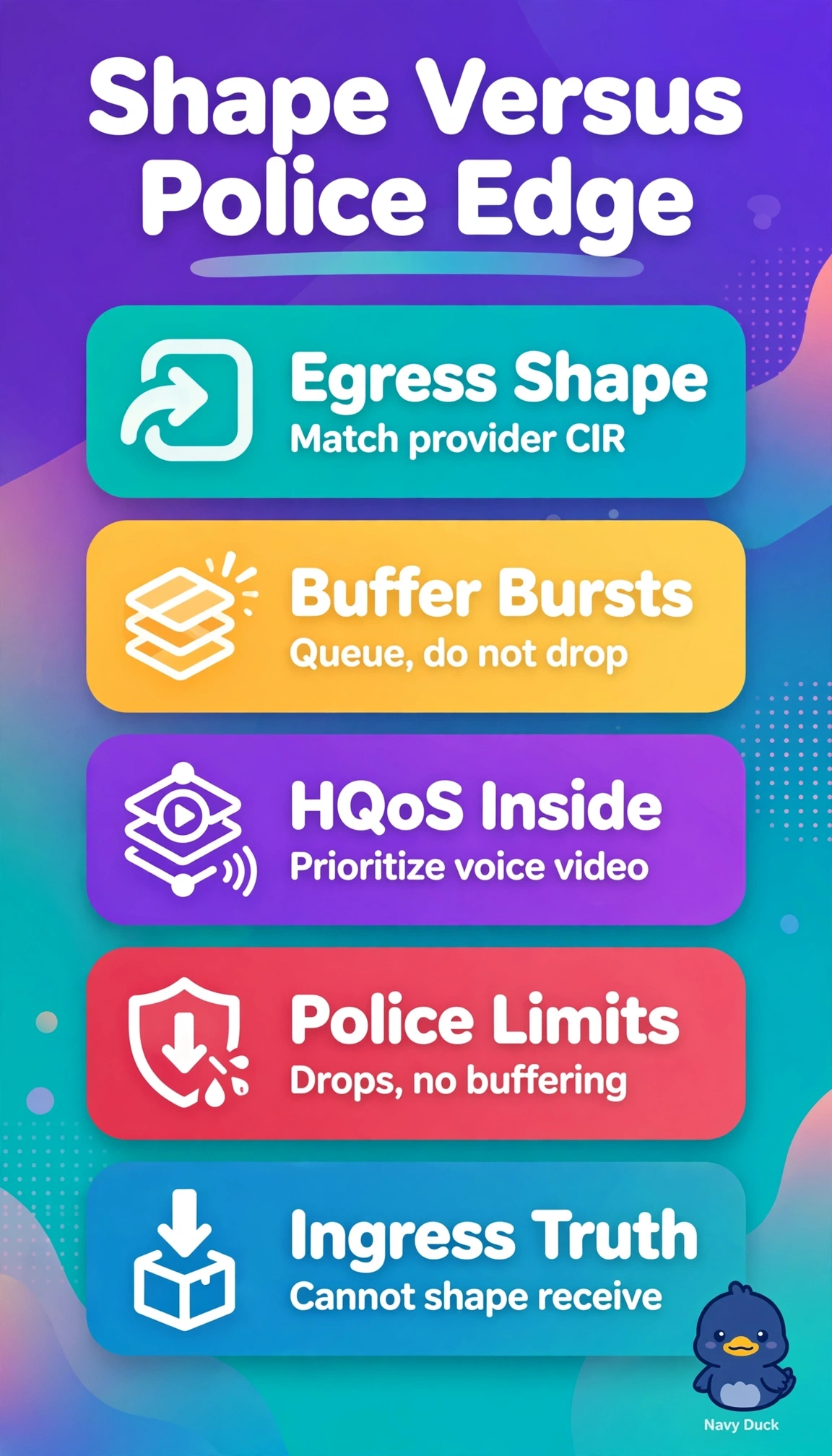
You’re smoothing traffic before it hits the provider’s strict speed limit. Shaping buffers bursts to the contracted rate, letting your priority queues decide what waits instead of leaving voice vulnerable to random provider drops.
Full Explanation
Egress hierarchical shaping buffers and paces packets to the provider’s contracted rate, allowing TCP to adapt without tail drops at the provider policer. Placing low-latency and class-based queues inside the shaper lets voice and video leave first while bulk data waits, helping preserve jitter and loss budgets. Aggressively policing egress at the edge fails to protect quality because a policer drops or re-marks excess bursts rather than buffering them; this can trigger TCP retransmissions and increase jitter for competing real-time packets while duplicating the provider’s penalty locally. Shaping inbound traffic fails because shaping can delay transmission only on egress queues; traffic received from the provider has already arrived, and provider bursts may already have been policed and dropped before enterprise policy can act beyond ingress policing or remarking. Removing edge queuing and relying entirely on the provider policer fails end-to-end QoS: provider tail drops may discard voice as readily as bulk data and provide no enterprise queuing guarantees. Exam caveat: shape outbound traffic to the contracted rate, and police only where you must enforce or re-mark inbound traffic. Practical check: verify the shaped rate matches the CIR, monitor queuing drops versus policer drops, and validate voice MOS during bulk-transfer tests.