
An enterprise runs a headquarters data center, two regional hubs, and new SaaS-heavy branches that need direct cloud access with low latency, while legacy client-server apps remain centralized and require predictable performance. Which WAN connectivity design for on-premises, hybrid and cloud sites best balances the needs?
Select an answer to reveal the explanation.
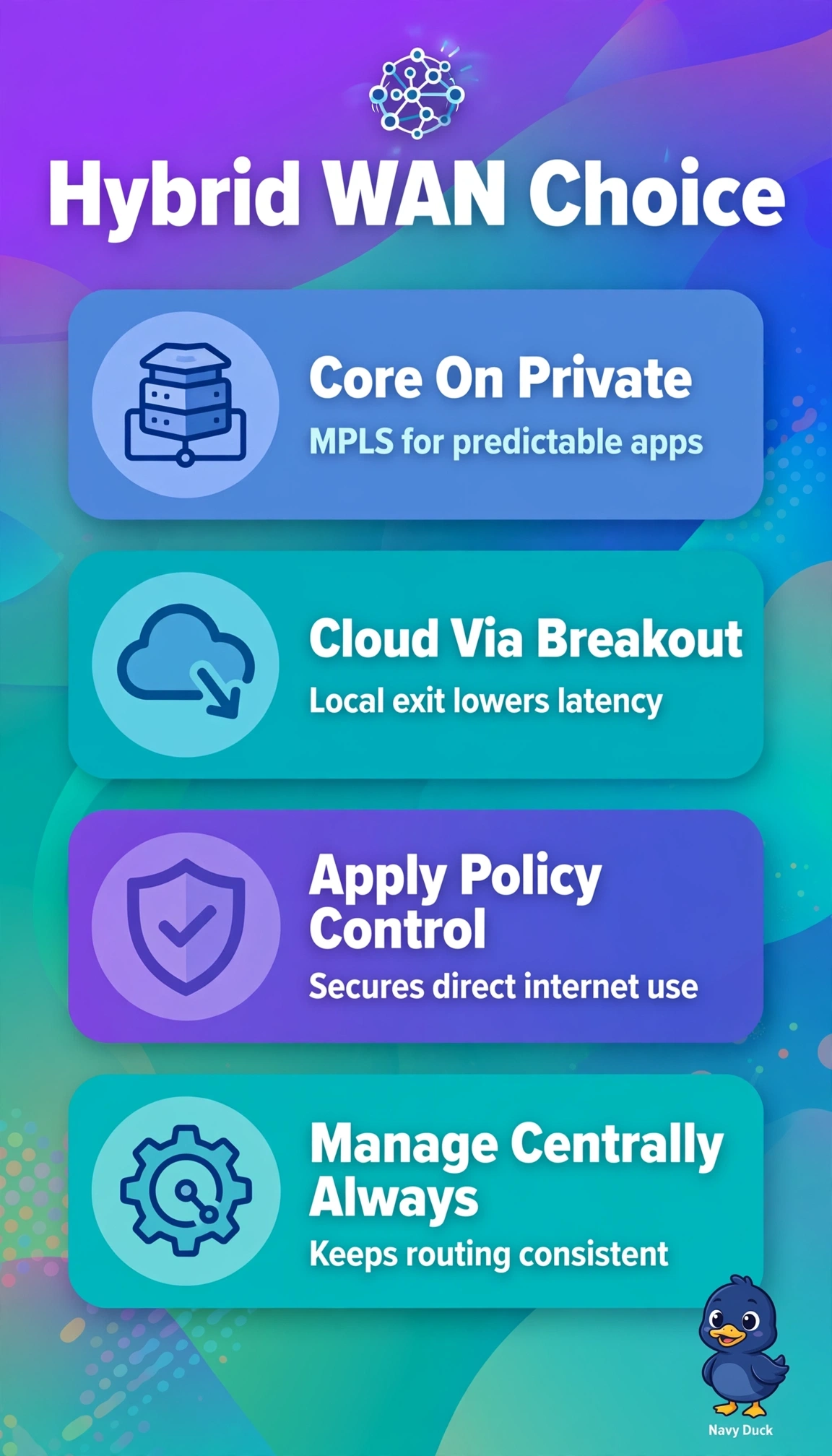
Short Explanation
You are keeping freight trains on private rails while letting commuters take the local highway. Split paths give legacy apps predictability and cloud apps low-latency exits.
Full Explanation
Private transport such as MPLS provides predictable latency, loss, and SLA behavior for centralized legacy applications between headquarters and hubs, while managed local internet breakout at SaaS-heavy branches reduces tromboning and latency to cloud providers under policy control. Using only public internet for all sites sacrifices predictable performance for centralized apps and complicates SLA enforcement, even though it simplifies cloud access. Using only private MPLS and backhauling all cloud traffic through headquarters preserves predictability but adds latency, bandwidth cost, and hairpin congestion for cloud-destined traffic. Operating isolated links with no peering, breakout policy, or centralized control fragments routing and security, preventing consistent hybrid access and operational visibility. For the exam, match private paths to centralized predictability and controlled breakout to distributed cloud needs; in practice validate breakout security inspection, SLA monitoring, and branch policy consistency.