
A logistics company runs DMVPN over broadband with a hub in each region and 200 spokes needing direct spoke-to-spoke voice without hairpinning through hubs. Future summarization at hubs is planned. Which DMVPN phase design provides spoke-to-spoke behavior with route summarization support?
Select an answer to reveal the explanation.
Short Explanation
You want direct calls without full tables everywhere, so hierarchy matters here. Phase 3 shortcuts let spokes punch direct tunnels even behind summarized hub routes.
Full Explanation
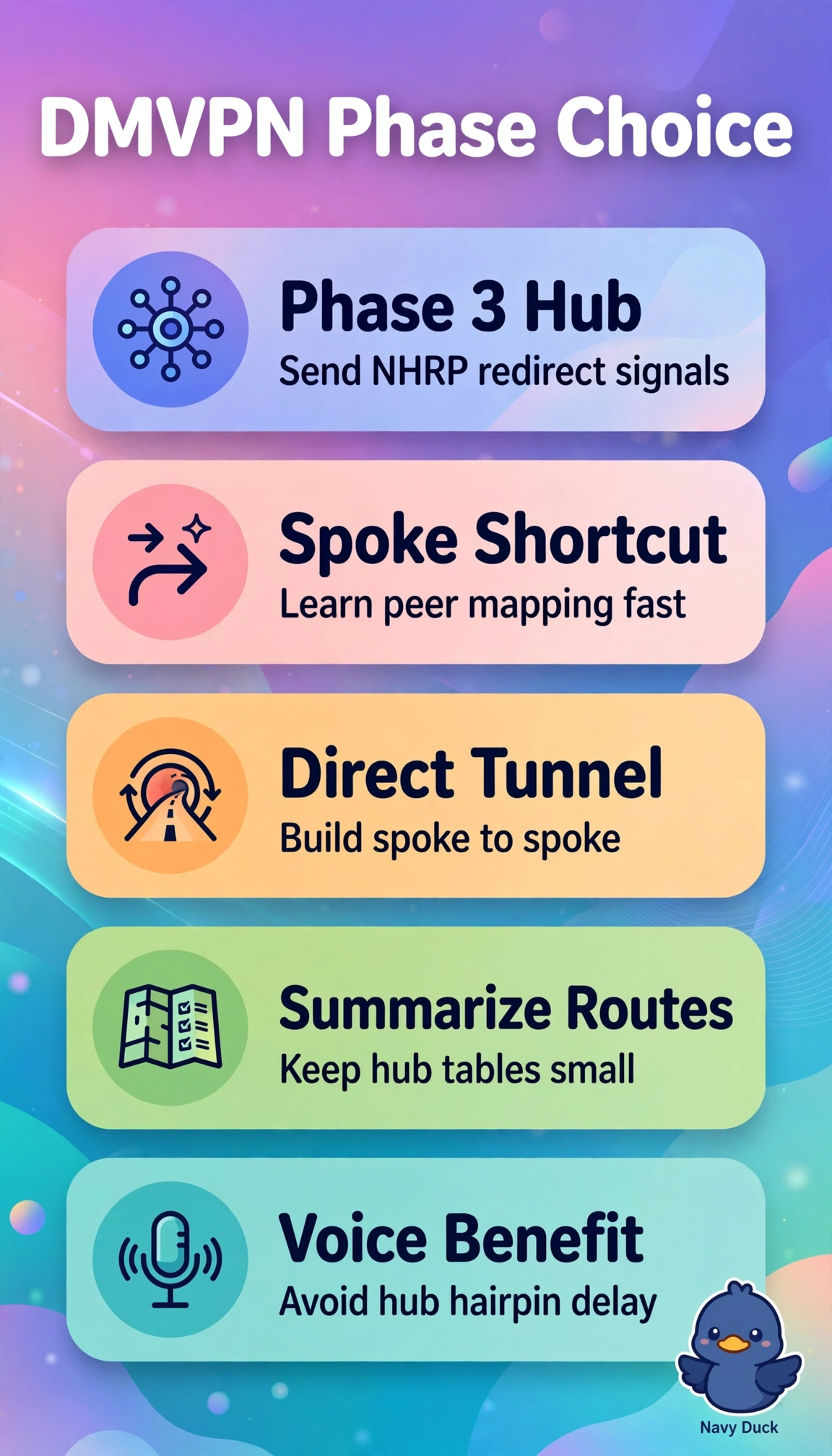
DMVPN Phase 3 uses hub NHRP redirect to signal a better path and spoke NHRP shortcut to install peer mappings on demand, establishing dynamic spoke-to-spoke IPsec tunnels while allowing hubs to summarize prefixes because resolution relies on NHRP rather than longest-match next-hop lookup. Phase 1 supports only hub-and-spoke with no spoke-to-spoke tunnels, forcing hairpinning that adds latency to voice. Phase 2 does allow spoke-to-spoke but requires spokes to hold detailed routes to determine next hops, preventing summarization and inflating routing tables. Building static GRE meshes between 200 spokes creates an unmanageable tunnel count, lacks dynamism, and scales poorly operationally. For the exam, link Phase 2 to full routes without redirect and Phase 3 to redirect plus shortcut with summarization; in practice verify NHRP mappings, IPsec triggers, and MTU for voice quality.