
A branch has a 200 Mbps Ethernet handoff but contracts a 50 Mbps MPLS CIR, and bulk file transfers are dropping interactive voice during peaks because excess traffic is discarded at the provider edge. Which shaping versus policing design at the WAN edge and provider handoff best protects voice?
Select an answer to reveal the explanation.
Short Explanation
You must meter your own exit to match the ticket. Egress shaping to CIR with voice priority smooths bursts, like merging calmly through a toll booth instead of racing and braking.
Full Explanation
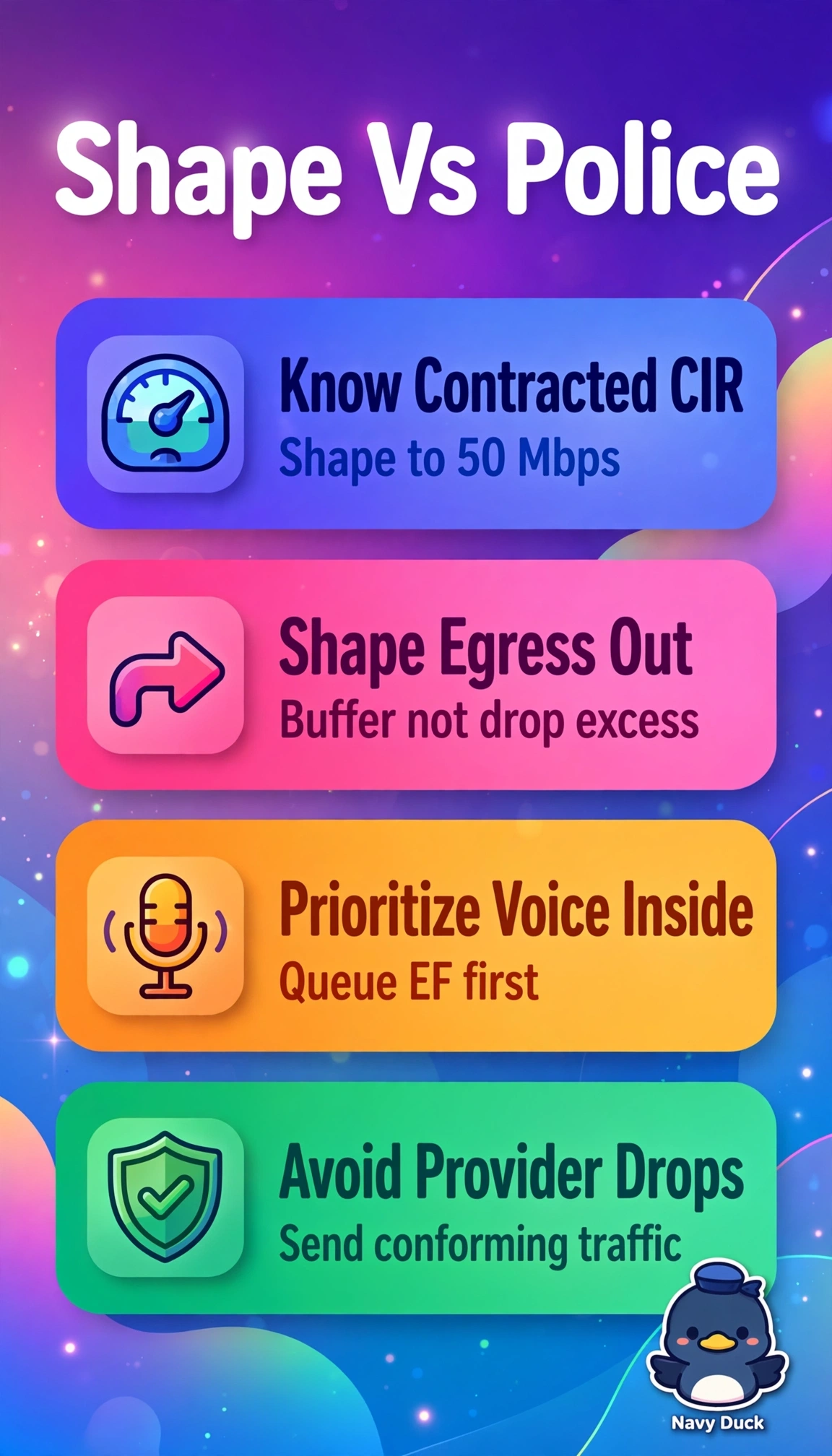
Egress shaping at the enterprise WAN edge buffers and paces output to the contracted CIR so provider policers see conforming traffic, while hierarchical queuing prioritizes voice inside the shaped rate, which prevents indiscriminate provider drops during bursts. Egress policing to CIR fails by concept because policing drops rather than buffers excess, which harms TCP throughput and still risks voice loss without proper queuing. Sending line rate and relying on provider policing fails by concept because provider drops are blunt and unaware of enterprise application priority, even though it maximizes interface utilization. Ingress shaping from the provider fails by concept because shaping controls output queues, not input arrival, so it cannot pace enterprise transmission toward the provider. For the exam remember shape outbound to CIR at the customer edge and let the provider police inbound; in practice confirm CIR, burst sizes, and child priority policies with service provider documentation.