
A retailer dual-homes its headquarters to ISP-A and ISP-B with its own public /22, hosting e-commerce that must stay reachable if one ISP fails. Management wants outbound browsing to prefer ISP-A and inbound customers to enter via ISP-A when healthy. Which BGP multihoming path-control design should the designer propose for inbound and outbound preference?
Select an answer to reveal the explanation.
Short Explanation
You're steering traffic in two directions at once here. Think of BGP policy as separate one-way signs for leaving and entering your network.
Full Explanation
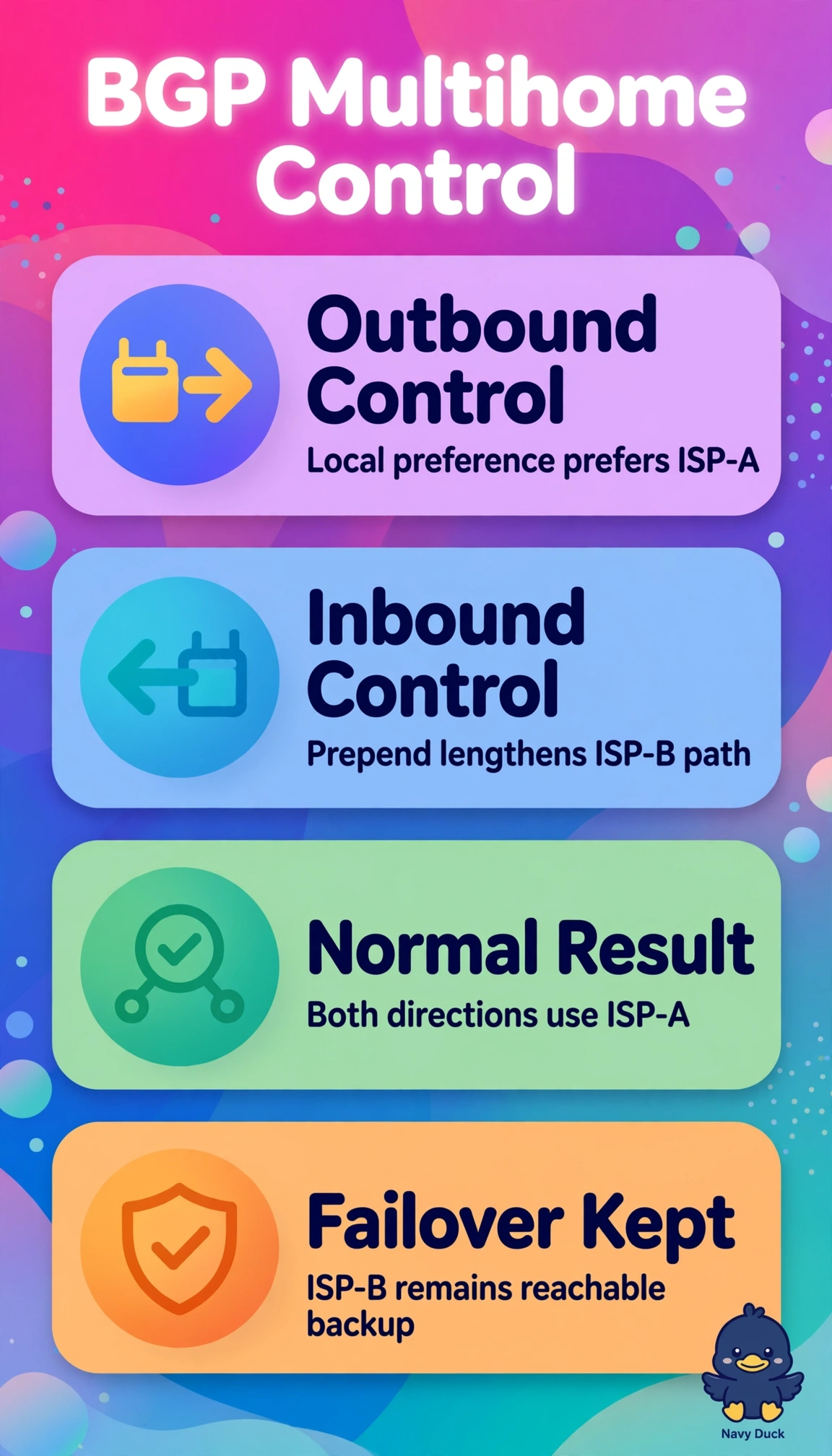
In enterprise multihoming, outbound path control is local to the autonomous system, so local preference favoring ISP-A determines egress, while inbound control must influence remote autonomous systems, so AS-path prepending on advertisements to ISP-B makes that path less attractive and steers ingress toward ISP-A while preserving failover. Raising MED on ISP-A and preferring ISP-B outbound fails by concept because MED is a weak inter-AS hint evaluated late and the outbound preference points the wrong way. Prepending toward ISP-A for outbound and using weight inbound fails by concept because prepending only affects inbound decisions by neighbors and weight is locally significant on one router, neither achieving the stated direction. Advertising longer prefixes via ISP-B and depreferring ISP-A fails by concept because longest match would pull inbound traffic to ISP-B, opposite the requirement. For the exam, remember local preference controls outbound, prepending and more-specific prefixes influence inbound, and a practical check is to verify from looking glasses that ingress actually follows the intended ISP under normal conditions.