
A school district with 25 campuses must block adult and gambling sites for students, allow teachers to access social media for lessons, and override miscategorized educational domains quickly. Which URL filtering design should you deploy for categories, reputation and allow/block lists?
Select an answer to reveal the explanation.
Short Explanation
You need classroom rules with teacher exceptions built in. Category plus lists blocks risky groups while your overrides fix mistakes, like a library with a trusted shelf.
Full Explanation
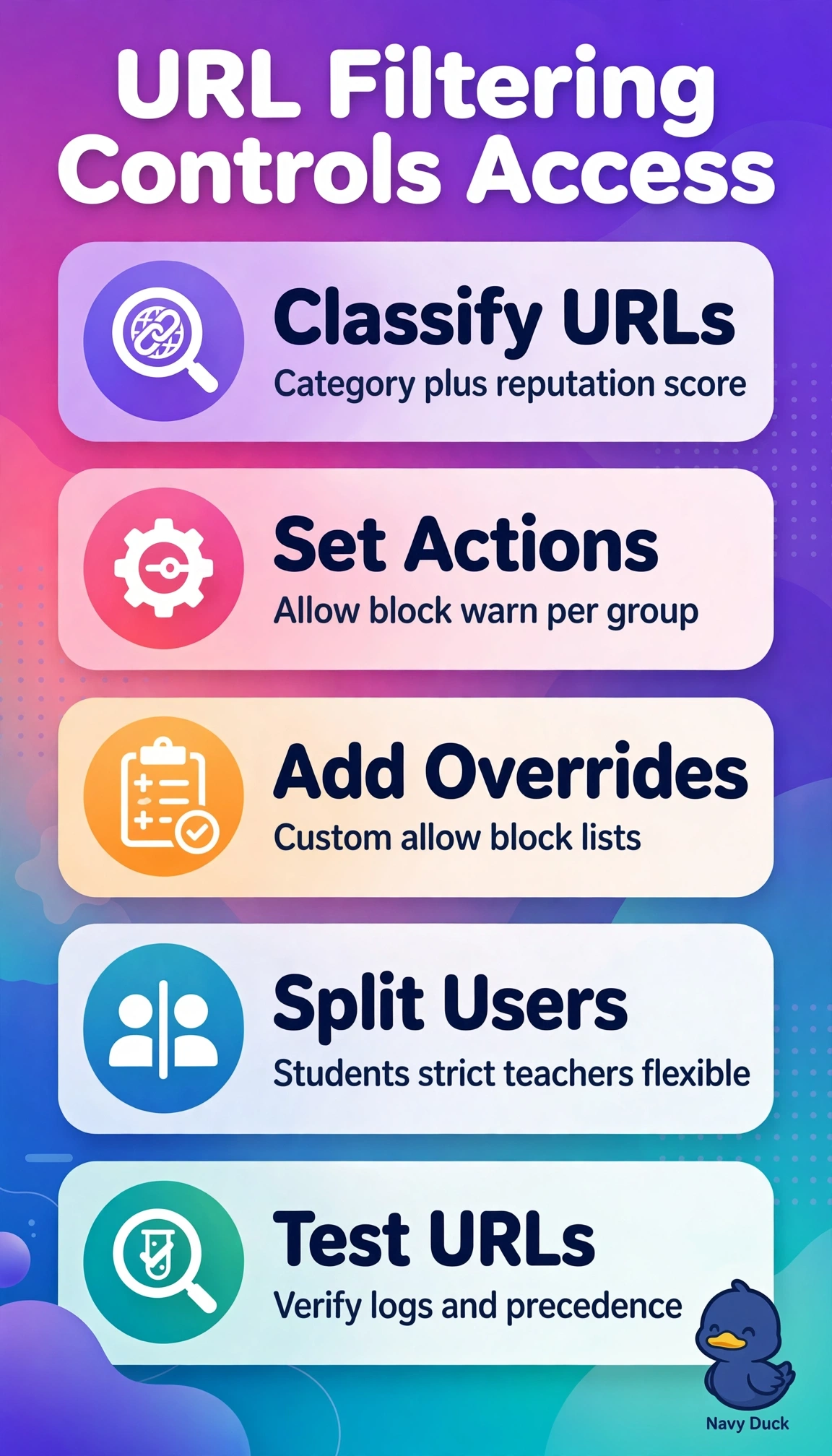
URL filtering on WAN Edge classifies HTTP and HTTPS requests by provider categories and web reputation scores, then applies block or allow actions by category and a block threshold on reputation, with local allow and block lists to override categorization for specific domains. That mechanism makes category actions with reputation thresholds plus custom lists correct because it blocks adult and gambling for students, permits teacher social use by policy, and quickly fixes miscategorized education sites. IPS with Snort rules fails by concept because IPS detects exploits and vulnerabilities, not web content categories and reputation. Application-aware routing with DPI fails by concept because it identifies applications for path selection and QoS, not URL category enforcement with allow and block actions. Full TLS decryption for banking fails by concept because sensitive financial categories are typically exempted from decryption and decryption alone does not provide category policy. Exam caveat is to remember URL filtering is part of Unified Security policy distributed by SD-WAN Manager, formerly vManage. Practical check is to test blocked and allowed URLs, review reputation logs, and validate list precedence.