
A hospital WAN Edge carries voice in VPN 20 and data in VPN 30 over one MPLS transport, voice arrives unmarked from legacy phones, and queuing must prioritize voice upstream. Which QoS configuration should the engineer apply to ensure correct marking and remarking of DSCP at the edge?
Select an answer to reveal the explanation.
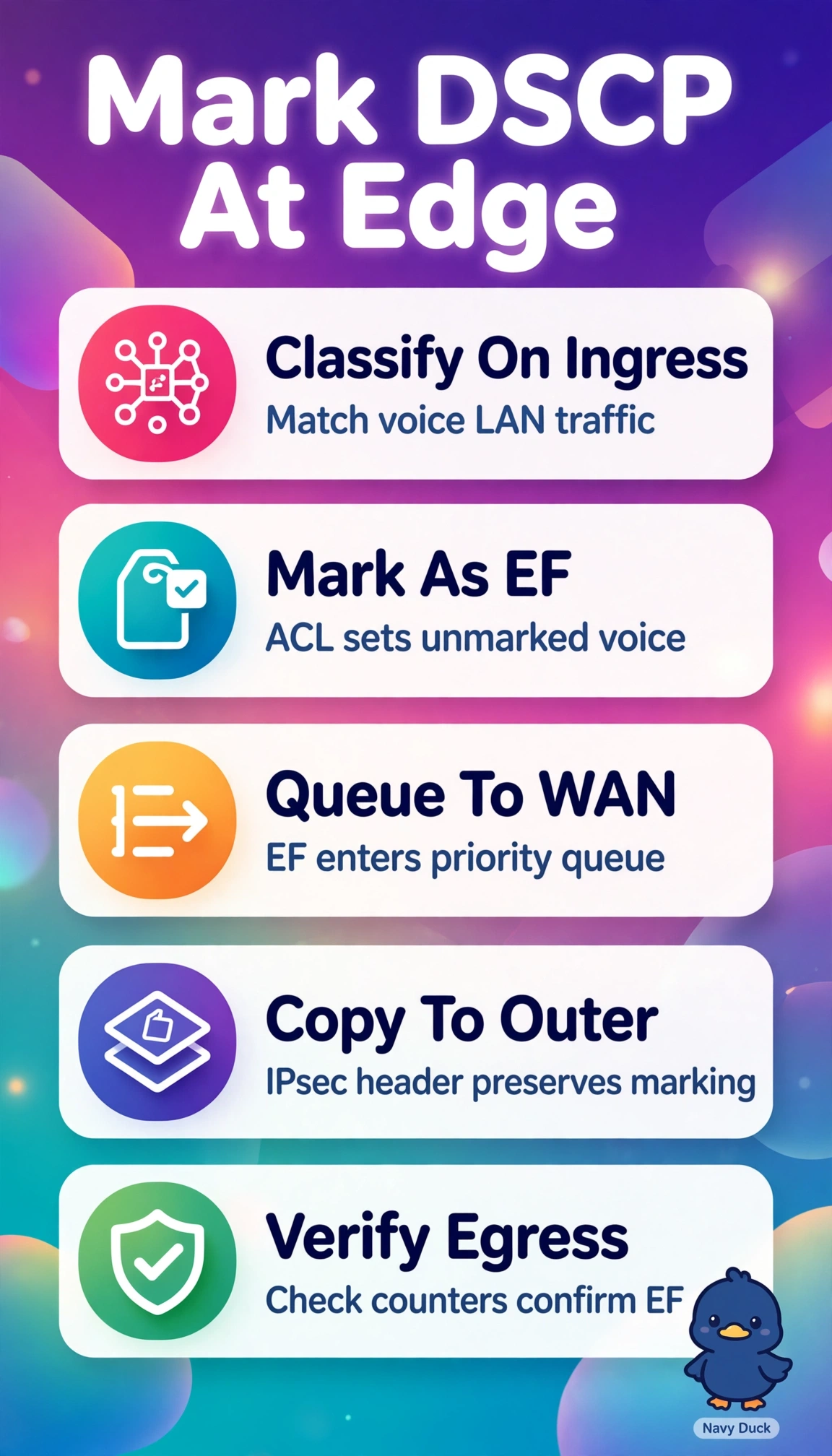
Short Explanation
You're stamping priority mail right at the front desk before it hits the highway. Mark voice once on ingress and the queues toward the WAN honor it, so classification decides who rides first.
Full Explanation
The correct approach works because legacy phones send untrusted or zero DSCP, so the WAN Edge must establish trust at the LAN ingress by classifying voice, marking it to EF, then mapping EF to the strict-priority or low-latency queue for upstream scheduling toward the MPLS transport, which preserves voice latency and jitter while keeping VPN 20 voice separate from VPN 30 data queuing and remarking consistent across the edge. Marking the same voice to AF31 fails by DSCP semantics because AF31 is commonly used for call signaling or assured data with different drop precedence and queuing treatment, so the MPLS core and egress schedulers will not provide EF expedited forwarding and voice bearer quality will degrade under congestion despite priority configuration. Applying EF marking and priority queuing inside VPN 30 fails by VPN context because each LAN interface belongs to one VPN, so an ACL applied to the data VPN's interface leaves the actual voice traffic in VPN 20 unclassified and it continues upstream as best-effort with no prioritization. Classifying inbound on the WAN interface fails by trust boundary and direction because WAN ingress sees traffic after uplink scheduling or in the downstream return path, so unmarked LAN voice has already missed upstream classification and contention, making the policy too late to affect uplink queuing. For exams, carefully separate where marking occurs, which VPN the interface belongs to, upstream versus downstream direction, and EF for voice bearer versus AF or CS values rather than assuming any priority statement is sufficient. Practically verify with policy counters, show qos queue statistics, and ingress versus egress captures confirming LAN ingress remark to EF and sustained EF to priority-queue mapping under load.