
A bank plans an on-premises SD-WAN Manager cluster for 800 WAN Edge routers with high availability and separate statistics collection. The design must keep configuration, control messaging and analytics available during a single server loss. Which Manager cluster scaling approach should the architect describe to satisfy resilience and service separation?
Select an answer to reveal the explanation.
Short Explanation
Clustering spreads the load so one box never carries everything alone. You get resilience plus dedicated capacity for stats, and node-services keep config safe when hardware stumbles.
Full Explanation
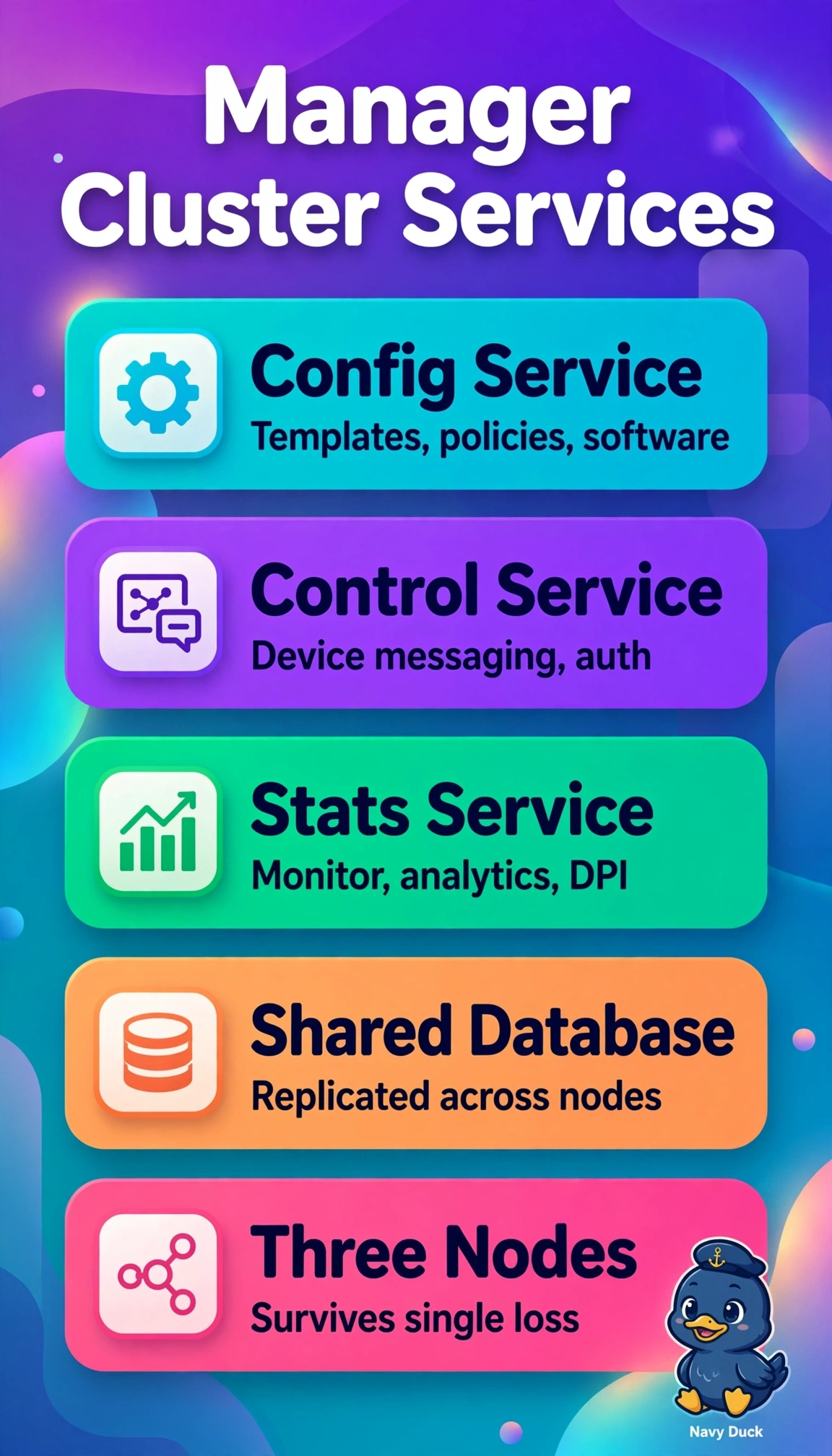
An on-premises SD-WAN Manager cluster, formerly vManage, scales by adding nodes that together provide network configuration management, control-plane connectivity services for device messaging, and statistics and monitoring services for performance and DPI data, backed by a replicated database so loss of one node preserves operations. Three nodes is the common resilient design because quorum protects the database and services can be distributed or failed over, supporting hundreds to thousands of devices depending on sizing. A single server satisfies simplicity but misses high availability and separation because any failure halts configuration, control messaging and analytics. An active-standby pair with one database satisfies basic redundancy but misses true clustering semantics and analytics scale because the shared database becomes a single point of failure and statistics load is not distributed. Independent per-region managers satisfies geographic separation but misses cluster benefits because there is no shared database or automatic failover. For the exam, remember Manager clustering is about service distribution plus database replication, not just adding CPUs, and in practice verify cluster health, service reachability and device affinities after adding nodes.