
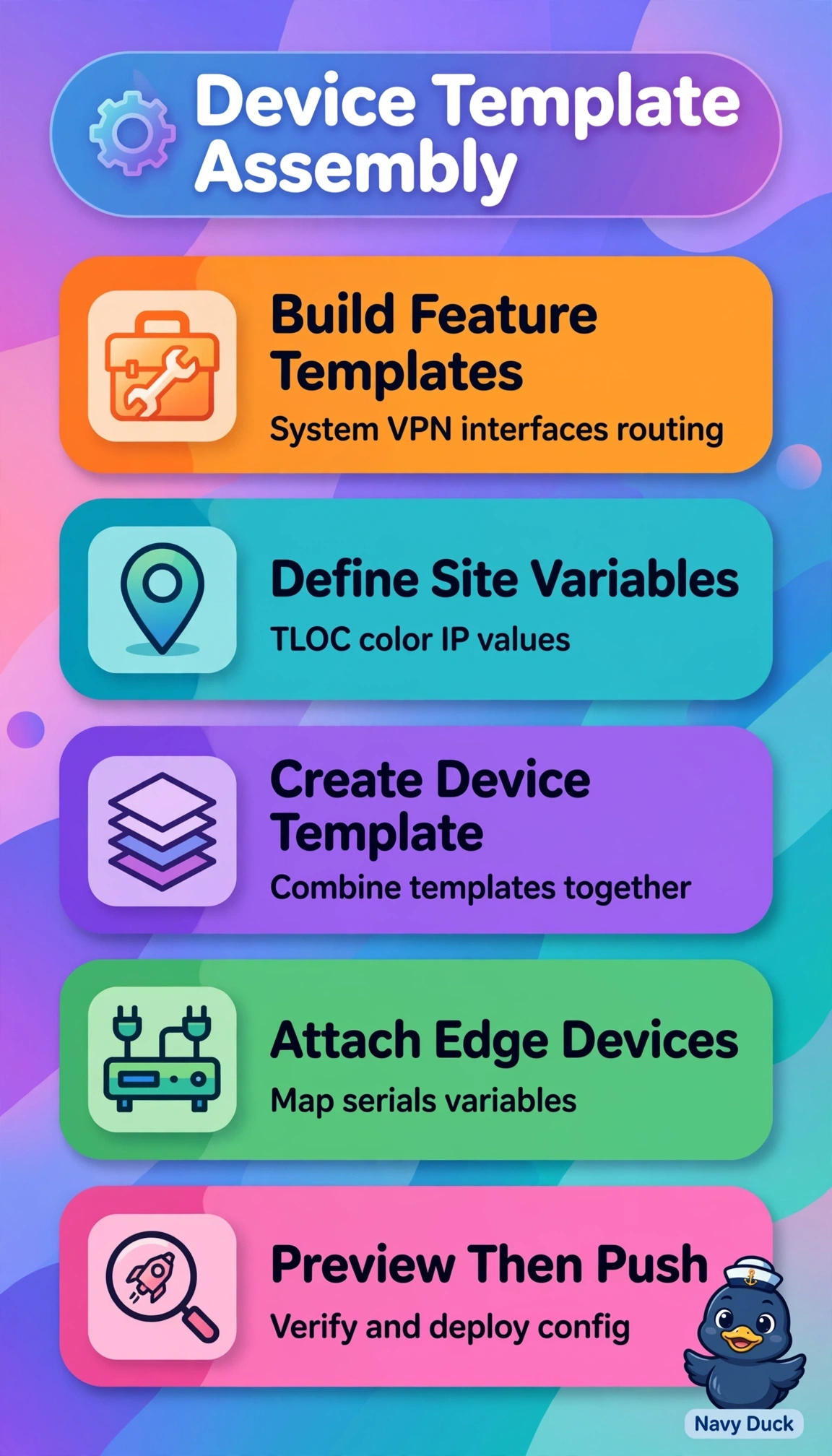
A bank must onboard 40 WAN Edge routers with common VPN, routing and security settings plus per-site TLOC colors. The engineer built system, VPN and interface feature templates in SD-WAN Manager and needs consistent push with site variables. Which device template workflow should the engineer perform to complete centralized provisioning correctly?
Select an answer to reveal the explanation.
Short Explanation
You're building with Lego blocks, not pouring concrete all at once. The device-template stacks your feature pieces, fills variables per site, then pushes to devices.
Full Explanation
The correct workflow is right because SD-WAN Manager uses modular feature templates to define reusable system, VPN and interface settings, joins them in a device template where per-site values such as TLOC color remain as variables, then resolves those variables when WAN Edge routers are attached and pushes the complete configuration, delivering common baseline consistency with controlled site differentiation. The separate templates idea fails on centralized consistency because creating a dedicated device template per site with hardcoded colors can push correctly but abandons variable-driven reuse and creates unsustainable lifecycle overhead for forty sites. The CLI template idea fails on architecture reuse because a CLI template with variables can attach and push to WAN Edge devices, yet it discards the engineered feature templates and sacrifices model validation, rollback structure and GUI lifecycle benefits. The default color idea fails on per-site variation because combining feature templates and pushing to attached devices is correct, but a single default TLOC color cannot express distinct transport identities required at each site. As an exam caveat, read carefully whether the stem asks for feature-based provisioning, edge versus controller targets, and whether variables must be supplied at attach time rather than defaulted or staged only. As a practical check, use the attach preview and configuration diff in SD-WAN Manager to confirm hostname, site ID and TLOC color per device before pushing, then verify sync status and control connections after the push.