
A media company with 60 branches uses Cloud OnRamp for SaaS for Microsoft 365, with dual transports at each site and both regional and local internet exits available. Users report variable Teams quality while direct internet is underutilized. Which Cloud OnRamp for SaaS path selection behavior should the engineer verify to choose the best exit for the SaaS application?
Select an answer to reveal the explanation.
Short Explanation
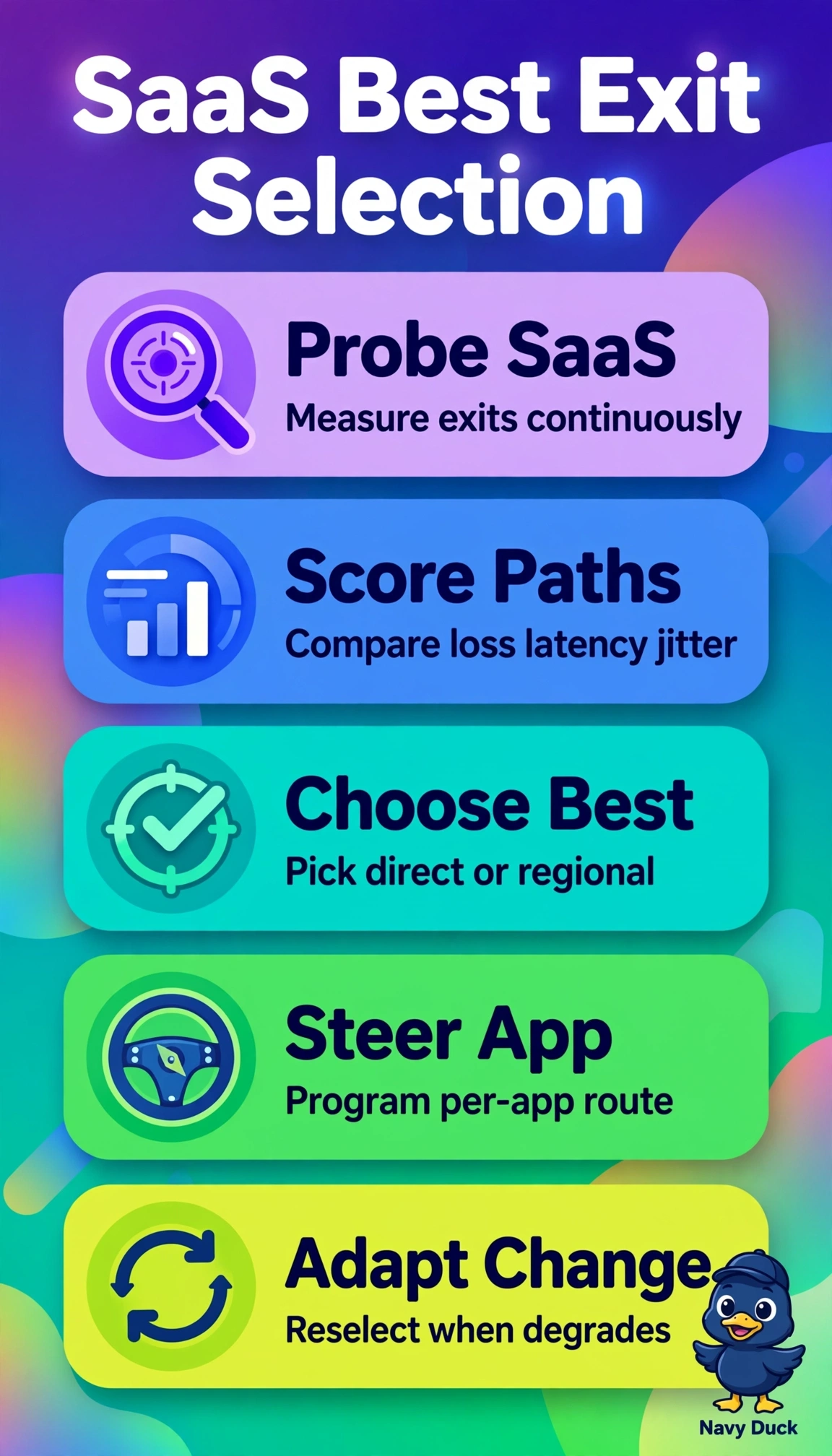
You are chasing quality, not just connectivity. Continuous probing acts like live traffic reports rerouting around jams, so trust probing.
Full Explanation
Cloud OnRamp for SaaS uses gateway probing and cloud vantage points to continuously measure loss, latency and jitter to SaaS front doors via candidate exits, then programs the best-performing direct internet or regional gateway path per application, adapting as performance changes. Verifying probe results and path selection explains why Teams shifts between local and regional exits to preserve quality. Static route metrics lock all SaaS to one hub and ignore real-time SaaS performance. OMP best-path chooses overlay routes by attributes and TLOC preference, not per-SaaS exit quality from probes. Balancing by tunnel count spreads sessions without regard to measured SaaS experience. Exam caveat: distinguish OnRamp SaaS dynamic exit selection from traditional DIA or backhaul routing. Practical check: review OnRamp SaaS path scores, chosen exit and SLA telemetry in SD-WAN Manager.