
An operations team managing 500 SD-WAN sites needs weekly executive summaries of application usage, tunnel health, and security events without manual dashboard exports. Audit also requires archived copies for review. Which reporting capability in SD-WAN Manager meets these needs?
Select an answer to reveal the explanation.
Short Explanation
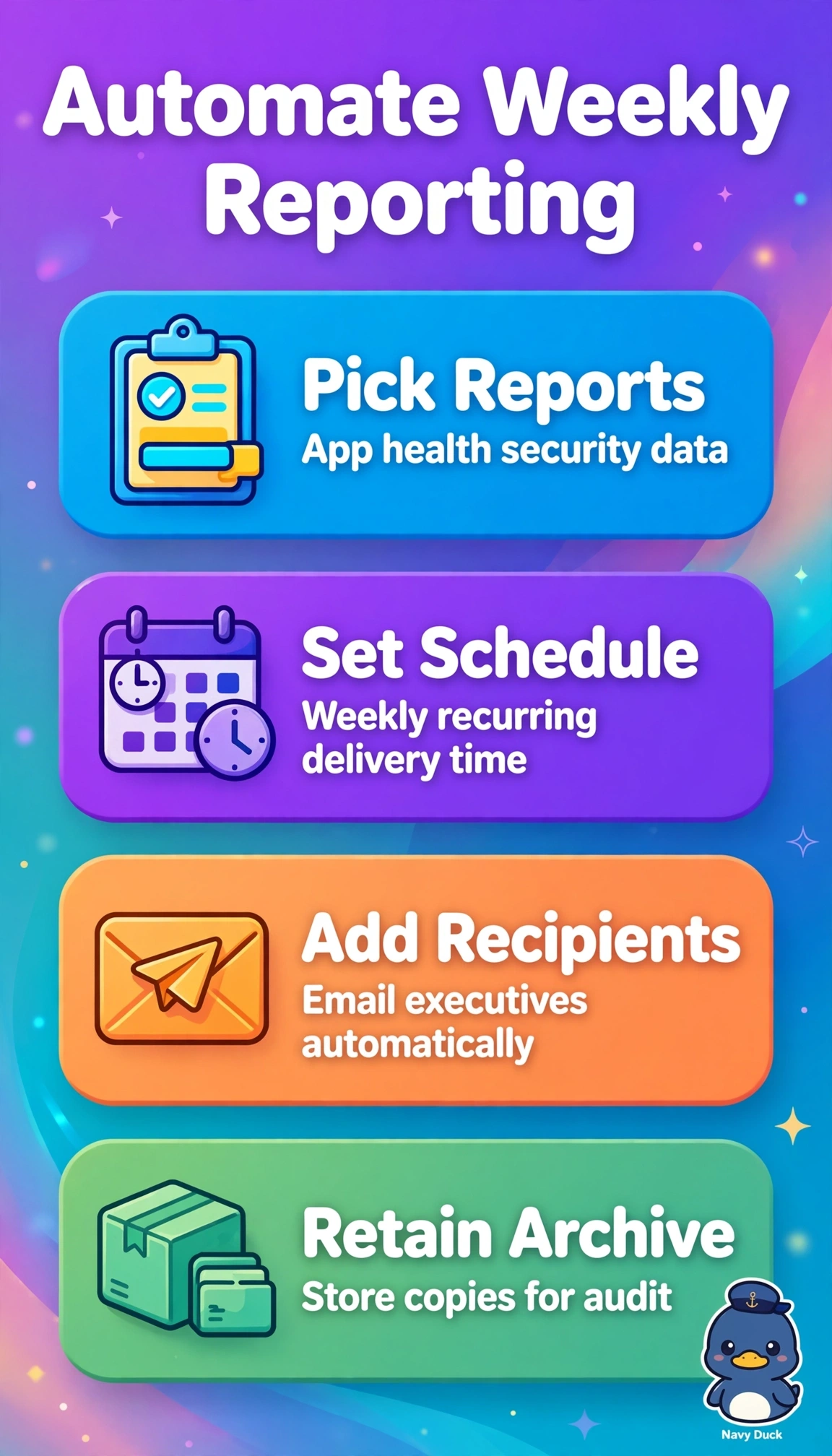
You'll save your team hours when your weekly summaries land in inboxes on autopilot, like a newspaper subscription for your network. Those scheduled reports cover apps, health, and security while keeping copies tucked away for audit.
Full Explanation
Scheduled reports in SD-WAN Manager directly satisfy the weekly, automated, summarized, and archivable requirement by allowing administrators to define recurring templates covering application usage, tunnel health, and security events that are automatically generated, emailed to stakeholders, and retained for audit without manual dashboard exports, which scales effectively across 500 sites where manual effort is impractical. Interactive executive dashboards provide valuable real-time visualization of the same domains and are commonly used for operations monitoring, but they fail the delivery concept because they require viewers to log in and observe live widgets rather than producing scheduled emailed summaries with archived copies. On-demand historical reports also use the reporting engine to analyze the same datasets and are standard for troubleshooting or ad-hoc executive requests, but they fail the automation concept because they depend on an operator manually running each report, violating the without manual exports constraint and risking missed weeks. Centralized syslog forwarding to an external SIEM is a sound best practice for long-term audit retention and compliance search, but it fails the summarization concept because it streams raw detailed logs for external correlation rather than generating concise executive-level summaries within SD-WAN Manager. For exam purposes, distinguish delivery mechanism from data content, as all approaches handle similar telemetry but only scheduled reports combine periodicity, email distribution, and archiving. As a practical check, validate SMTP settings, recipient lists, weekly schedule, report scope, and retained archive location in a lab before production rollout.