
A financial firm wants its trading application to prefer low-jitter MPLS unless loss exceeds threshold, but port-based rules keep misclassifying the app when it moves to cloud ports. Classification must stay accurate without manual ACL updates. Which classification approach should the engineer choose to support application-aware routing for the trading traffic?
Select an answer to reveal the explanation.
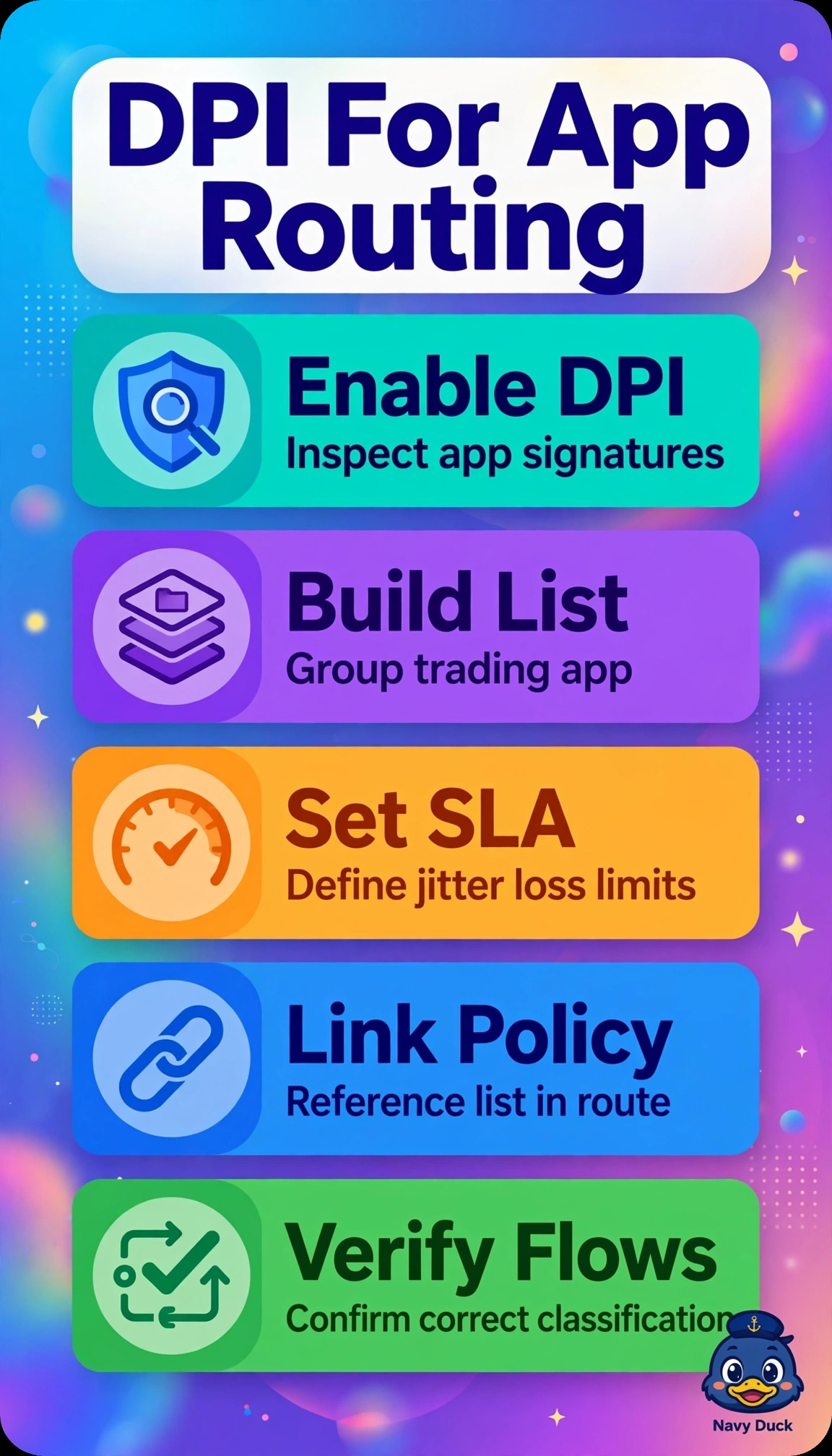
Short Explanation
You caught why ports lie in the cloud era. DPI reads behavior rather than just addresses, giving your policy sharper eyes with DPI.
Full Explanation
Application-aware routing matches traffic to SLA classes through application lists powered by deep packet inspection signatures, which identify applications by behavior rather than static ports, then applies loss, latency and jitter thresholds for path selection. Referencing the DPI application list in the centralized app-route policy keeps trading classification accurate across port or cloud changes. Extended access lists by ports are brittle when applications use dynamic or encrypted ports and require constant updates. Prefix lists in a control policy influence route advertisement and TLOC selection, not granular application SLA measurement. Community lists in redistribution affect route tagging between protocols, not application identification for SLA-based forwarding. Exam caveat: application lists abstract identity while SLA classes define performance thresholds, and both are needed. Practical check: verify DPI application observed in flow visibility and app-route SLA hits.