
A partner must stage SD-WAN Manager, SD-WAN Controller and SD-WAN Validator for a new customer isolated lab with no prior controllers. They have IPs, certificates and WAN links ready but devices cannot join. Which initial installation sequence with system IP, VPN 0 and organization name allows controllers to form the fabric?
Select an answer to reveal the explanation.
Short Explanation
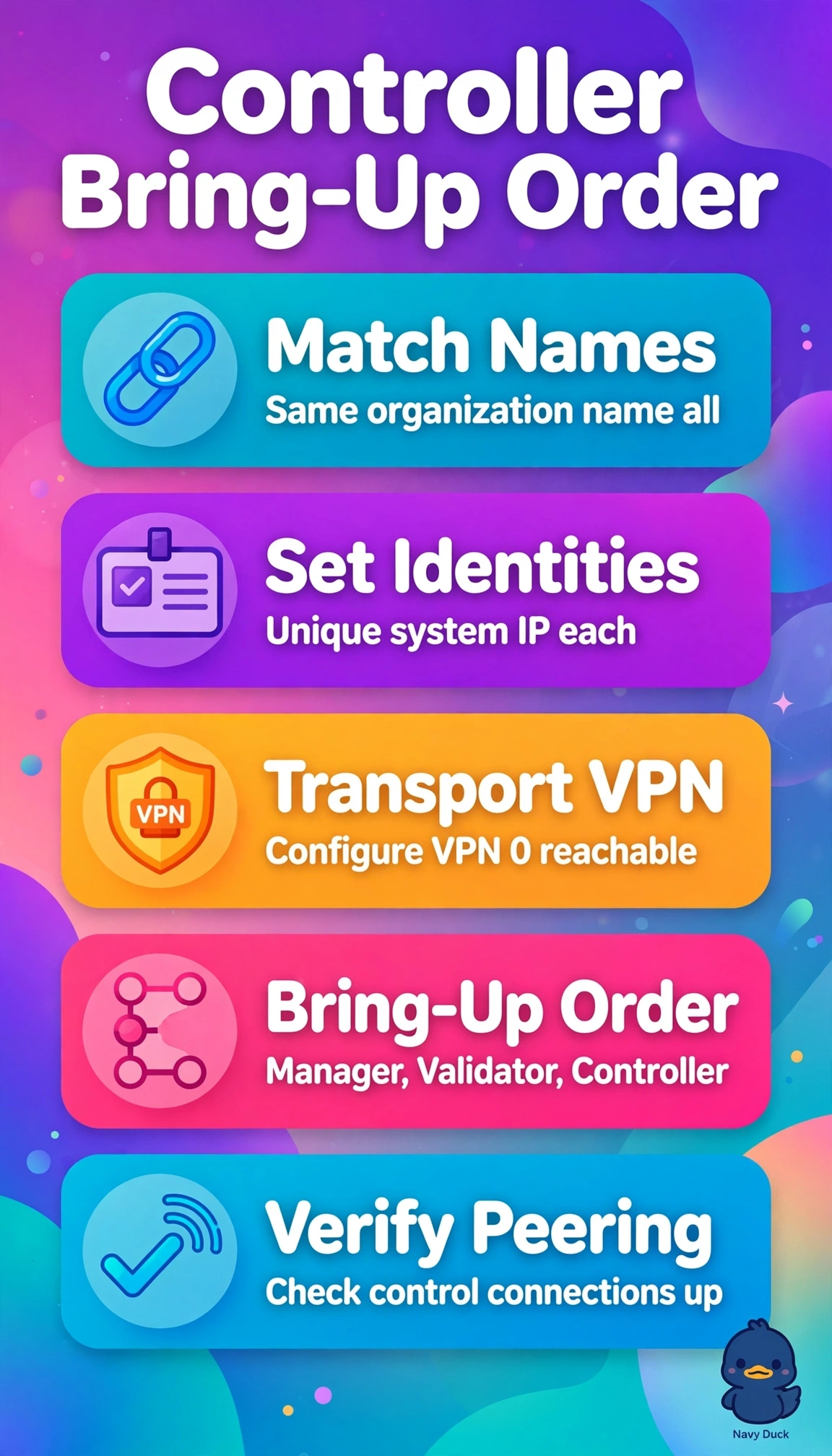
Fabric trust starts with matching names. Organization match, VPN 0 reachability and the right bring-up order (Manager, Validator, then Controller) let your trio shake hands.
Full Explanation
Cisco's overlay bring-up sequence starts SD-WAN Manager first, then the SD-WAN Validator, then the SD-WAN Controller. After that the three authenticate each other and Manager pushes configuration to the Validator and Controller, and only then do WAN Edges join. Before that, every controller needs the same organization name, valid certificates trusted by a common root, VPN 0 transport reachability and a unique system IP. Bootstrapping the Validator first as the root of trust fails on sequencing: the Validator is not a certificate authority, and without Manager running there is nothing to configure and authorize it centrally. Keeping Manager on a different organization name fails on trust because the organization name must match exactly for control connections to authenticate, so the Manager would sit in a separate fabric. Using management IPs without distinct system IPs fails on identity because the system IP is the overlay identity of each controller, and VPN 512 management reachability does not replace VPN 0 transport or a system IP. The newer names SD-WAN Manager, Validator and Controller replace vManage, vBond and vSmart. In practice, verify organization spelling and case, certificate validity, system IP uniqueness and VPN 0 reachability, then check show sdwan control connections after each controller comes up.