
A logistics firm runs voice over two transports and wants app-aware routing to shift traffic within seconds when loss rises, but BFD flaps on a brownout link cause excessive reroutes. SLA targets require fast detection without instability. Which timer adjustment should the engineer evaluate first to tune application-aware routing convergence behavior?
Select an answer to reveal the explanation.
Short Explanation
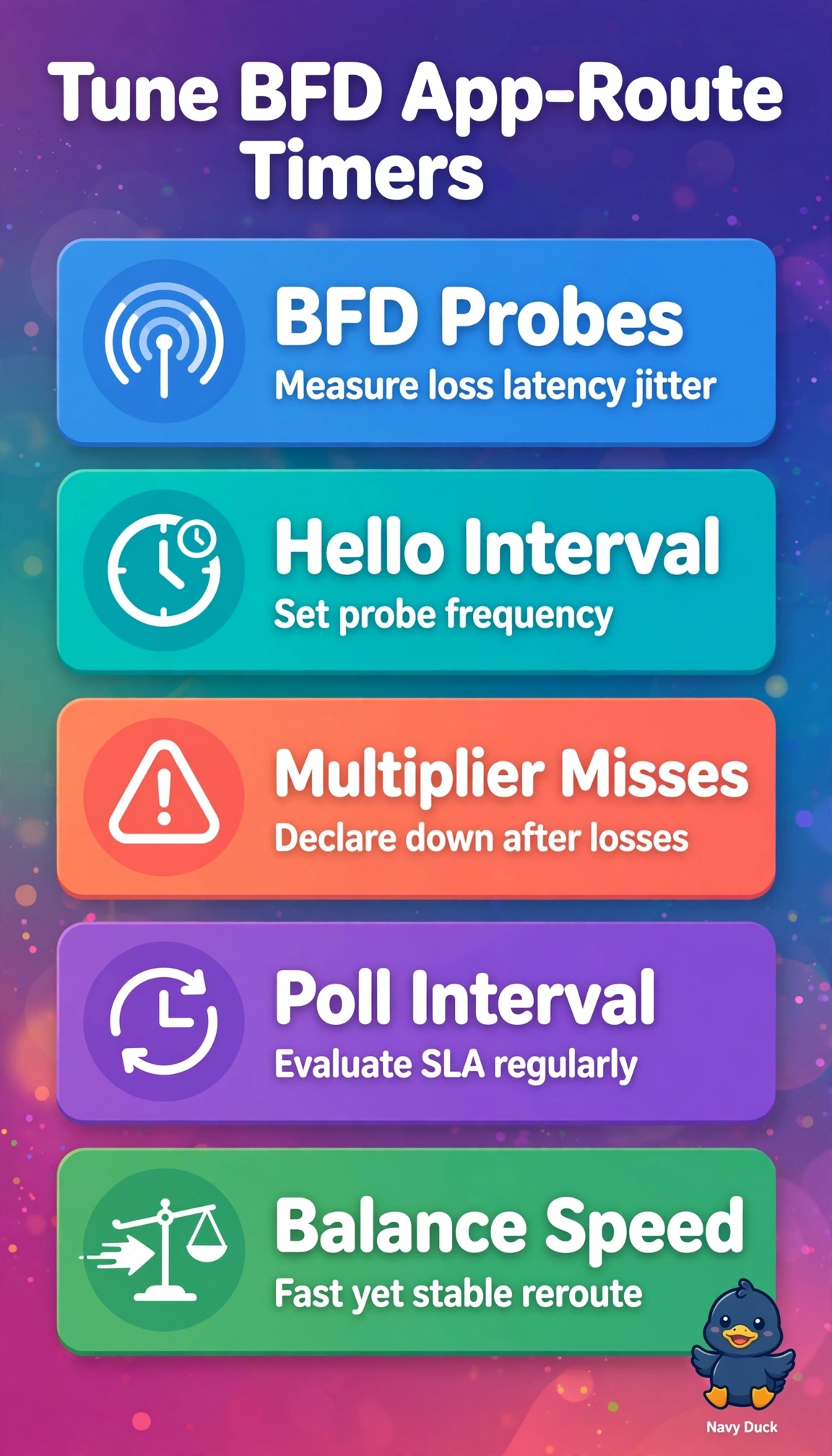
You're spot on — you've got to balance speed and steadiness here. It's like tapping your brakes on ice: you'll want your BFD hello interval and multiplier dialed with the poll timer so you catch loss fast without swerving on every blip.
Full Explanation
Application-aware routing uses BFD measurements for loss, latency and jitter on each tunnel plus app-route poller aggregation against SLA classes, so BFD hello interval and multiplier set failure detection speed while poll interval controls how often SLA decisions trigger reroutes. Shortening BFD detects brownouts faster but risks flaps, while lengthening poll dampens reaction, and the pair must be tuned together for voice convergence. Increasing OMP hold time affects route peering stability, not per-tunnel SLA measurement and reroute timing. Extending DTLS hello affects control connection keepalives to controllers, not data-plane SLA probing. Raising IPsec rekey affects encryption key rotation, not loss and jitter detection for path selection. Exam caveat: distinguish data-plane BFD timers from control-plane OMP and DTLS timers when troubleshooting convergence. Practical check: compare BFD session statistics and app-route SLA history before and after timer changes.