
An enterprise onboards 200 WAN Edges through SD-WAN Manager, where the procurement list must authorize devices and operators must track which routers are approved, testing, or rejected before control connections form. Sync failures currently block onboarding. Which upload of the WAN Edge authorized serial number list and handling of device validation states resolves onboarding?
Select an answer to reveal the explanation.
Short Explanation
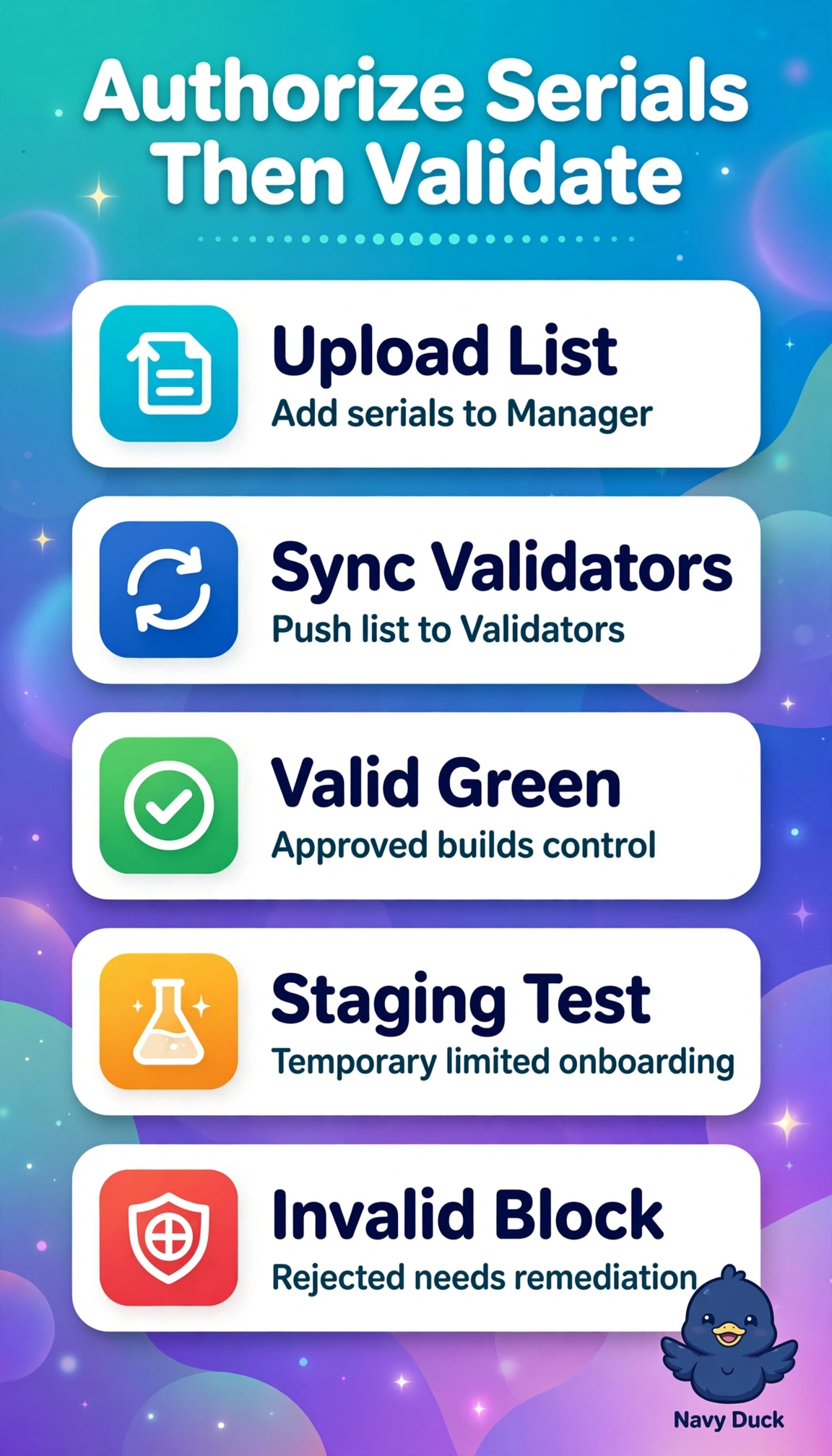
You're the bouncer with a guest list, so you'll upload your authorized serials to SD-WAN Manager and let it sync to the Validators. Then you can watch for valid, staging, and invalid states and quickly fix any routers that don't make it through the door.
Full Explanation
Device onboarding trust begins by uploading the WAN Edge authorized serial number list, typically sourced from Plug and Play or manual entry, into SD-WAN Manager (formerly vManage) which synchronizes it to SD-WAN Validators (formerly vBond); Validators compare incoming bootstrap requests against the list and report validation as valid for approved, staging for temporary testing, or invalid for rejected, gating control connections accordingly, so sync health directly explains onboarding blocks. Loading lists locally on edges fails by concept because edges cannot self-authorize and OMP routes only appear after validation succeeds. Using the root chain as the list fails by concept because certificates establish identity trust while serial authorization is a separate allow-list, and BFD measures tunnel quality, not onboarding permission. Using Controllers and SLA fails by concept because Controllers distribute OMP and policy, not orchestration allow-lists, and app-route SLA reflects path performance, not device validity. Exam caveat: know where the list is managed versus enforced and what each validation state permits. Practical check: verify sync status on Manager and Validator device lists before troubleshooting certificates.