
A manufacturer has dual transports at each plant, MPLS for bulk replication and internet for interactive apps, and needs branch routers to prefer internet TLOCs when reaching the cloud gateway. Which TLOC preference configuration steers path selection toward the destination over internet?
Select an answer to reveal the explanation.
Short Explanation
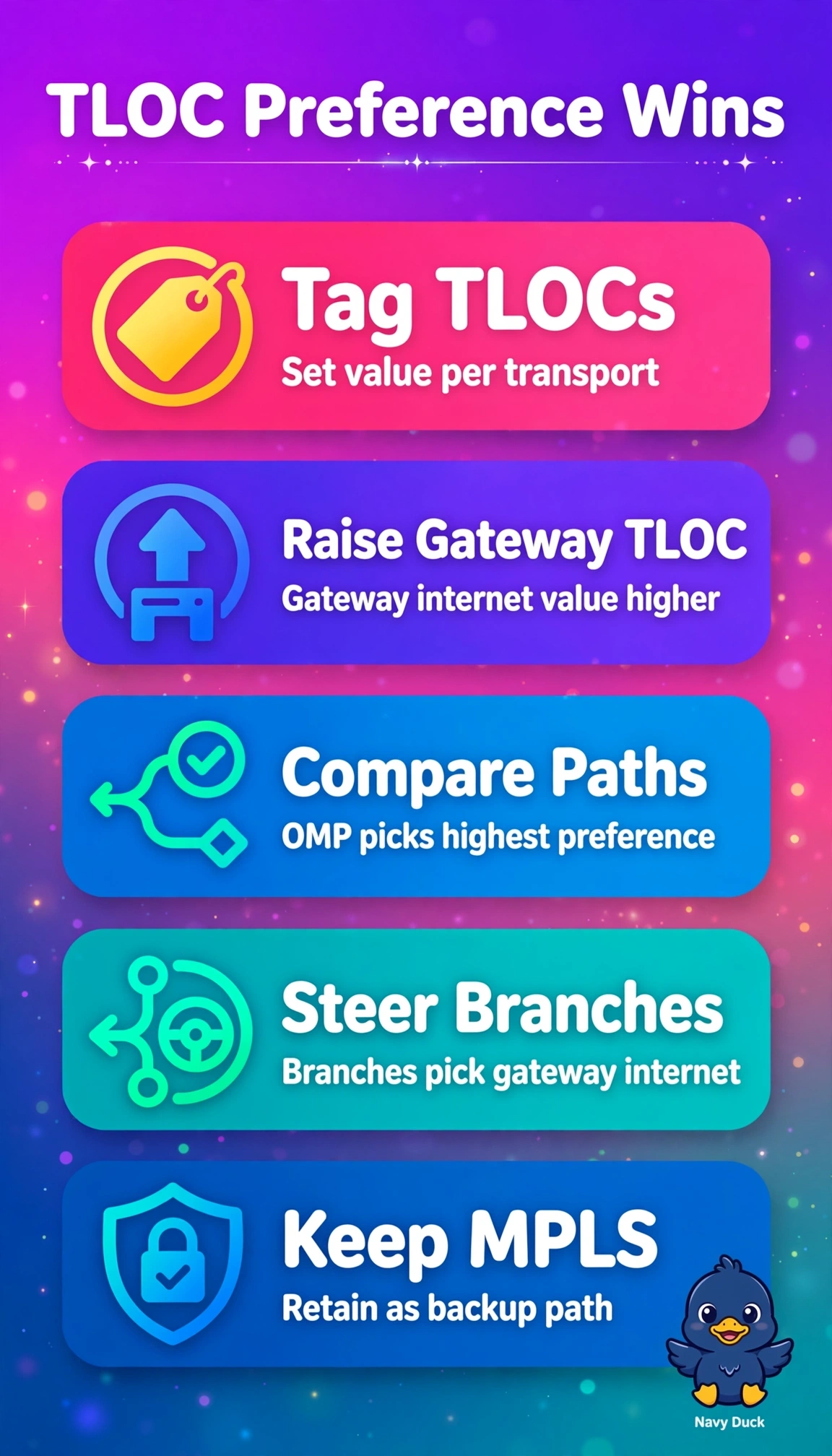
You'll get your branches onto the fast lane when you bump up the TLOC preference on the cloud gateway's internet TLOCs, like giving them express tags. Branch OMP then picks those higher-value paths when you're headed to the gateway.
Full Explanation
TLOC preference is an attribute of the advertised TLOC, and receiving sites compare it when choosing among TLOCs that reach the same destination, preferring the higher value. To make branches send cloud-bound traffic over internet, you raise the preference on the remote site's (the cloud gateway's) internet TLOCs, either on its tunnel interface or with a control policy, so every branch selects the internet path toward it while bulk replication stays on MPLS. Raising internet preference on the bulk replication destination's TLOCs fails on destination scope because that traffic must remain on MPLS. Raising OMP route preference fails on selection function because it ranks competing routes for a prefix rather than choosing between the internet and MPLS transports of one site. Raising preference on the branch's own internet TLOCs fails on location because a TLOC's preference shapes how other sites send traffic to that branch, not how the branch sends traffic out, so it would only affect return traffic. For the exam, remember that preference is set where the destination TLOC is advertised, and keep it distinct from OMP route preference and administrative distance. In practice verify with show sdwan omp tlocs and show sdwan omp routes for the cloud prefix on a branch to confirm the preferred TLOC, then use traceroute to confirm interactive traffic uses internet while bulk stays on MPLS.