
A healthcare SOC analyst observes lateral movement using valid administrative credentials from a workstation that matches no scheduled maintenance window. Which action should the analyst take to determine whether this activity is an authorized penetration test?
Select an answer to reveal the explanation.
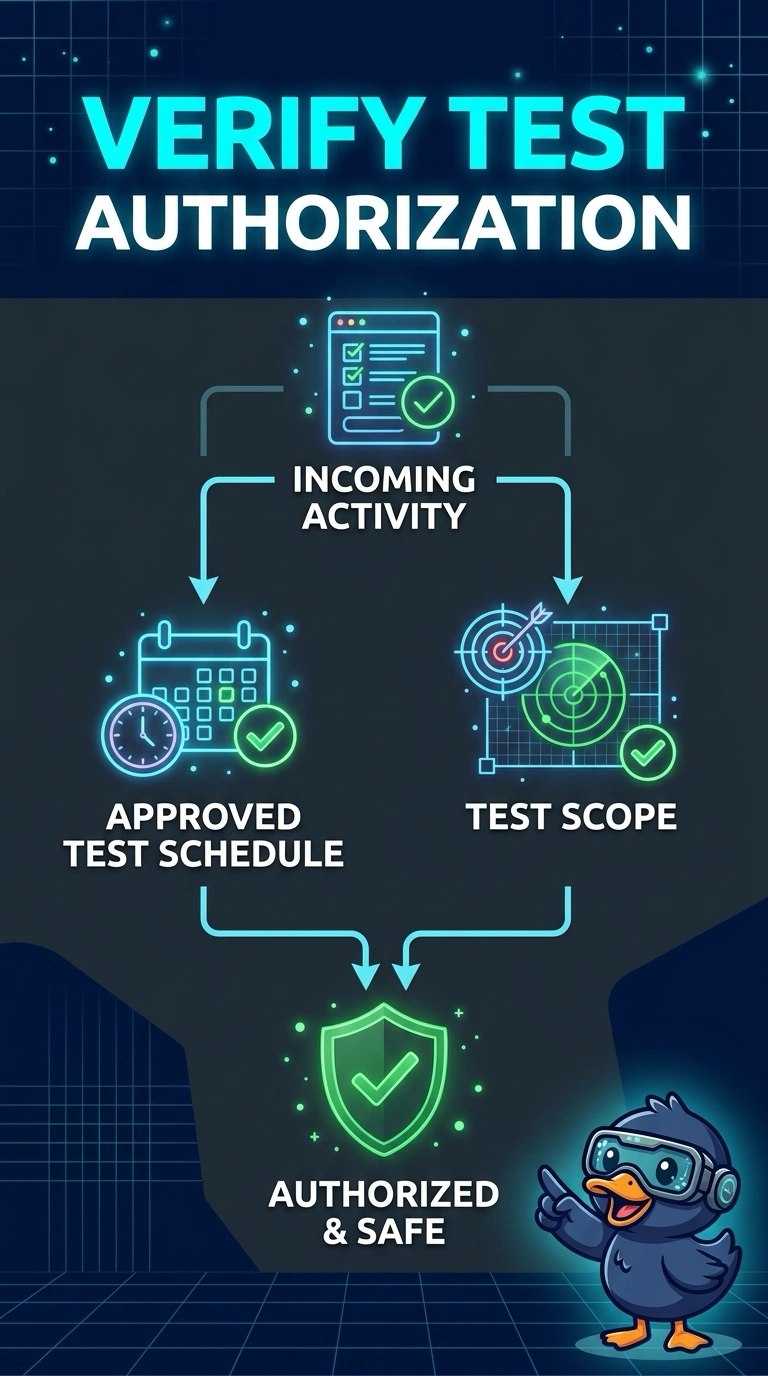
Short Explanation
When valid credentials move unexpectedly across your network, it can feel like a puzzle between a sneaky intruder and a friendly tester. Always check your authorized testing records before jumping to conclusions. The trap is either blocking a legitimate exercise or waiting passively while a real attacker escalates.
Full Explanation
Verify the activity against the approved test schedule and scope is the right step because authorized assessments operate under documented rules of engagement, designated source hosts, and approved timeframes maintained by security leadership. Block the source workstation immediately on the internal firewall jumps straight to containment before confirming whether the traffic is part of an approved exercise or a real intrusion needing evidence preservation. Compare the command syntax against public threat actor profiles online is unreliable because authorized testers intentionally emulate common adversary techniques, making syntax alone indistinguishable from an actual attack. Wait twenty-four hours to see if data exfiltration alerts trigger introduces unacceptable dwell time if the activity is genuinely malicious. As a caveat, never rely solely on a tester's unverified claim in chat or email; confirm through an established out-of-band point of contact. As an operational check, cross-reference source IP addresses, timestamps, and target subnets against your active assessment register before escalating.