
Two threat feeds disagree on whether a public address is malicious. Why is automatically blocking that address from the first feed premature?
Select an answer to reveal the explanation.
Short Explanation
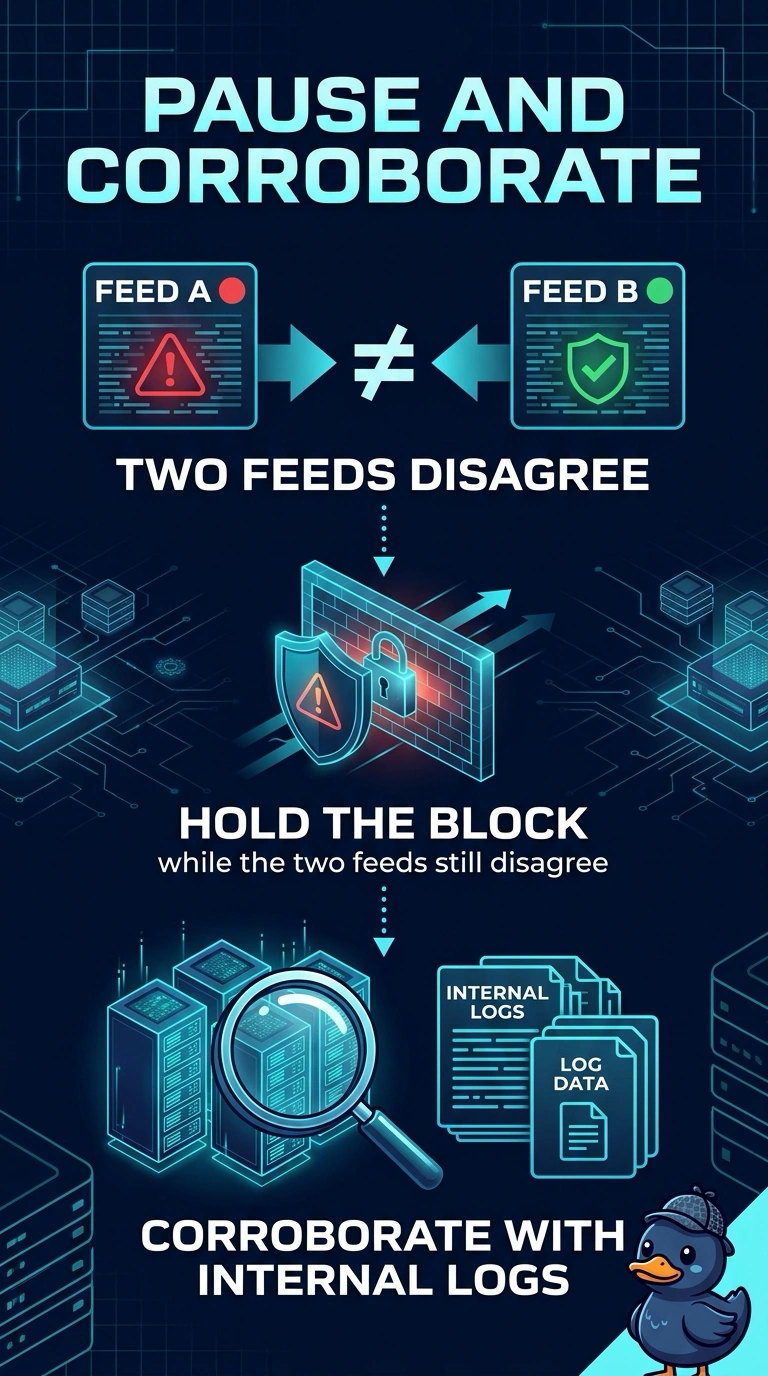
Two witnesses who contradict each other are not a warrant. You hold the block and corroborate with internal logs while the feeds still disagree. Enforcing the first feed, or calling the address benign, skips that check.
Full Explanation
Automatic blocking from the first feed is premature because the second feed disputes the claim and a public address may be shared infrastructure. Hold the block and corroborate with internal logs while the two feeds still disagree: look for actual connections or resolutions, note which feed cites which context, and only then decide on enforcement. Block the address at once so the first feed is enforced before the second feed is read and you can black-hole legitimate traffic on an unresolved conflict. Delete both feeds from the collection and stop tracking that address entirely and you destroy the lead instead of resolving it. Treat the disagreement as proof the address is benign on every network and you convert uncertainty into a clearance the evidence did not grant. Exam caveat: a later block can still be right once internal logs show malicious use or the disagreeing feed is shown to be stale. Operational check: query firewall, proxy, or DNS logs for the address, record which feed called it malicious, and write down why the other feed dissented before any block is committed.