
A retailer TLS log records the string TLS_AES_128_GCM_SHA256 for a completed connection to the payment application. What is that string naming?
Select an answer to reveal the explanation.
Short Explanation
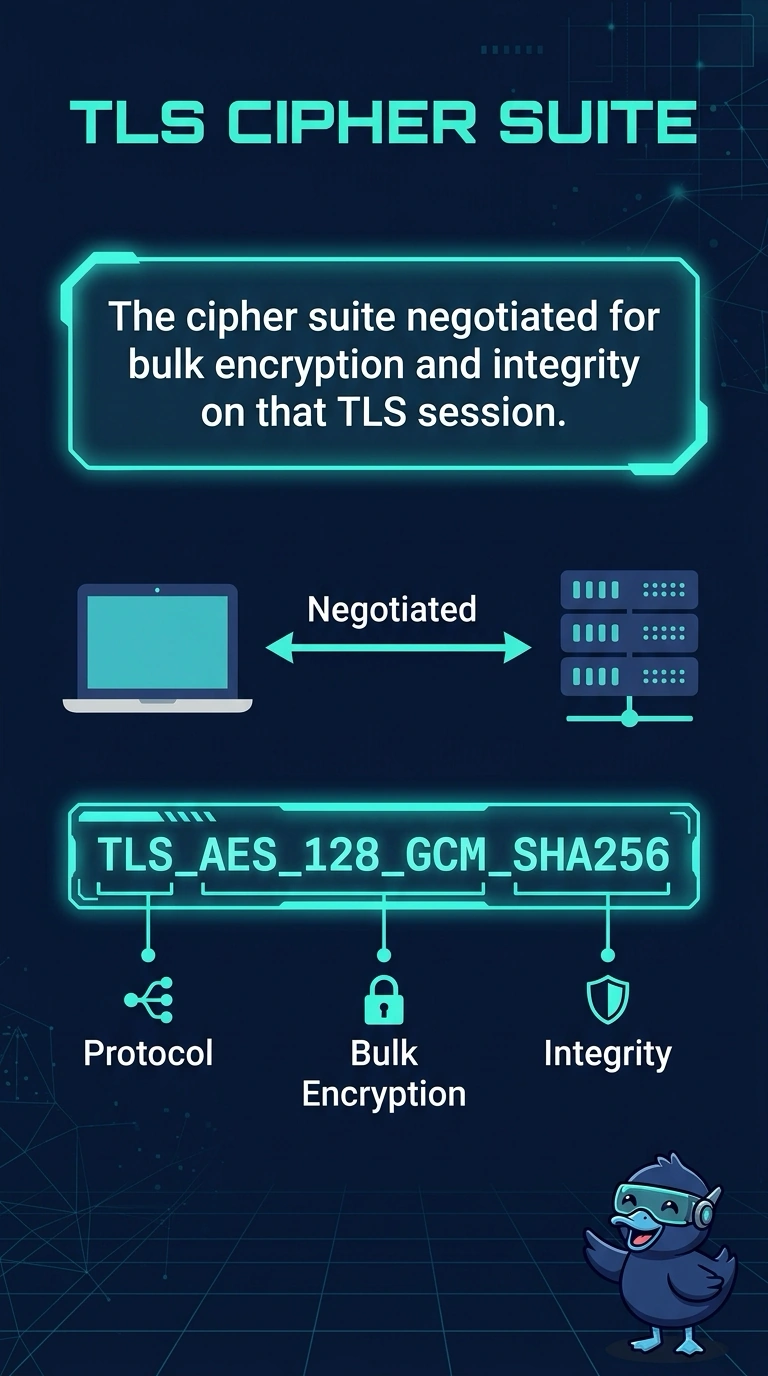
You can read TLS_AES_128_GCM_SHA256 as the cipher suite negotiated for bulk encryption and integrity on that TLS session. An X.509 subject name identifies a server, a PKCS#10 request asks for a certificate, and a TCP receive window is a numeric field.
Full Explanation
TLS_AES_128_GCM_SHA256 is the standard name of a TLS cipher suite: it identifies the algorithms the peers agreed to use for authenticated encryption on that session. Thus, the option describing the cipher suite negotiated for bulk encryption and integrity is correct. An X.509 subject name identifying the payment application server in the retailer log would be a certificate identity, not an algorithm label of this form. A PKCS#10 certificate request submitted by the payment application server is a signing request, not the string recorded as the negotiated suite. The TCP receive window advertised while the handshake was opening the session is a numeric TCP field, not TLS_AES_128_GCM_SHA256. Exam caveat: a cipher suite names algorithms for the session; it is not the certificate or the private key. Practical check: look for this string beside the negotiated suite in the TLS details, and treat the certificate subject as a separate field. The algorithm string is not a distinguished name.