
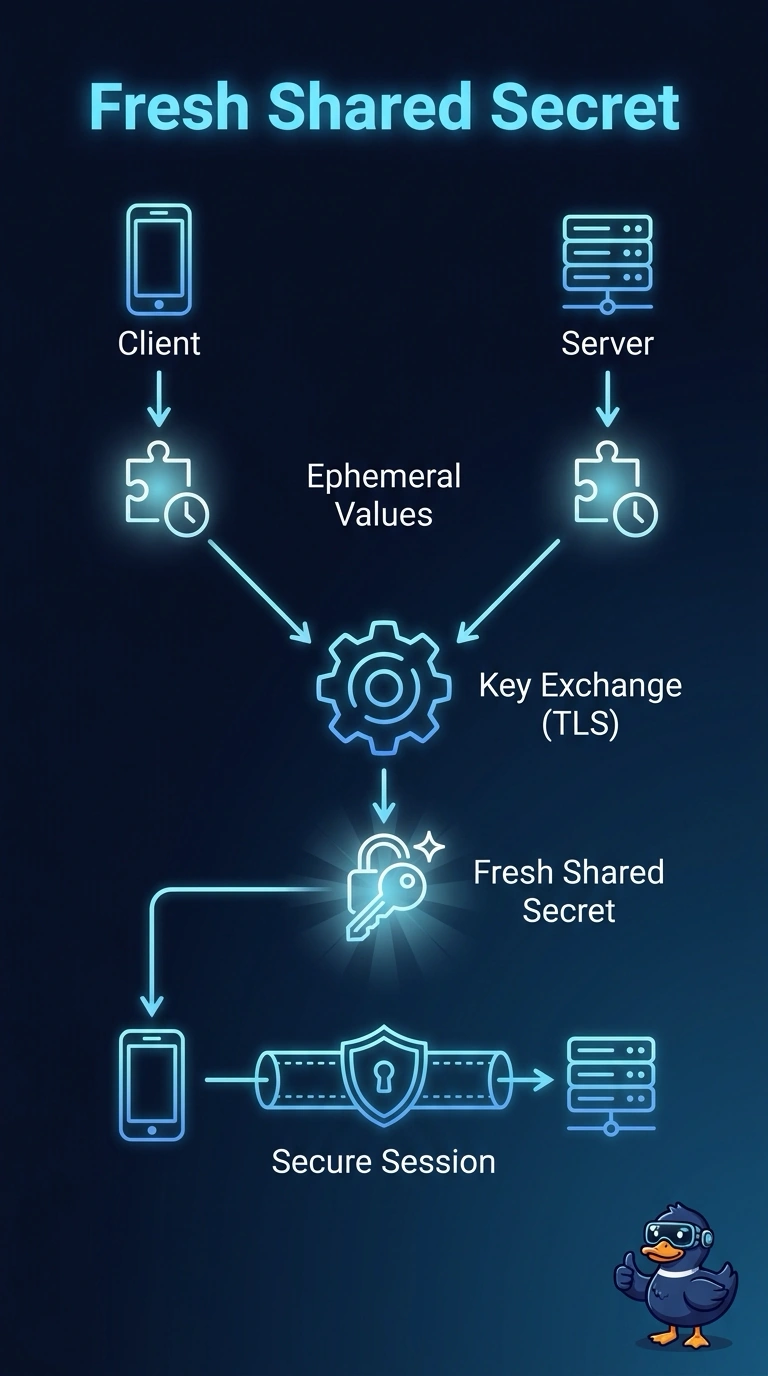
At a manufacturer, a TLS handshake agrees on a fresh shared secret by using ephemeral values, while the long-term private key only signs that exchange. Which piece is the analyst looking at?
Select an answer to reveal the explanation.
Short Explanation
Two peers can invent a fresh shared secret while a long-term seal only signs the invitation. You are looking at the key exchange in that manufacturer handshake. The trap is the certificate date, an email-filter verdict, or an HTTP status code.
Full Explanation
In this handshake the peers derive a fresh shared secret from ephemeral values, and the long-term private key only signs that exchange. The piece under study is the key exchange, not a date on the certificate and not an application result. "The key exchange that produces a fresh shared secret from ephemeral values" is the piece. "The certificate validity dates printed on the leaf certificate of the server" bound the certificate lifetime and do not create the shared secret. "The email filter verdict for a message that never entered this TLS handshake" belongs to mail inspection, which this stem does not describe. "The HTTP status code returned only after the protected session was already up" is an application response after the session exists. Exam caveat: some older suites use the long-term key for key transport, and this stem instead describes ephemeral agreement plus a signature. Operational check: in the handshake, point out the ephemeral exchange and the signature, and leave the certificate dates as a separate field. Do not mix in the mail verdict or the status code.