
A hospital clinic trusts a station only after the station certificate chains to a hospital authority. What is that certificate chain for?
Select an answer to reveal the explanation.
Short Explanation
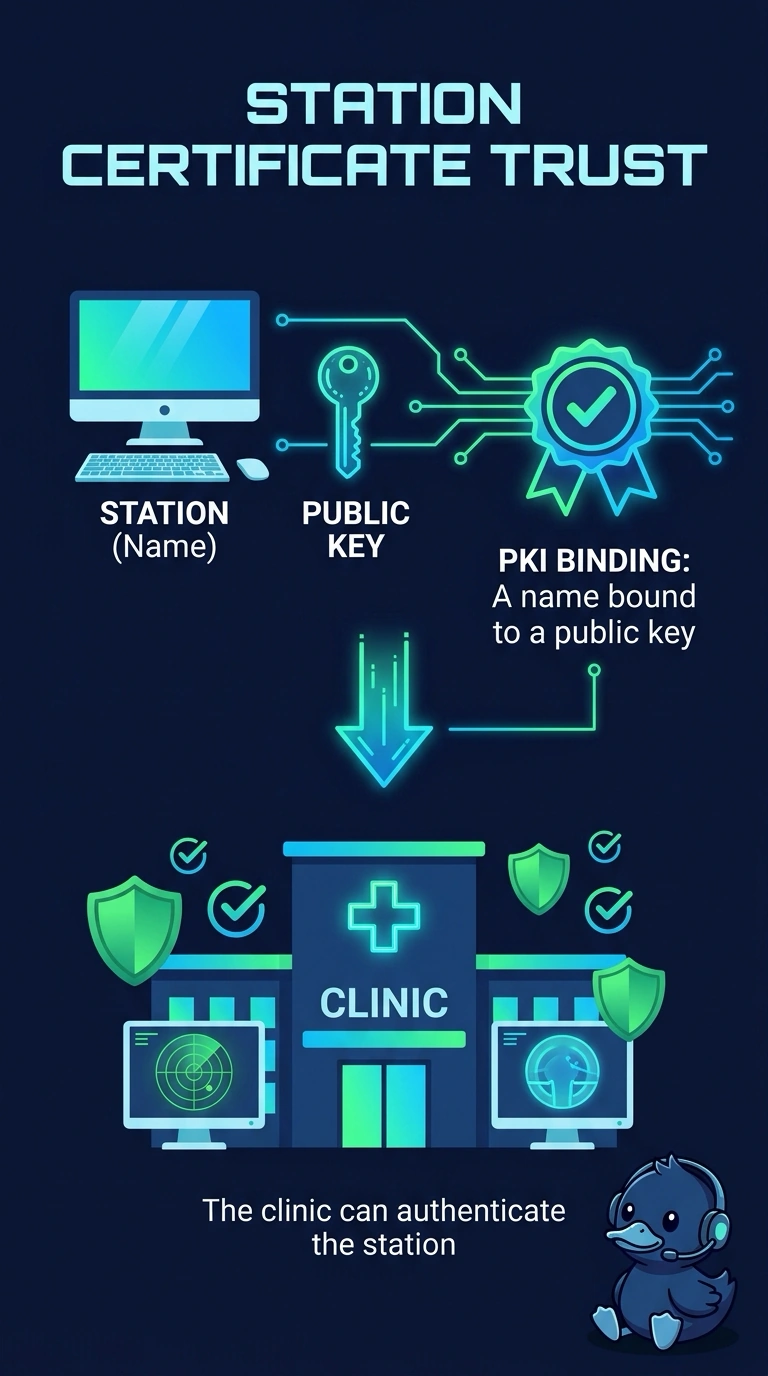
A certificate chain is an introduction from someone the clinic already trusts, not a cloak and not a stopwatch. You use that chain as a public-key binding of a name to a key so the station can be authenticated. The trap is saying it hides NetFlow, replaces the private key, or scores time to detect.
Full Explanation
A certificate chain links the station certificate back to a hospital authority the clinic trusts. That public-key infrastructure binds the station name to the public key in the certificate so the peer can be authenticated. The chain is for "A PKI binding of a name to a public key so the clinic can authenticate the station". NetFlow is a separate record of conversations. The chain does not hide those records, so "Hiding the station NetFlow so the clinic cannot see the station conversations" fails. The station still needs its private key to prove it holds the key that matches the certificate. The chain does not replace that proof, so "Removing any need for a private key on the station, with the chain alone proving possession" fails. Time to detect is a SOC clock for how long an incident sat before detection. A certificate chain is not that metric, so "Recording a SOC time-to-detect figure for how fast the clinic accepted the station" fails. Exam caveat: a valid chain checks the name-to-key binding against a trust anchor, and proof that this station still holds the private key is the handshake, not the chain alone. Operational check: validate the chain to the hospital authority and confirm the station completes an authenticated handshake, while flow records on that path continue to be collected.