
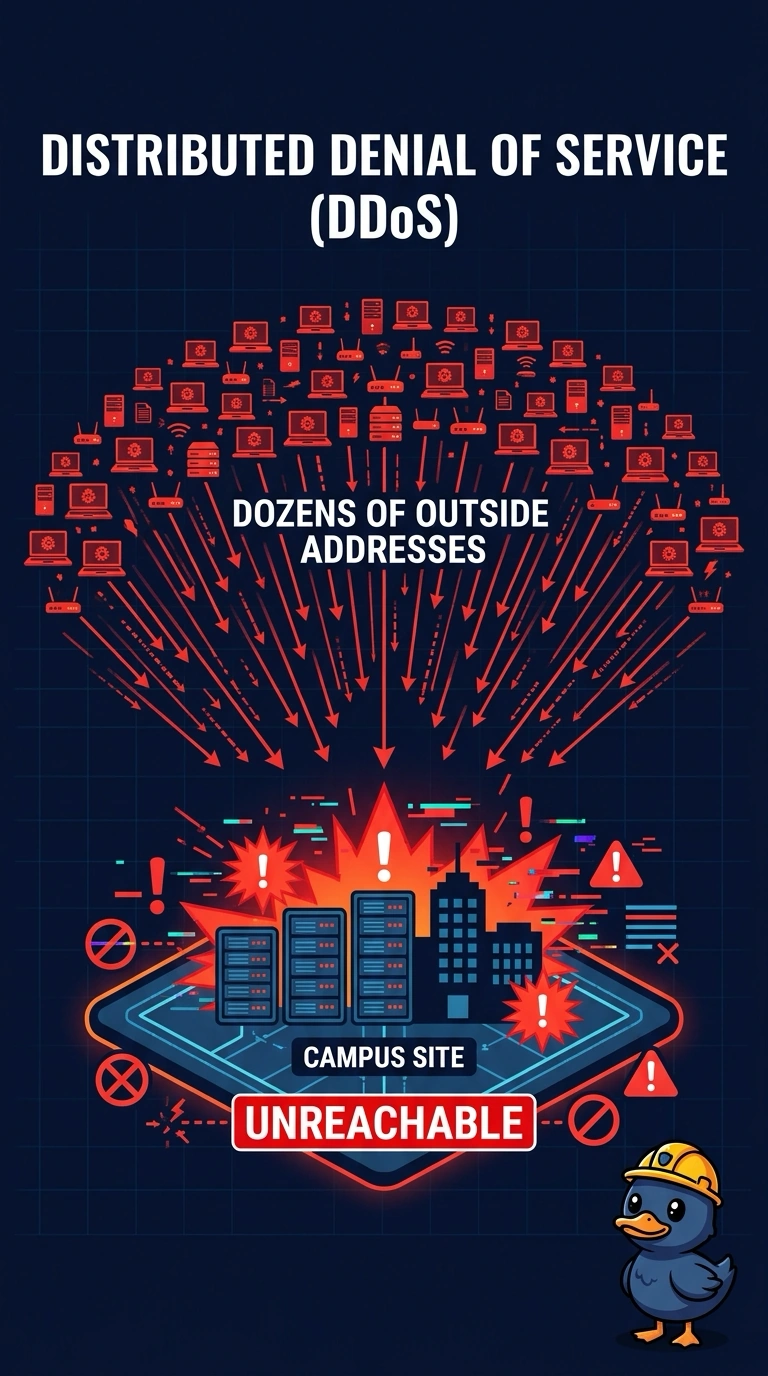
Dozens of outside addresses send the same request to a university, and the public campus website becomes unreachable for students. Which attack class fits?
Select an answer to reveal the explanation.
Short Explanation
Cars entering from every ramp can stop a highway even when no single driver is the story. You call many outside addresses knocking the campus site over a distributed denial of service. The trap is blaming one unplugged switch, a database query, or a stolen password.
Full Explanation
The right selection is "Distributed denial of service from many outside addresses, leaving the campus site unreachable". Many external sources send the same request and the effect is loss of use of the site, which is the shape of a distributed denial of service. The statement "One insider unplugging a single campus switch and taking the public website offline by that act" would be a local physical act by one person, and the report is dozens of outside addresses sending traffic. The statement "SQL injection that returns or changes database rows on the public campus website" would show a query changing or returning database rows, and the symptom here is that the site cannot be reached. The statement "A stolen student password used to sign in, with no effect on whether the site stays up" would be an authentication event, and a single stolen password does not explain a crowd of sources or an unreachable site. Exam caveat: a local outage can also take a site down, so the source pattern is what selects the distributed class. Operational check: count distinct outside addresses sending that request during the window when students cannot reach the site.