
At an agency, a workstation browsed a site and the only saved record is a web-filter line that contains the URL and a category. What can that saved line not show?
Select an answer to reveal the explanation.
Short Explanation
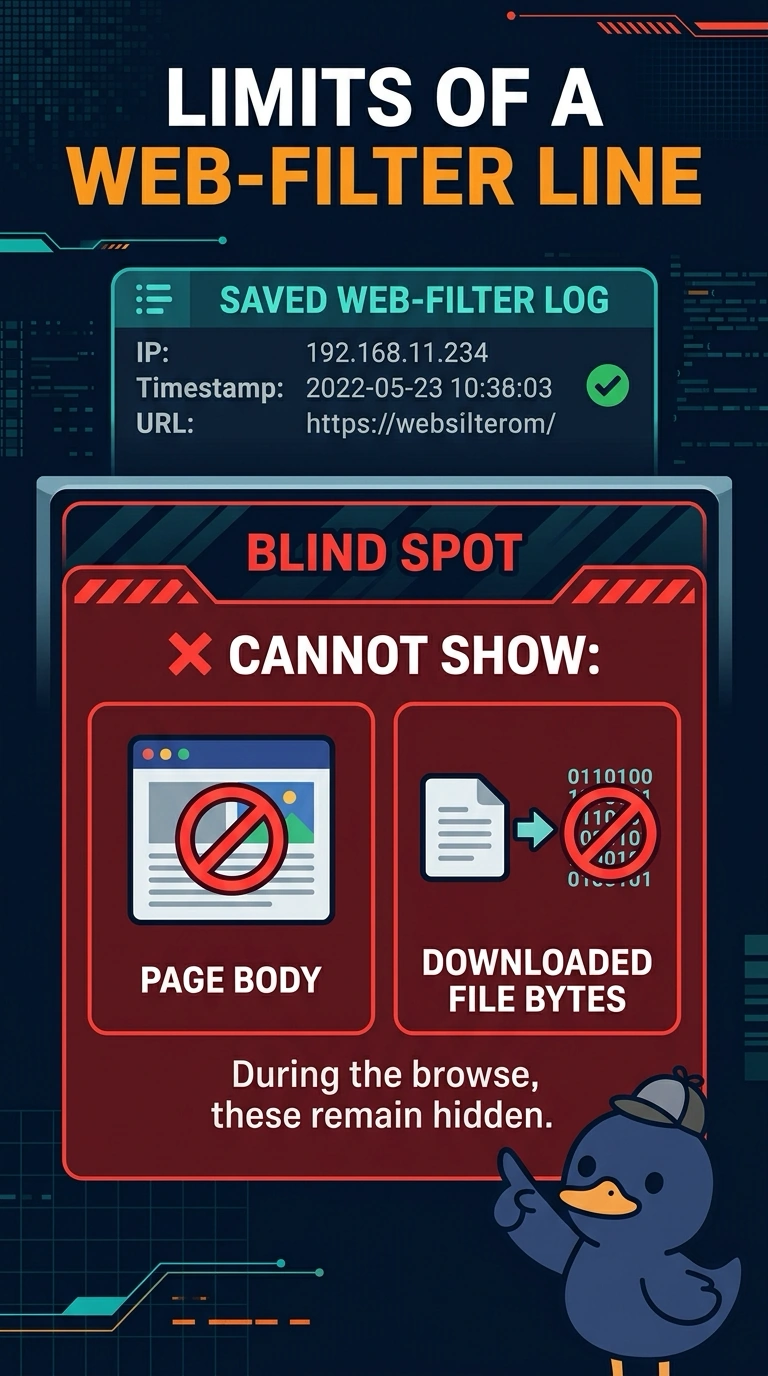
A library card tells you the title and not the pages inside the book. This web-filter line can carry the URL, the category, and the time, and it cannot carry the page body or the downloaded file. The trap is treating a one-line verdict as a full copy of the visit.
Full Explanation
A web-filter line that stores a URL and a category is a verdict about the request, not a copy of what the browser received. The page body and the bytes of any file the workstation downloaded during that browse are exactly what that line cannot show. The URL the workstation requested, already written on the saved web-filter line, is present and is not the missing piece. The category the filter assigned to that URL when it logged the request is the other field the scenario saved. The time the filter recorded the request beside the URL and the category is part of the same log line, not a hidden payload. That line can support a timeline of the request and the filter's classification, and it cannot be carved back into the page or the downloaded file. Analysts who need those bytes still have to find a record that kept them. Exam caveat: a different product that stored the full object would be a different record; this agency saved only the URL and category line. Operational check: open that line and confirm the fields in hand are the URL, the category, and the time, then look to a capture or a stored object if the file bytes are required.