
Engineers at a SaaS company can name the application on a flow even when the traffic uses a port that is not the well-known port for that application. Which technology supplies the application name?
Select an answer to reveal the explanation.
Short Explanation
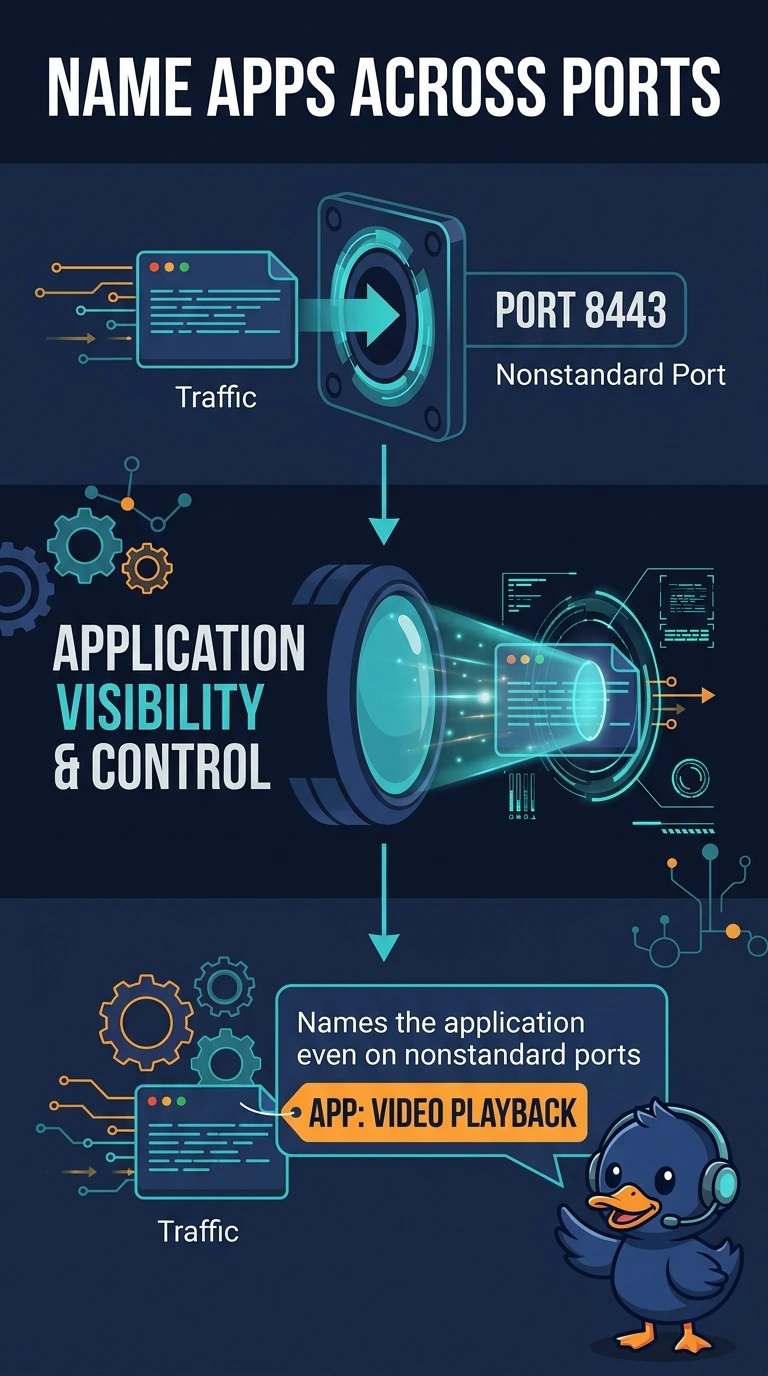
You recognize a delivery by the cargo, not by the dock number painted on the door. Naming the application on a nonstandard port is application visibility and control at your SaaS company. A port-only allow, raw byte counts, or one laptop firewall cannot supply that name.
Full Explanation
Applications move off their familiar ports, and a control that only reads the port number will misname them or refuse to name them at all. Application visibility inspects enough of the flow to identify the application and can attach that name even when the port is unfamiliar. That is the technology the network team is using. Application visibility and control that names the application even on a nonstandard port. A stateful allow decision that recognizes the flow only by the TCP or UDP port number it carries can permit the socket and still have nothing to say about which application opened it. Counters are thinner still. NetFlow byte and packet counters for the flow, with no application name attached to it tell you volume, not identity. A single endpoint filter is the wrong vantage point. A host firewall on one laptop, limited to the inbound rules of that single machine never sees the company's flows as a set and does not name applications on the network path. Exam caveat: a well-known port is a hint, not an application ID. The exam separates a stateful port decision from application visibility for exactly the case where the port and the application disagree. Operational check: find a flow on an unregistered high port and confirm the application log names the software while the stateful rule cites only the port.