
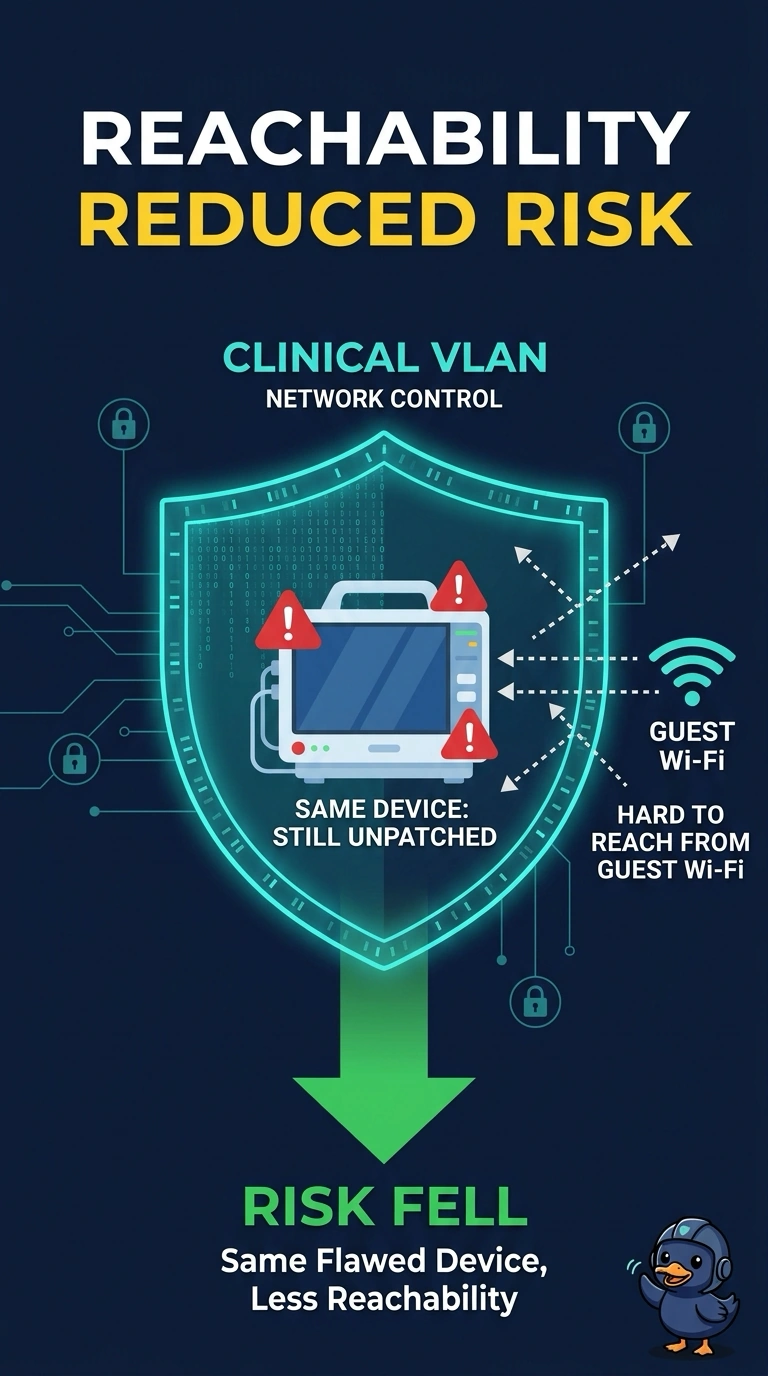
At a hospital, the clinical VLAN is cut off from guest Wi-Fi. The same unpatched device is still flawed, yet it is much harder to reach from that guest network. What changed?
Select an answer to reveal the explanation.
Short Explanation
Locking a side door does not repair the broken lock. You reduced risk by making the same unpatched hospital device harder to reach, and the flaw is still present. The trap is claiming the vulnerability vanished, the actor was arrested, or the exploit code was erased.
Full Explanation
A control can change exposure without removing the weakness. Cutting the clinical VLAN off from guest Wi-Fi leaves the device unpatched and makes a path from that guest network much harder, so the chance of a successful reach drops. What changed is Risk fell after a control made the same unpatched device much harder to reach. Risk combines a weakness, a credible path, and the impact if that path is used, and segmentation attacks the path. The vulnerability itself disappeared once the clinical VLAN lost guest Wi-Fi overstates the change, because the device is still unpatched and the flaw remains. The threat actor was arrested by the cut between the clinical VLAN and guest Wi-Fi confuses a network control with law enforcement, and nothing in the scenario describes an arrest. The public exploit code was erased from the internet by that one VLAN cut confuses a local segmentation change with deletion of code hosted elsewhere. Exam caveat: risk reduction and vulnerability remediation are different events, and a control can lower risk while the vulnerability is still open. Operational check: confirm the segmentation rule is in place and that the device remains listed as unpatched, so the residual weakness stays on the remediation queue.