
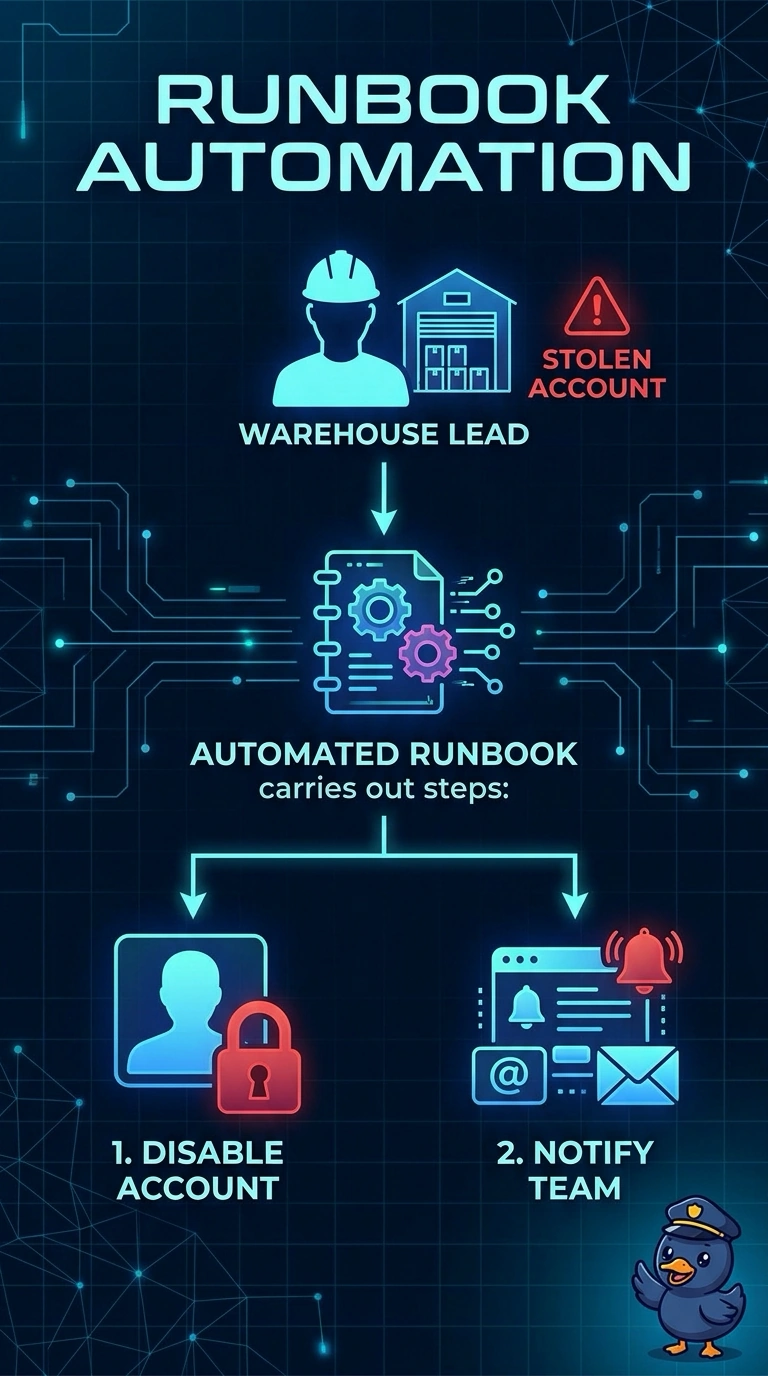
At a logistics hub, a documented set of steps disables a stolen account and notifies the warehouse lead, and a tool executes those steps without an analyst typing each one. Which term names that arrangement?
Select an answer to reveal the explanation.
Short Explanation
A recipe card does nothing until a machine actually cooks each step for you. Here a tool runs the documented disable-and-notify actions without an analyst typing them. The trap is an alert that only waits, a hand-typed access list, or a whiteboard sketch.
Full Explanation
Runbook automation that has a tool carry out the documented disable and notify steps is the term. The hub has a documented procedure, disable the stolen account and notify the warehouse lead, and a tool executes those steps instead of an analyst typing each one. The defining piece is execution of the written steps, not the mere existence of a document. A SIEM correlation rule that raises an alert and then waits for a person to take action stops at notification. A correlation rule that raises an alert and waits does not itself disable the account or send the warehouse notice. A firewall access list an engineer types by hand on the warehouse edge router is a manual control an engineer enters on a router. Hand entry is the opposite of a tool running a documented procedure, and an access list is not the account-disable step in this case. A threat model sketched on a whiteboard during a design discussion at the hub is a design discussion. A sketch of threats does not disable a live stolen account or notify the lead when the account is found. Exam caveat: automation runs the steps that were written, including a bad step, so the term does not mean the outcome is automatically correct. Operational check: review the stolen-account procedure and the tool's latest run, and confirm that run disabled the account and sent the notice to the warehouse lead.