
At a retailer, the team encrypts card files at rest and also stores a separate hash of each file. What is that separate hash for?
Select an answer to reveal the explanation.
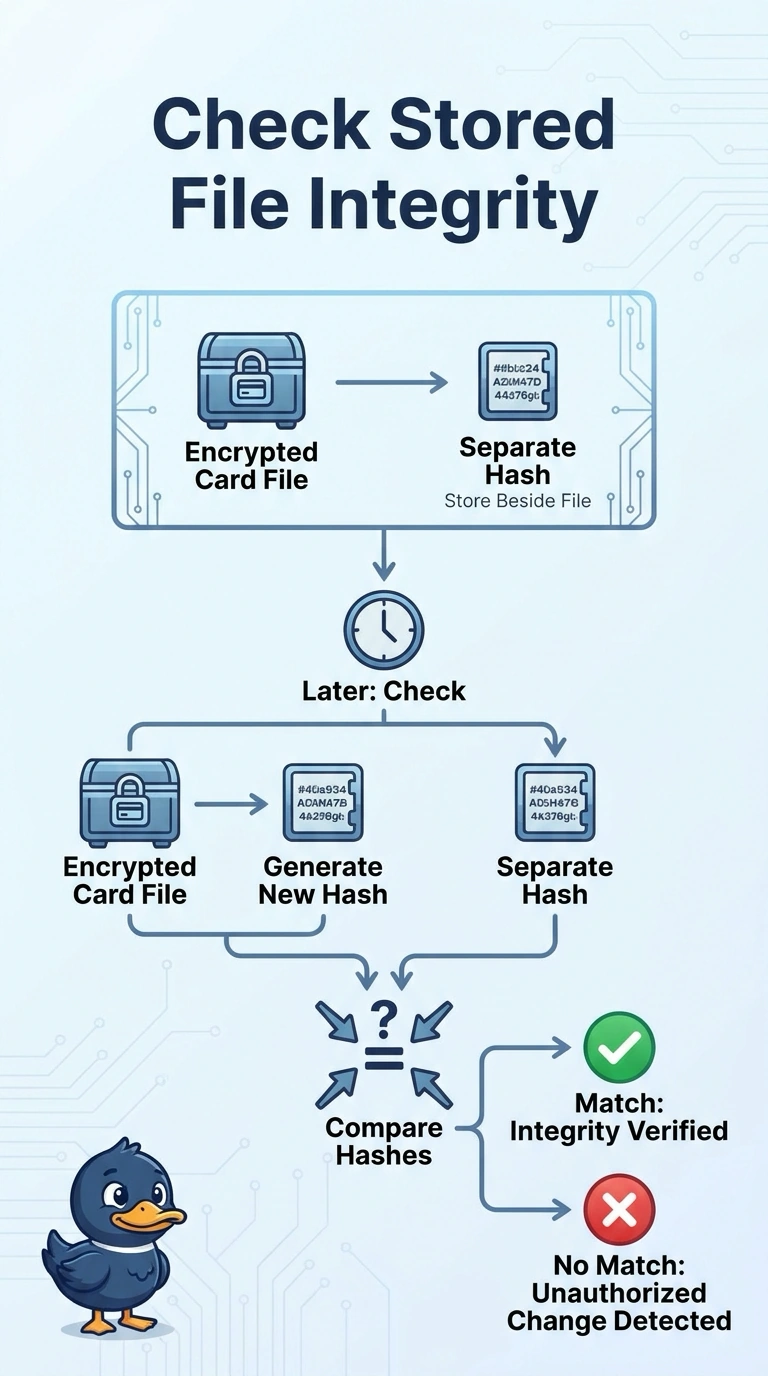
Short Explanation
Encryption is the locked drawer, and a separate seal tells you whether the papers inside were swapped. You already hide the card files, so the extra hash is there to detect a change. The trap is saying the hash hides the file, keeps the store up, or names the clerk.
Full Explanation
Detecting an unauthorized change to a stored card file, an integrity check beside the encryption is what the separate hash is for. A hash of a stored file changes when the file changes, so a later comparison shows whether the card file still matches the value recorded when it was stored. It detects unauthorized change, which is integrity. Hiding each card file so an unauthorized reader cannot see the cardholder contents stored at rest is the job encryption is already doing. Hiding cardholder contents from an unauthorized reader is confidentiality. A hash does not conceal the file. Someone who can read the bytes can still read them if the file is not encrypted, hash or no hash. Keeping store systems online so clerks can reach card files during a sale at the register is availability, keeping the store systems up so clerks can reach the files during a sale. A stored hash does not keep a system online and does not restore a down register. Proving the clerk who logged in at the register at the time the card file was saved would tie the save to the clerk who logged in. A content hash does not identify the clerk. Exam caveat: hashing detects change and does not encrypt. If the team hashed the files and did not encrypt them, confidentiality would still be open. Here both controls exist, and the question is only what the hash adds. Operational check: alter a test copy of a card file and confirm the stored hash no longer matches, while the encryption control remains a separate setting.