
A manufacturer folder holds unreleased product designs that are not about a person and are not passwords. Which data class fits that folder?
Select an answer to reveal the explanation.
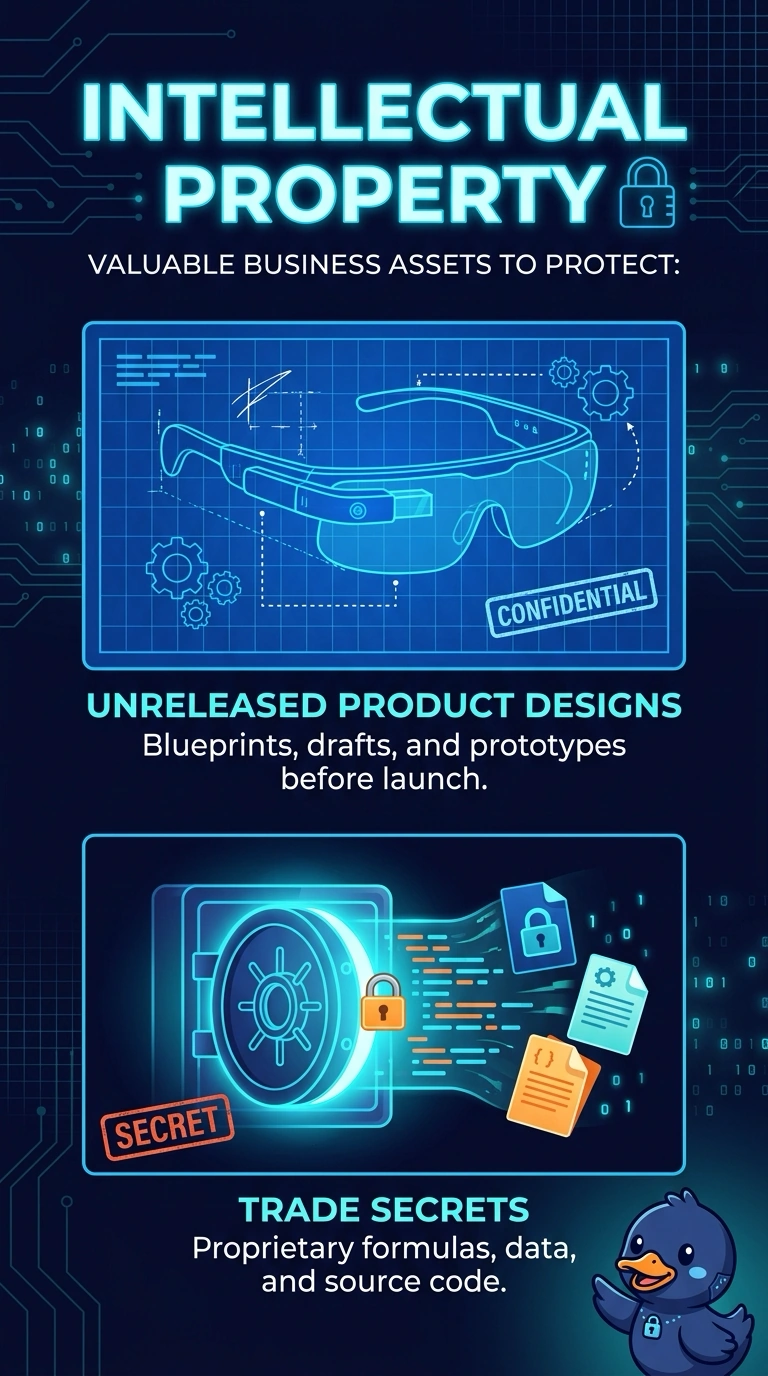
Short Explanation
A locked blueprint drawer is not a patient chart, a phone book, or a key ring. You are looking at unreleased product designs, so the class is intellectual property. The trap is reaching for personal data, health records, or credentials when the folder is not about a person and holds no password.
Full Explanation
The folder holds unreleased product designs. The files are not about a person and they are not passwords, so the class is intellectual property: trade secrets, designs, and source. The fit is "Intellectual property: unreleased product designs and trade secrets, not a person or a password". Personally identifiable information identifies a person, and this folder is described as not about a person, so "Personally identifiable information: data that names or can single out a living person" does not fit. Protected health information is clinical data about care, and product designs are not health records, so "Protected health information: clinical records tied to a patient's care and treatment" does not fit. Personal security information means usernames, passwords, and other credentials, not a general sensitivity label, so "Personal security information: usernames, passwords, and other credentials used to authenticate" does not fit. Exam caveat: a drawing that also names an employee or embeds a password would carry another class in those fields, but this folder is described as neither. Operational check: mark the folder as intellectual property in the data inventory, then spot-check files for names, health data, and credentials before leaving that as the only label.