
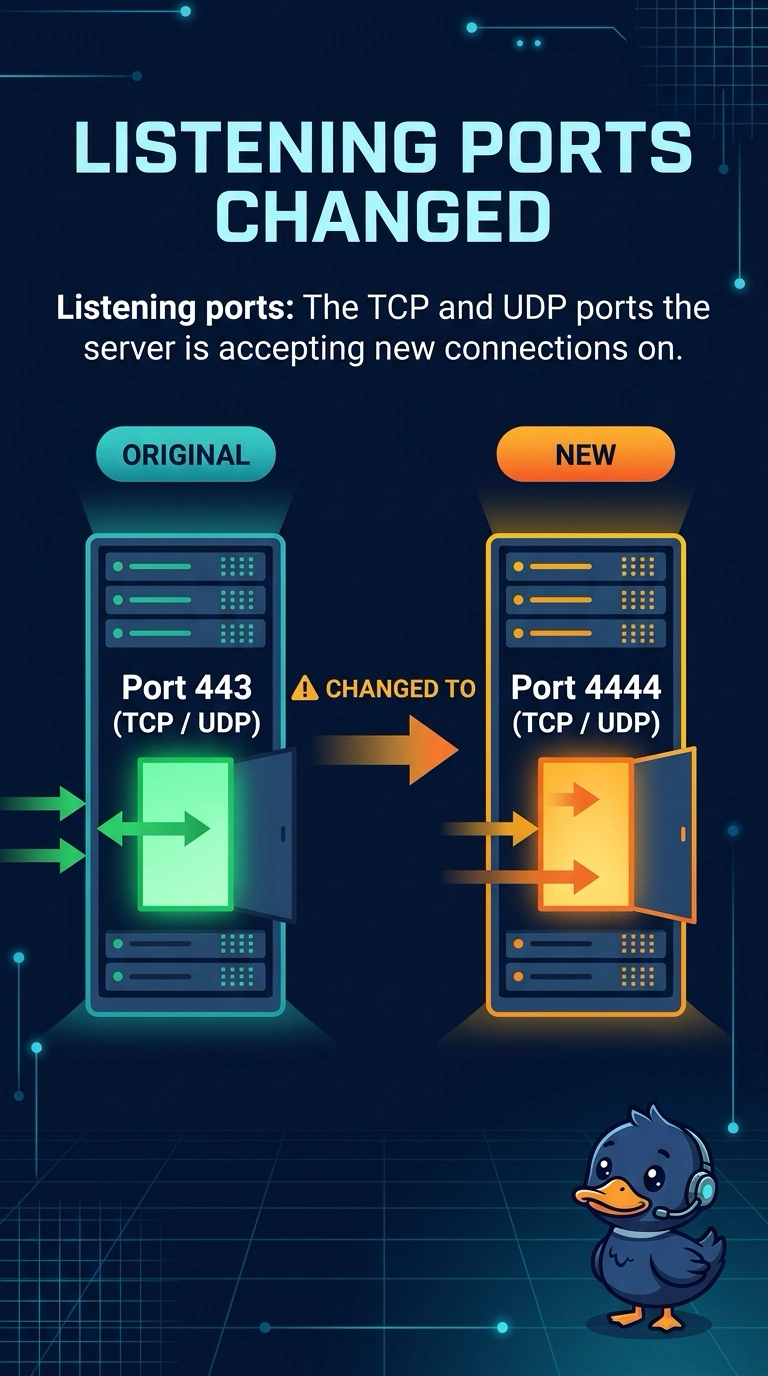
At a manufacturer, a server that should listen only on port 443 also starts listening on port 4444. Which server-profile element changed?
Select an answer to reveal the explanation.
Short Explanation
A building profile lists the doors that are actually open, not how busy the highway is. You update the server profile where a new listening port appeared beside 443. The trap is scoring WAN volume, the call list, or the cipher on the original listener.
Full Explanation
A server profile includes the ports the host is listening on, along with users, processes, tasks, and applications. A host that should accept connections only on 443 and then also listens on 4444 has changed its listening ports, whatever service owns the new socket. The element is "Listening ports, the TCP and UDP ports the server is accepting new connections on". "Total WAN throughput, the volume of traffic the plant path carried during the shift" is a network-profile measure of volume on a path, not a fact about which sockets this server opened. "The incident communication plan, the list of who to notify when a plant system fails" is part of incident handling, and a new listener does not rewrite who gets called. "The certificate cipher suite, the algorithms named for the TLS listener on port 443" describes how an existing TLS listener negotiates, and the new fact is a second port, not a change to the algorithms on 443. Exam caveat: listening ports are a server-profile field, while total throughput belongs to the network profile, so a new socket is not answered by a WAN counter. Operational check: list the listening sockets on the host, confirm 4444 is new against the baseline that allowed only 443, and identify the process bound to that port.