
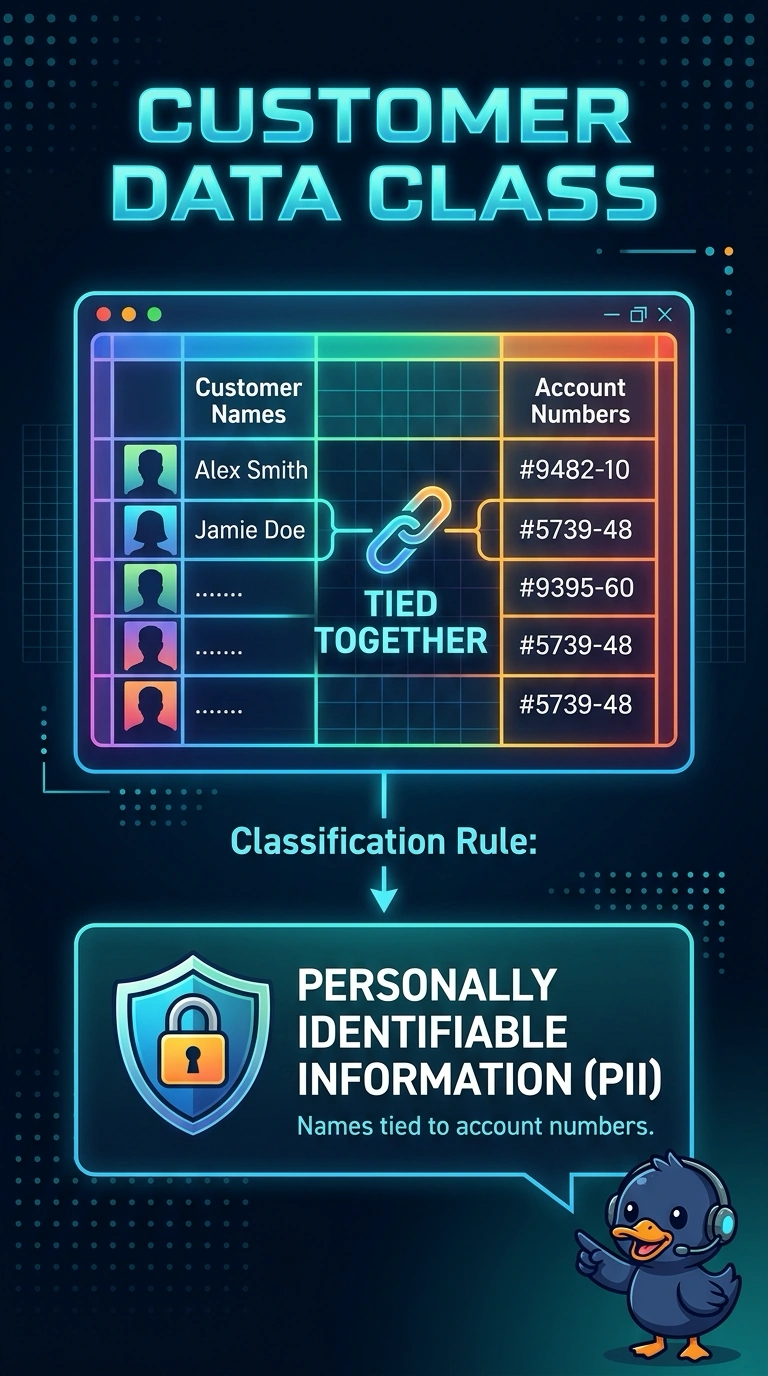
At a bank, a spreadsheet lists customer names and account numbers and contains no passwords. Which data class fits that spreadsheet?
Select an answer to reveal the explanation.
Short Explanation
An index card with a customer's name and account number identifies a person, and it is not a chart or a key. You classify that spreadsheet as personally identifiable information. The trap is calling it health data, credentials, or a trade secret made out of someone's identity.
Full Explanation
Personally identifiable information is data that identifies a person, and a name tied to an account number does that. The spreadsheet fits Personally identifiable information, the class for customer names tied to account numbers. Protected health information, the class for a diagnosis or other record about a patient, needs health content, and this sheet has none. Personal security information, the class for usernames, passwords, and other credentials, is the credential class, and the sheet contains no password. Intellectual property, treating the customer's identity details as a private trade secret, misfiles a person's identifiers as designs or source. Names paired with account numbers identify customers even when the sheet stores no secret and no clinical fact, so the identifier class is the one that fits. Exam caveat: add a password to the same sheet and the credential class would also apply, but this sheet has names and account numbers only. Operational check: scan the columns for a password, token, or diagnosis before you stop at the identifier class.