
An MSSP customer asks who performs detection and analysis on Tuesday night, when the customer's alerts need a person to review them. Which role does that work?
Select an answer to reveal the explanation.
Short Explanation
The night clerk is the person on duty, not the owner of the building. You want the analysts on shift when an MSSP customer needs detection and analysis on Tuesday night. The trap is handing that job to the board, a patch task, or the landlord.
Full Explanation
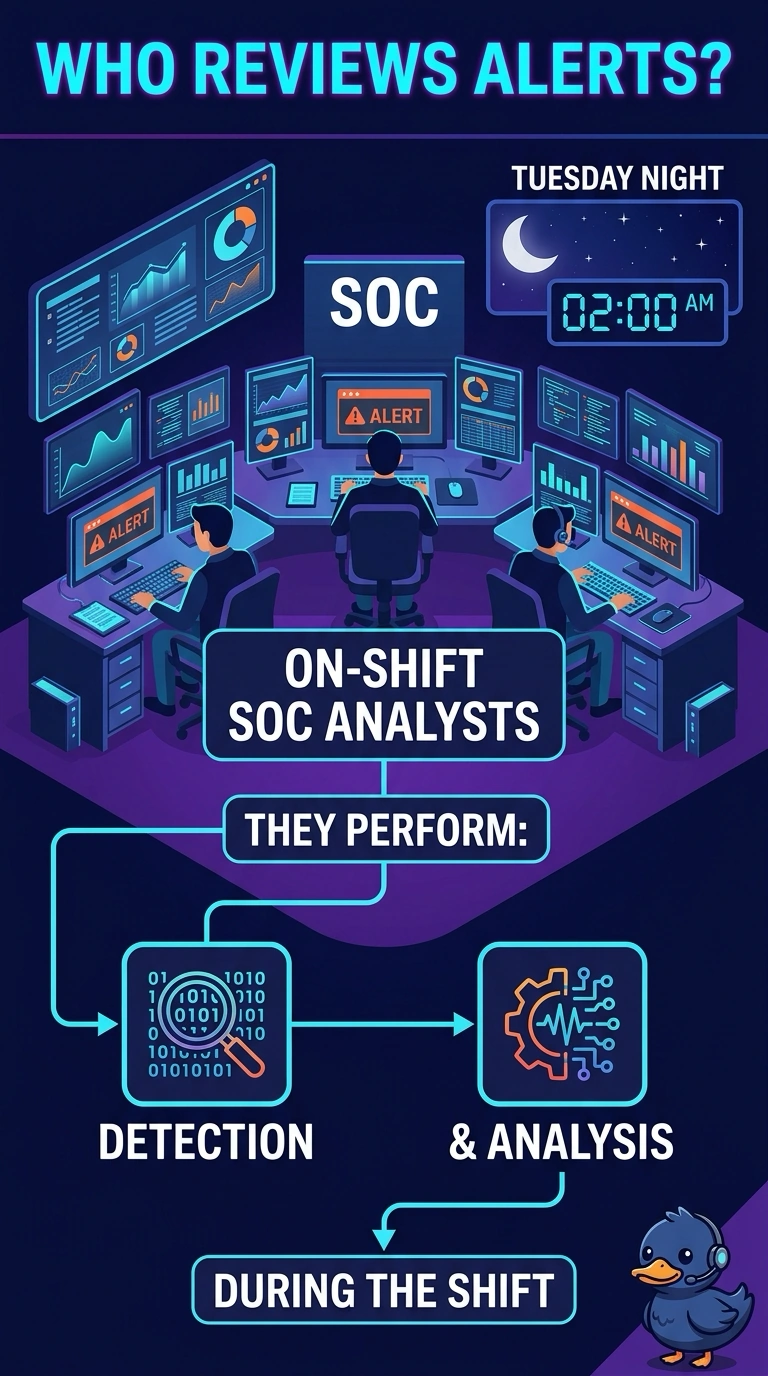
Detection and analysis is the phase in which people examine alerts, decide what is real, and scope the event. On Tuesday night that work belongs to the staff who are assigned to do it. The role that fits is The on-shift SOC analysts who perform detection and analysis during the shift. They query the customer's queue, read the context, and escalate inside the handling plan. The board of directors, treated as the people who query the SIEM that night is a governance body, not the shift that triages alerts. The Tuesday-night patch job, treated as the team that investigates the alerts is an automated change task, and deploying patches is not the same work as analyzing an alert. The building landlord, treated as the person who reviews the customer's queue has no duty in the customer's detection process. Exam caveat: a stakeholder question asks who acts in a phase, and a tool that runs on a schedule is not a person performing detection and analysis. Operational check: read the shift roster and the plan's role table and confirm an analyst queue covers Tuesday night, rather than assuming a board calendar or a patch window does that job.