
A logistics hub finished restoring warehouse systems yesterday and confirmed that operations are back to normal. What does the incident-handling process still require?
Select an answer to reveal the explanation.
Short Explanation
The locker-room debrief is still part of the day after the scoreboard is final. You finished recovery yesterday, and the handling process still wants the lessons from that work. The trap is another containment pass, throwing the plan away, or attacking the host again as a test.
Full Explanation
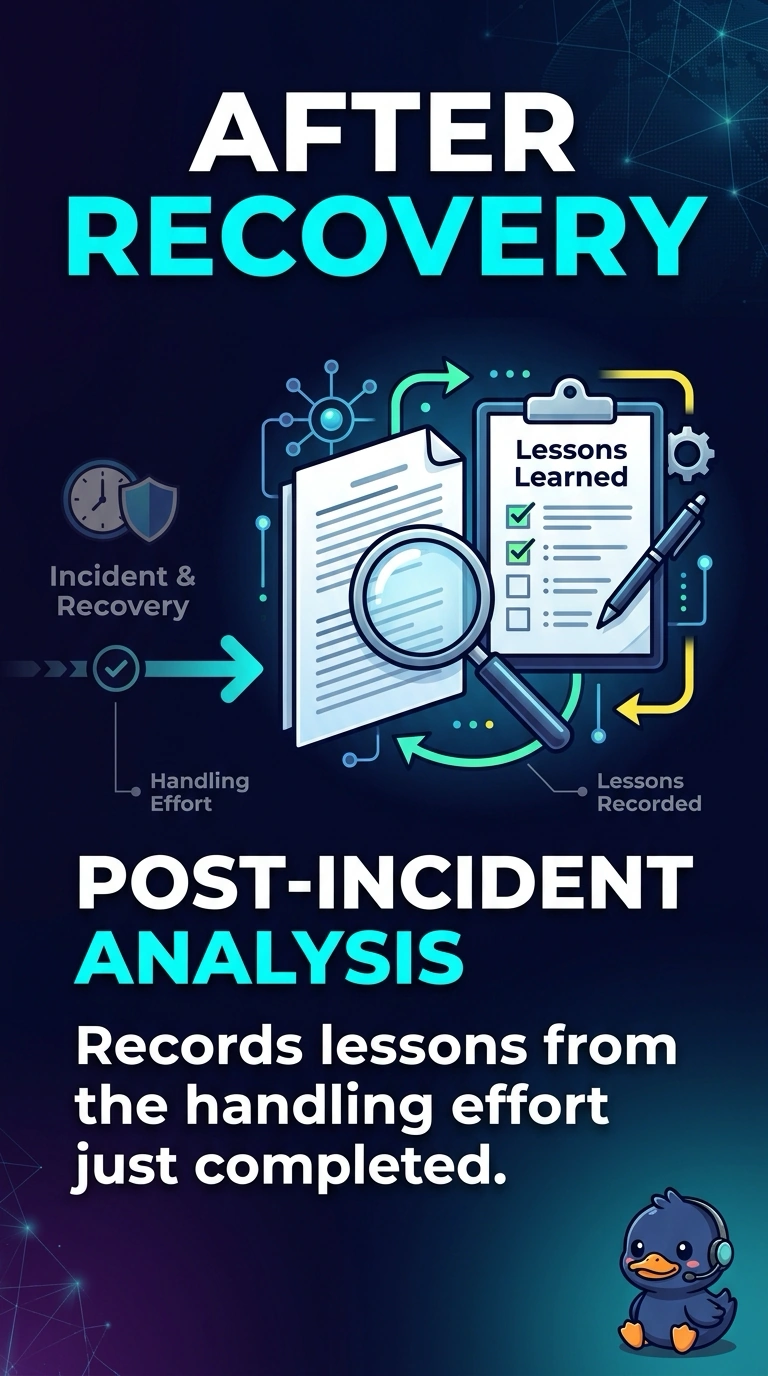
Post-incident analysis that records lessons from the handling effort just completed is what remains. Recovery is finished and operations are back, and the handling process still requires a structured look at what happened, what worked, and what should change. That review is post-incident analysis, the lessons-learned work, and it is not optional cleanup after the systems are restored. Another containment pass against warehouse hosts that are already restored and in service repeats a phase the hub has already left. Containment is for limiting an incident that is still live, not for hosts that are restored and back in service. Retirement of the incident plan so the next event starts from a blank procedure would discard the procedure the next event depends on. Finishing one incident does not retire the plan; the review should improve the plan, not erase it. A fresh exploit of the same host to prove the recovered service can be broken again would open a new harmful action against a recovered host. Lessons come from reviewing the incident that already occurred, not from attacking the service again to see if it breaks. Exam caveat: NIST SP 800-61 Rev. 3 maps post-incident learning onto CSF 2.0 Functions. Use the exam name post-incident analysis, and do not treat the older four-phase list as the only model Rev. 3 describes. Operational check: schedule the review, record what slowed detection or recovery at the hub, and update the written procedure from that record before the next warehouse incident.