
At a hospital, a clinical device is live on the network and does not appear in the inventory the SOC uses. Which management practice failed?
Select an answer to reveal the explanation.
Short Explanation
You cannot put a truck on the maintenance schedule if it is not on the yard list. This clinical device is on the hospital network and missing from the SOC inventory, so asset management failed. The trap is patching a device you already track, wiping phones, or picking a cipher suite.
Full Explanation
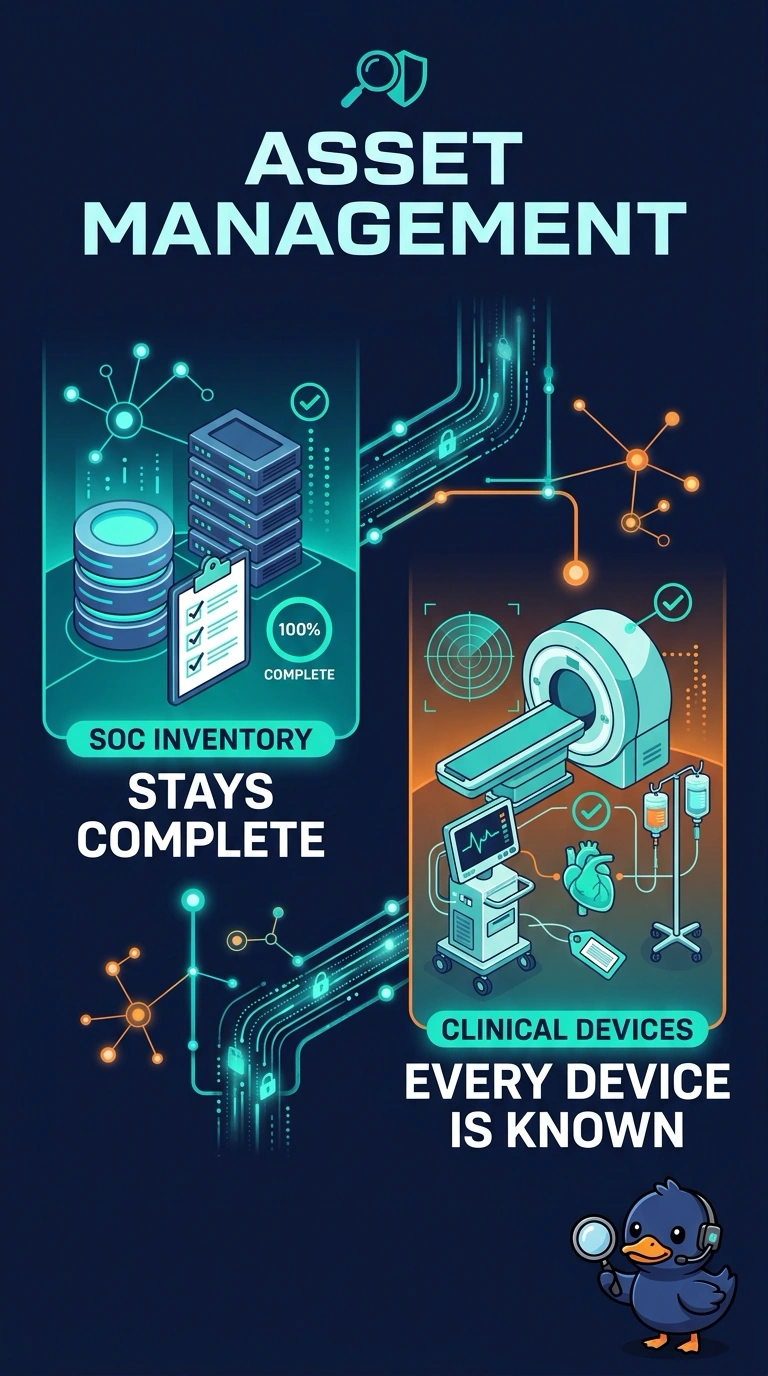
Asset management, so the SOC inventory stays complete and every clinical device is known is the practice that failed. Asset management keeps the inventory the SOC relies on aligned with what is actually on the network. A clinical device is live and is absent from that inventory, so the list is wrong. Patch management for a device the inventory already lists and the SOC already tracks each cycle applies fixes to a device the inventory already lists and the SOC already tracks. This device is not listed, so the failure shown is not a missed patch on a known asset. Patching cannot be the practice that failed for an object the list does not contain. Mobile device management that locks and wipes hospital phones when staff leave the job locks and wipes hospital phones when staff leave. The scenario is a clinical device on the network, not a phone enrollment, and a phone-wipe control would not explain a missing inventory row. A cipher-suite choice on the imaging VPN that selects the algorithms used in the handshake selects algorithms for an imaging VPN handshake. Cipher choice is a configuration of a tunnel. It does not decide whether a clinical device is present in the SOC inventory. Exam caveat: patching is one input to vulnerability handling, and it depends on knowing the asset. The gap demonstrated here is the missing inventory entry. Operational check: compare live observations on the clinical network with the SOC inventory and investigate every device that appears only on the wire.