
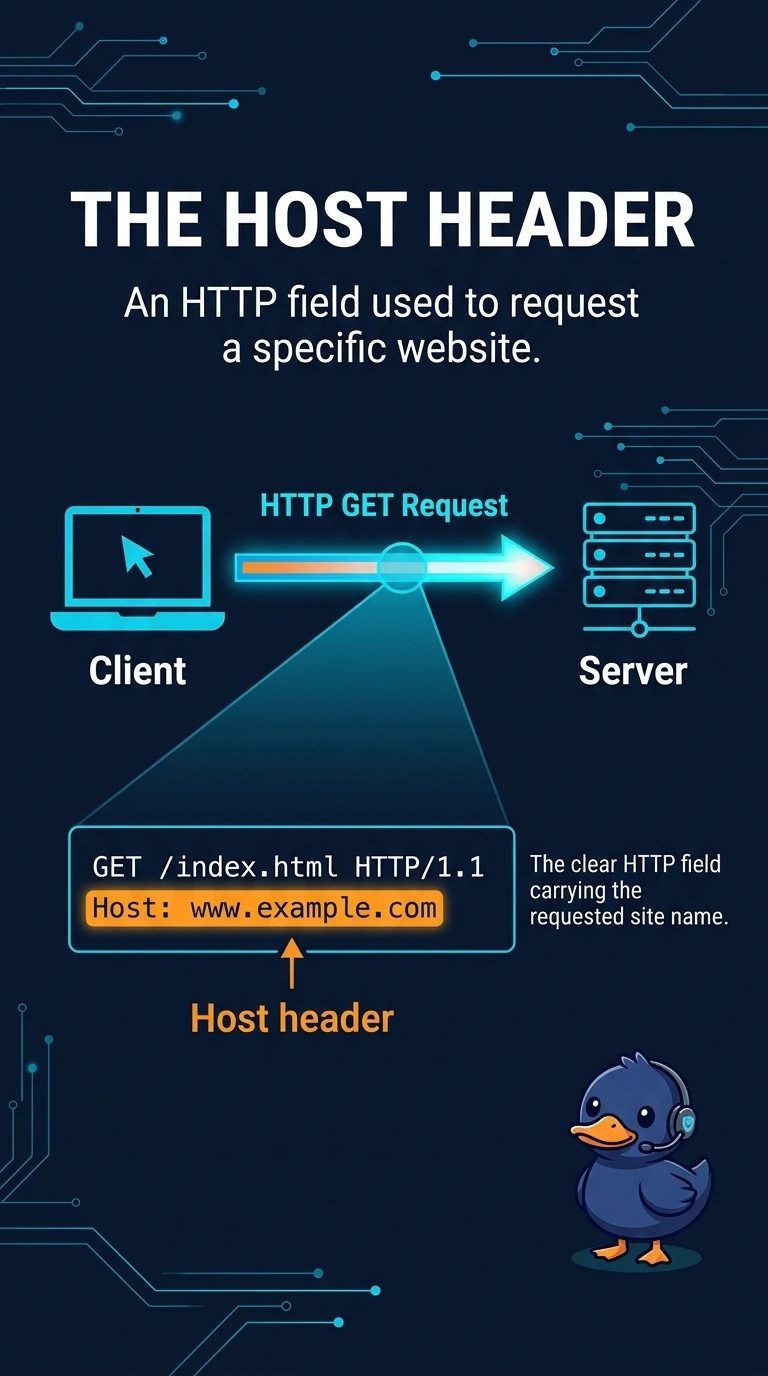
At a SaaS company, a cleartext HTTP request line is GET and the Host header names a look-alike domain. Which field carries the site name the client asked for?
Select an answer to reveal the explanation.
Short Explanation
The name on a reservation card is the line the guest wrote, not the baggage-tag number or the truck's tailgate. You are reading clear HTTP, and the site name the client asked for sits in the Host header. The trap is the acknowledgment number, the Ethernet trailer, or the IP identification field.
Full Explanation
In clear HTTP, the client places the site name in the Host header of the request. The field that carries the look-alike domain is The Host header, the clear HTTP field that carries the site name the client asked the server to open. The TCP acknowledgment number, a transport field that only tracks bytes already received, counts data in the session and never names a site. The Ethernet trailer, the frame ending that carries a check sequence and not a requested site, is a frame check, not an HTTP field. The IP identification field, a packet value used to match fragments and not to name a site, helps reassembly and does not hold the hostname. The request line carries the method and the path, while the site name the client asked for is the separate Host field on that same readable request. Exam caveat: this capture is readable HTTP, so the site name is in the Host header; the acknowledgment number, the trailer, and the identification field stay unrelated to that name. Operational check: display the GET and read the Host value against the look-alike domain before you decide which site the client requested.