
Three products sit on one link at a logistics hub, and an analyst must choose the product that can name an application command carried inside the payload. Which product does that?
Select an answer to reveal the explanation.
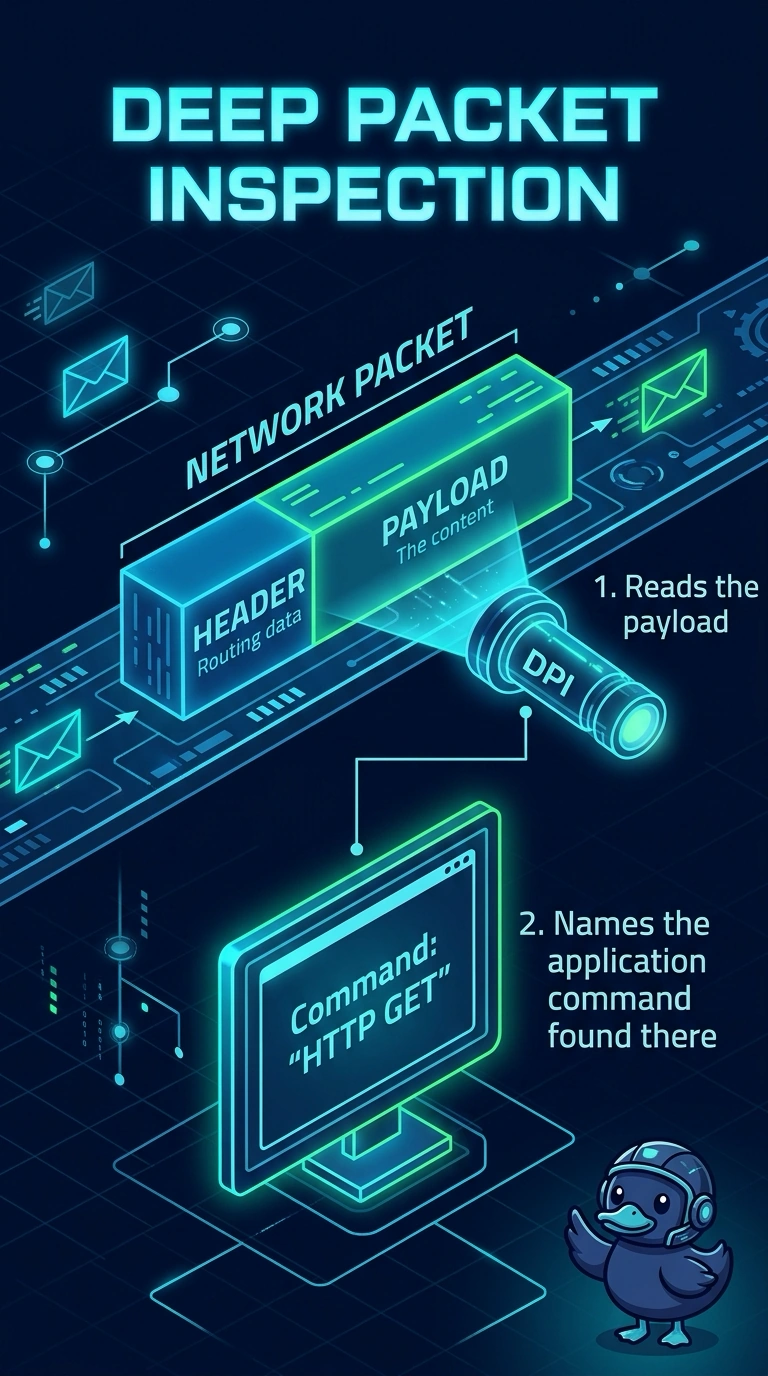
Short Explanation
A photocopier can hold an image of a form and still not tell you what command the form is giving. You need the product that reads the payload and names the application command inside it. The trap is a header filter, a handshake tracker, or a tap that only copies.
Full Explanation
Deep packet inspection that reads the payload and names the application command found there is the product that can name the command. Deep packet inspection reads application content in the payload and can identify a command that appears there, which is more than knowing the ports or knowing that a handshake finished. A packet filter that permits or denies using only addresses and ports from the headers permits or denies from addresses and ports in the headers. Header fields do not name an application command sitting in the payload. A stateful firewall that only tracks whether the connection handshake has completed tracks whether the handshake completed. Handshake state says the connection was established; it does not read or name a command inside the payload. A network tap that copies frames onward without naming an application command inside the payload copies frames, and the copy can contain the payload bytes, but the tap's job is the copy. Copying does not itself identify the application command; that identification is the inspection step. Exam caveat: a tap can feed a copy to a sensor that performs deep packet inspection. The tap does not become that inspection just by holding the bytes, and a tap still cannot drop the original packet. Operational check: confirm the log line that names the command cites content from the payload, not only the addresses, ports, or the fact that the handshake completed.