
At a hotel, a sensor outage left the guest network up while detection of that guest traffic stopped. Which design fits both of those results?
Select an answer to reveal the explanation.
Short Explanation
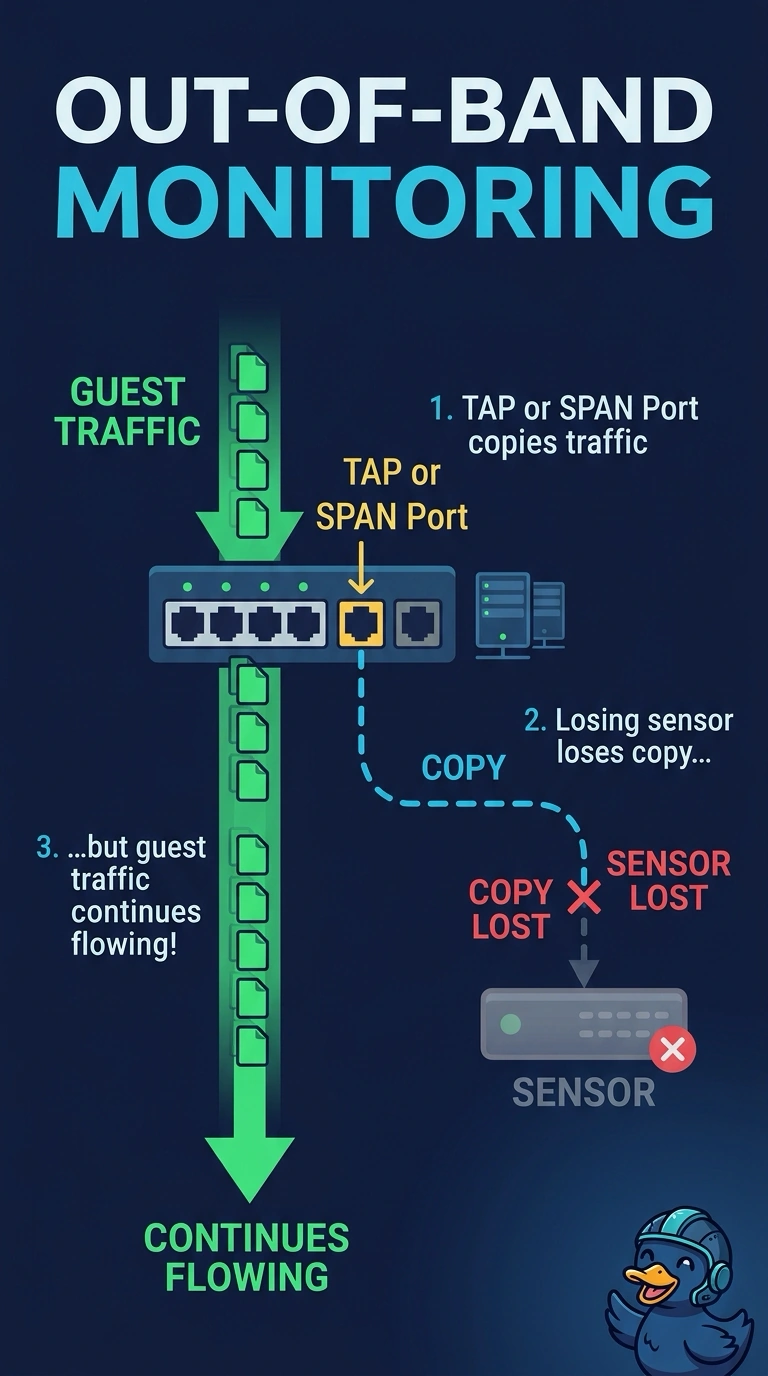
If the hallway camera dies and the lights stay on, the camera was watching a copy of the scene. You match guest traffic that stayed up, while detection stopped, to a tap or SPAN copy. The trap is an inline fail-closed path, a host-firewall outage, or a certificate expiry.
Full Explanation
Out-of-band monitoring receives a copy from a tap or a SPAN port. If that feed fails, detection stops and guest packets on the forwarding path keep flowing. Both stem results match loss of a copy. "Out-of-band monitoring on a tap or SPAN port, where losing the sensor loses the copy and leaves guest traffic flowing". Losing the sensor loses the copy and leaves guest traffic flowing, which is both observed results. "An inline fail-closed design that would have stopped guest traffic when the sensor lost power". An inline fail-closed design would have stopped guest traffic when the sensor lost power. Guest traffic stayed up, so that design does not fit the outage. "A host-firewall outage on guest laptops, blocking each guest device from the laptop itself". A host-firewall outage would block traffic on each laptop. The stem is a sensor outage with the guest network still up, not a filter failure on the endpoints. "Expiry of the guest-portal certificate, breaking new TLS handshakes for guests at the hotel". Certificate expiry would interfere with new TLS handshakes at the portal. It would not selectively stop detection while the guest network stayed up. Exam caveat: do not assign a fail-open or fail-closed default to inline devices from this item. Use the observation: traffic continued and detection stopped, which is loss of a copy. Operational check: confirm the sensor is fed by a tap or SPAN port, disconnect that feed in a maintenance window, and confirm guest sessions stay up while detection from that feed stops.