
At a hotel, a record says TCP from a guest device to port 443 was permitted, and the record names no application and no signature. Which technology produced that record?
Select an answer to reveal the explanation.
Short Explanation
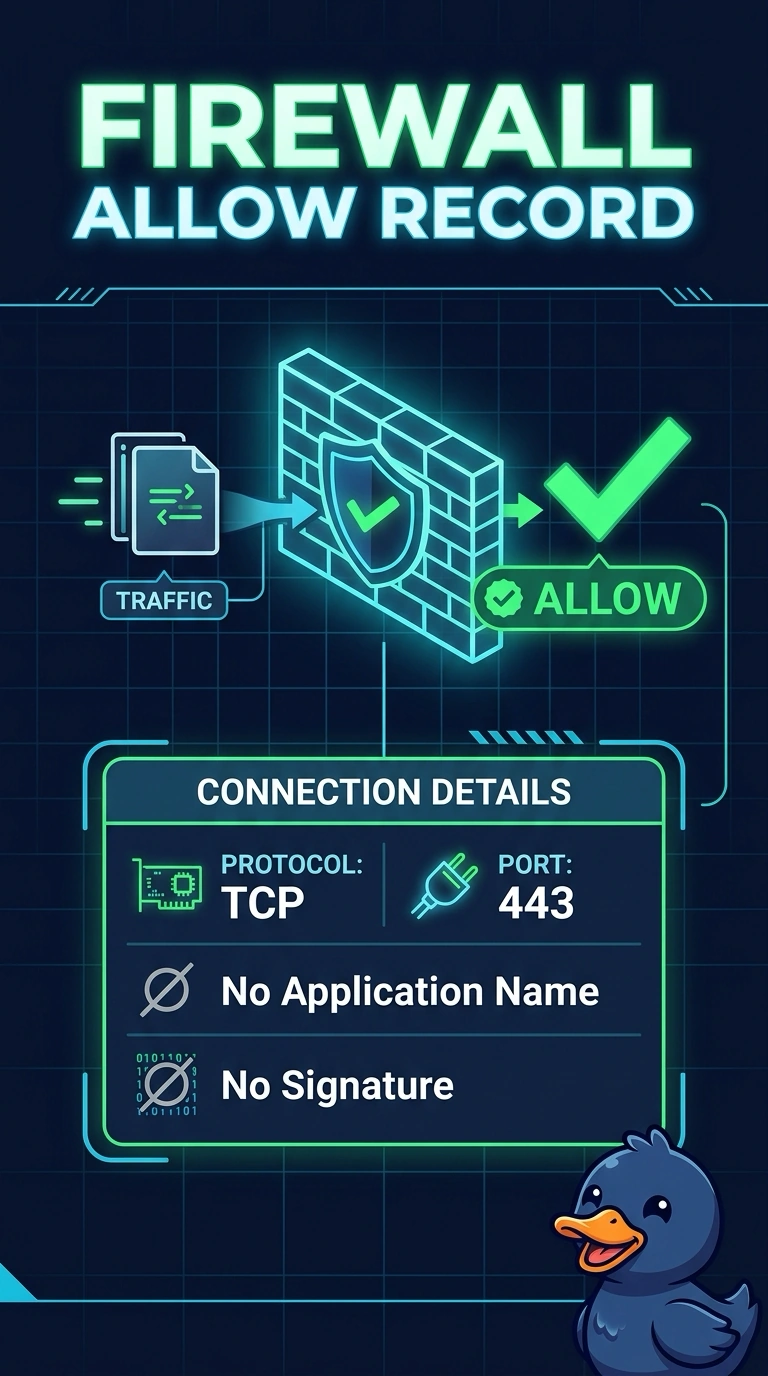
A door guard who only checks that you used the main entrance is not reading the paper in your hand. This hotel record permits TCP to port 443 and names no application and no signature, so it is a firewall allow. The trap is an intrusion signature, a proxy URL log, or an antivirus hit.
Full Explanation
A firewall allow that permitted TCP to port 443 with no application name and no signature matches a record whose whole decision is that TCP to port 443 was permitted. A firewall allow is a permit or deny on the connection. This hotel record has the permit, and it explicitly has no application name and no signature. That is as far as a basic firewall decision goes. An intrusion prevention signature that matched a known attack pattern and raised a verdict on the flow would include a known attack pattern and a verdict from that pattern. The record names no signature, so an intrusion-prevention match is not what was logged. A proxy log that records the guest, the full URL, and a category for the web request would name the guest, the full URL, and a category. None of those web fields are in the record. A permitted TCP session to port 443, without a URL, is not a proxy log. An antivirus detection that matched a file hash and quarantined a file on the guest device would name a file hash and a quarantine on the guest device. The record is about a permitted flow, not a file, and no hash appears in it. Exam caveat: a permit for port 443 does not become a proxy log or an intrusion signature just because the port is associated with web traffic. Look for the URL or the signature before you rename the source. Operational check: confirm the hotel event shows an allow for TCP to port 443 and that the signature and URL fields are absent.