
A logistics hub sandbox report lists file hashes, contacted URLs, and a process tree. Counsel asks for proof of what the sample did on the host, not merely the sample identity. Which report section answers that request?
Select an answer to reveal the explanation.
Short Explanation
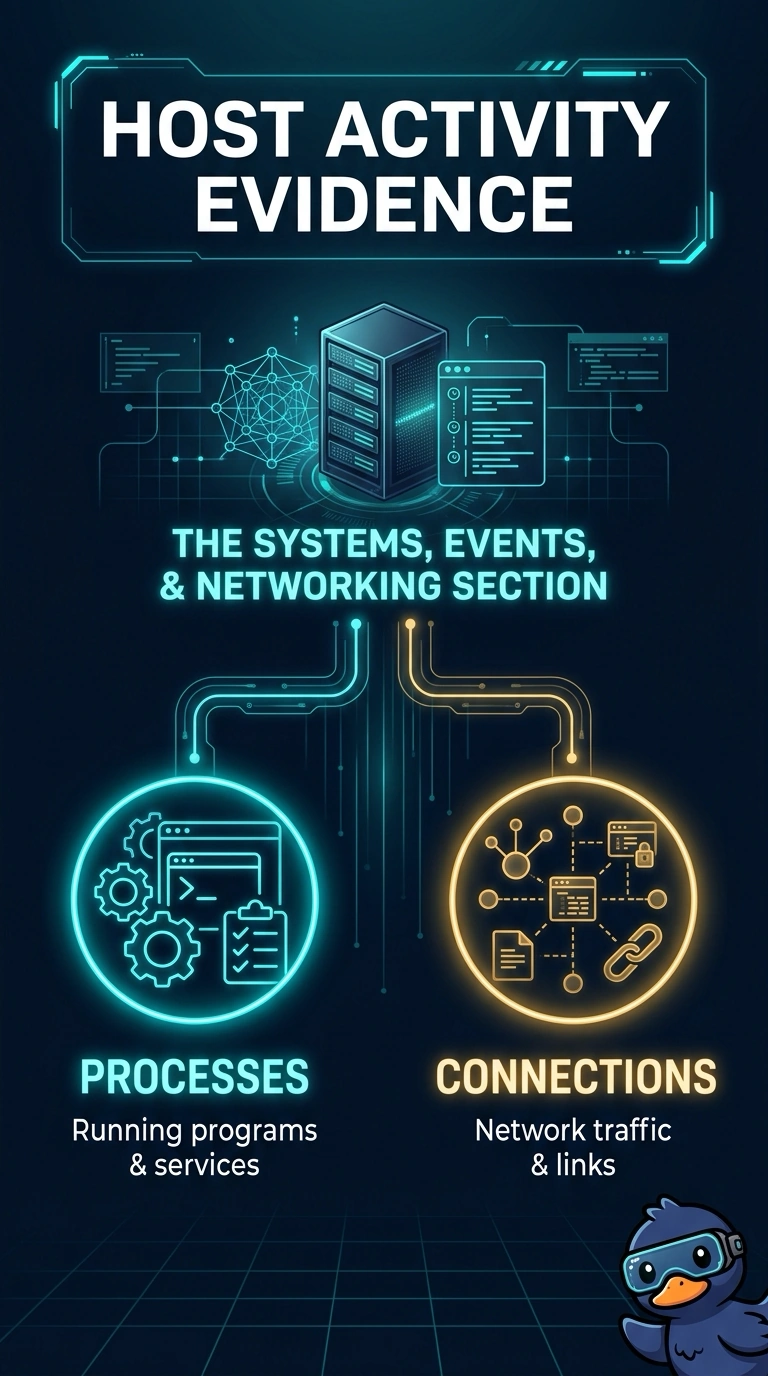
A fingerprint tells you who stood in the room, not what they did while they were there. You need the systems, events, and networking section, where processes and connections are recorded. The trap is stopping at the hash, the submission time, or the logo.
Full Explanation
A sandbox hash identifies file contents. Counsel asked what the sample did, which is behavior: processes started, files touched, and connections opened. That activity is recorded with the process tree in the events and networking portion of the report. "The systems, events, and networking section that records processes and connections" is the section that answers. "The file hash by itself, treated as a complete record of what the sample did on the host" only identifies the file and says nothing about the process tree. "The submission time printed at the top of the detonation report for this logistics sample" marks when the file was sent in, not what ran afterward. "The product logo on the report cover, taken as if it summarized sample behavior" is branding, not evidence of host activity. Exam caveat: a quiet events list can mean the sample did little in that image, and the section is still the right place to look. Operational check: read the process tree and the connection list in that section and compare them with the host timeline. Do that before you brief counsel.