
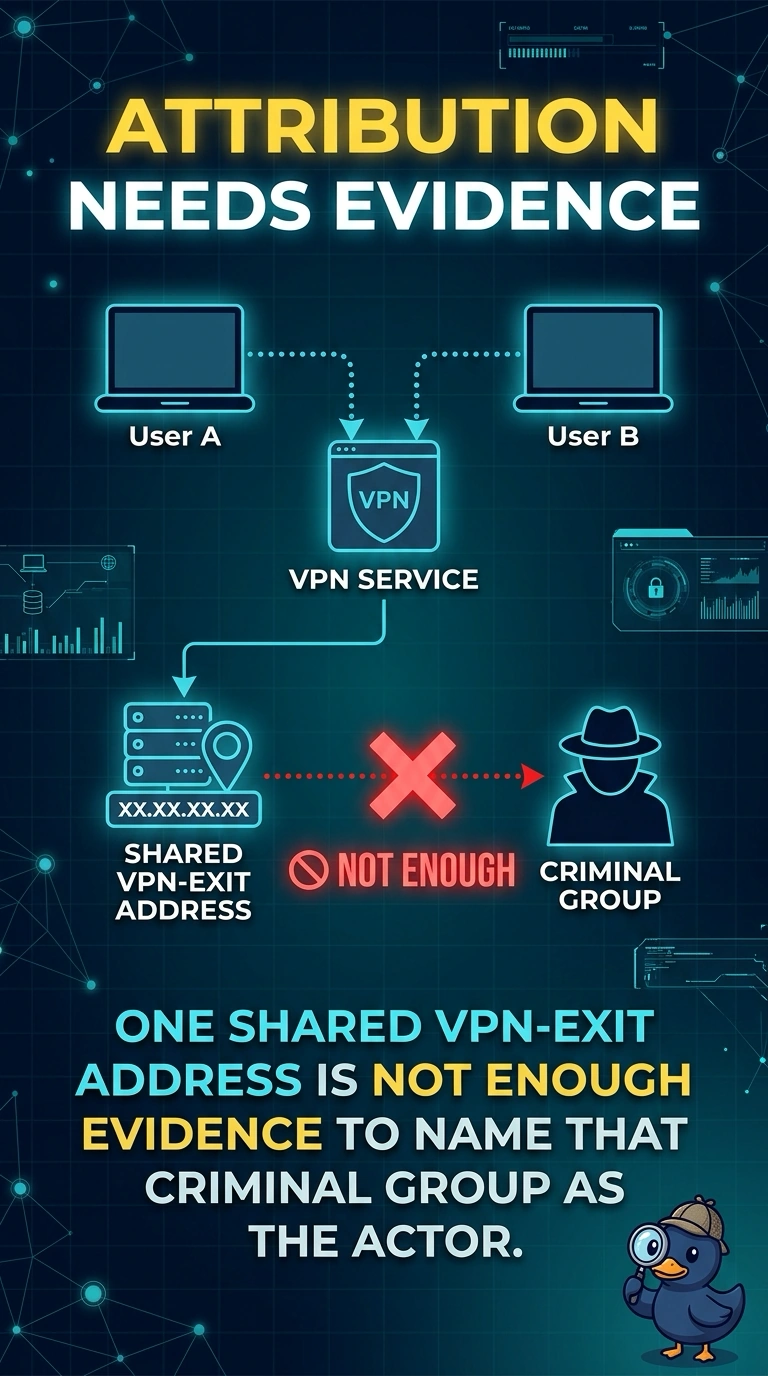
An MSSP report names a criminal group as responsible for a customer incident solely from one IP address, and that address is a shared VPN exit. What is the correction?
Select an answer to reveal the explanation.
Short Explanation
A shared taxi stand does not put a passenger's name on the curb. You cannot name a criminal group from one VPN exit that many unrelated customers use. The trap is treating that address, a file hash, or the victim organization as the actor.
Full Explanation
One shared VPN-exit address is not enough evidence to name that criminal group as the actor is the correction. A shared VPN exit is used by many parties, so the address shows where traffic left, not which person or group was behind it. Naming a criminal group from that address alone overclaims what the indicator can prove. The shared VPN-exit address itself is the threat actor the customer report ought to name turns a locator into a person. An IP address, especially a shared exit, is not the threat actor; at most it is a place to pivot from. The file hash gathered on the incident host is the threat actor the report should name outright names a file, not a party. A hash can identify a sample and still say nothing about which group used a shared exit. The customer organization listed as the victim is the threat actor behind the incident swaps the affected customer for the actor. The victim is the organization that suffered the incident, not the group that caused it. Exam caveat: the shared address can still be an indicator worth following. It is not, by itself, an identity, and one address does not name a person. Operational check: check whether that exit is a known shared VPN or similar egress, and withhold the group name until more than that single address supports it.