
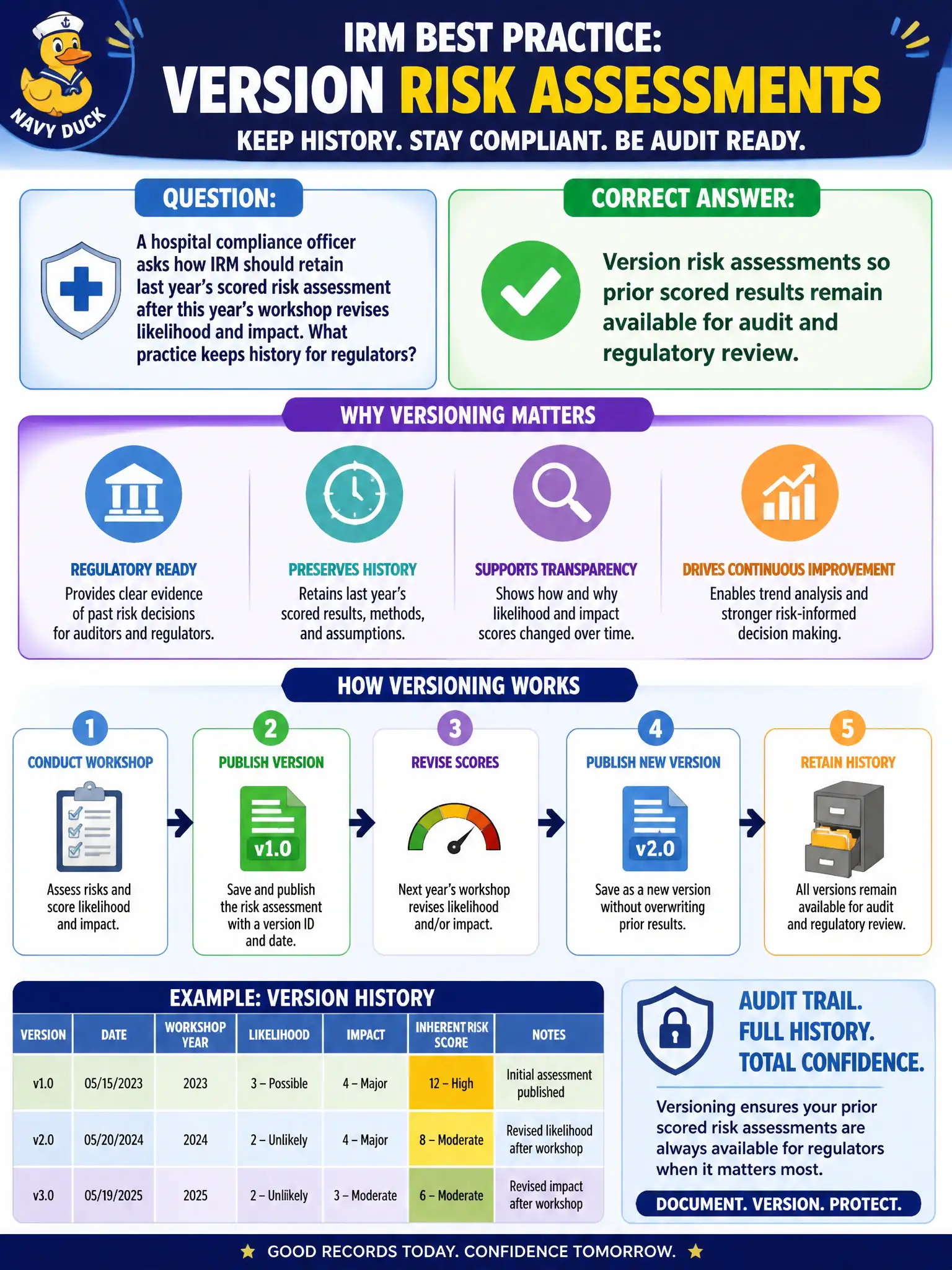
A hospital compliance officer asks how IRM should retain last year’s scored risk assessment after this year’s workshop revises likelihood and impact. What practice keeps history for regulators?
Select an answer to reveal the explanation.
Short Explanation
Regulators love a paper trail, not a magic eraser. Version the assessment so last year’s scores stay on the shelf when this year’s workshop updates likelihood and impact. Overwriting in place loses the story you may need to defend.
Full Explanation
After this year’s hospital risk workshop revises likelihood and impact, IRM should version risk assessments so prior scored results remain available for audit and regulatory review. Versioning preserves last year’s scored assessment as history for clinical risk governance. Overwriting the same assessment fields in place and relying on email for prior scores fails by concept because email attachments are not durable assessment history in the platform. Exporting old scores to a personal spreadsheet and deleting the assessment instance fails by concept because personal files and deletion destroy the system of record. Disabling assessment history so only the latest residual appears fails by concept because regulators often need prior-period scores, not solely the newest number. Exam caveat: CIS-RC retains historical assessment versions across reassessment cycles. Operational check: complete a new assessment version for the revised workshop scores, open prior-year assessment history on the same risk, and confirm last year’s likelihood and impact remain readable without email archaeology. In civic IRM programs, retain configuration and decision evidence so examiners can reconstruct why this design supports public services.