
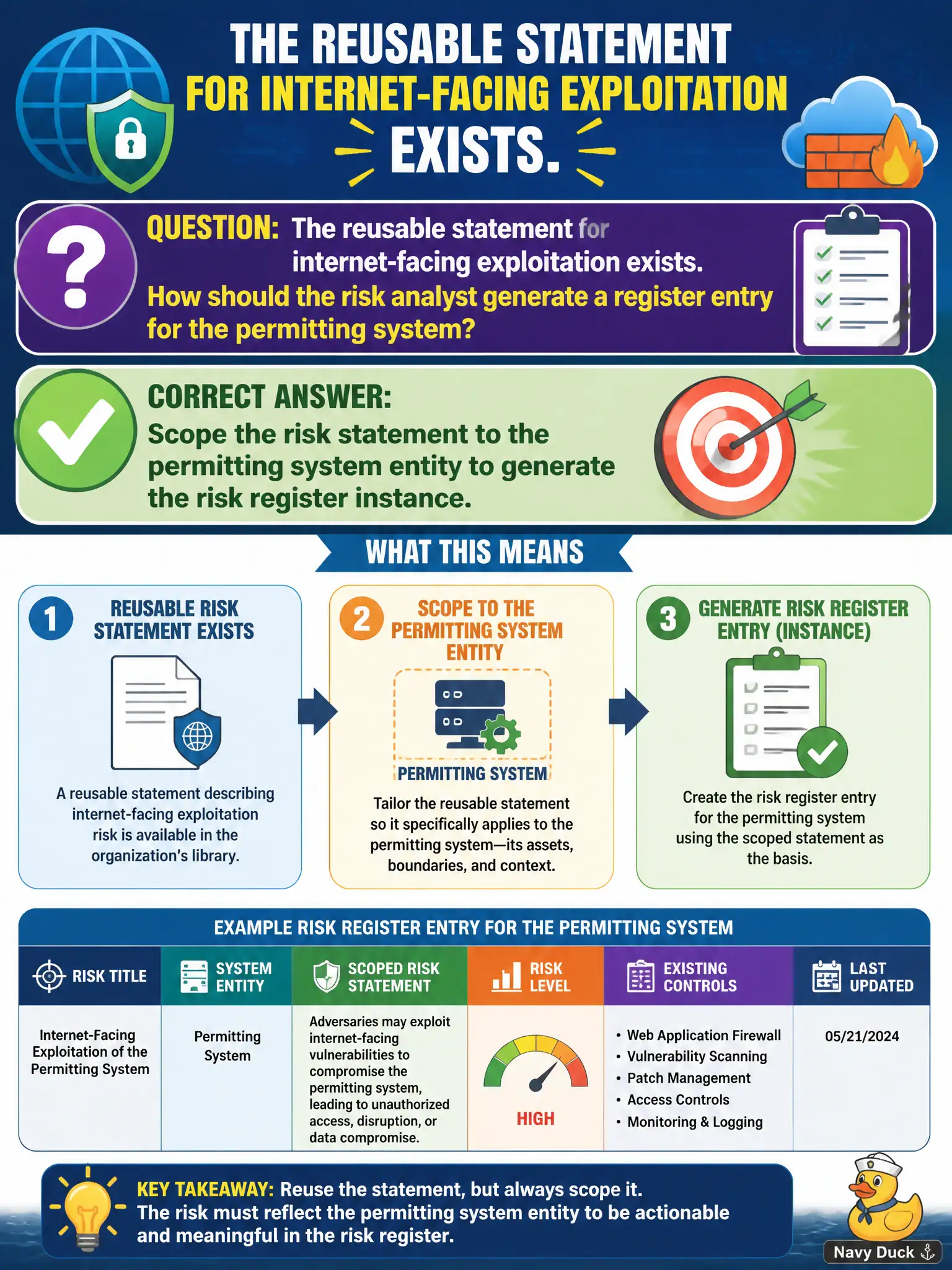
The reusable statement for internet-facing exploitation exists. How should the risk analyst generate a register entry for the permitting system?
Select an answer to reveal the explanation.
Short Explanation
The statement is the recipe; scoping it to the permitting system is pouring the cake. That scoped apply is what puts a real risk on the register.
Full Explanation
Once the reusable statement for internet-facing exploitation exists, the risk analyst generates a register entry for the permitting system by scoping the risk statement to the permitting system entity. That apply step creates the entity-scoped risk instance citizens’ permitting workflows depend on. Leaving the statement unscoped and assuming every entity inherits the risk automatically fails by concept because IRM needs explicit scoped risk records for ownership, scoring, and treatment. Converting the statement into a knowledge article and closing the risk module fails by concept because knowledge content is not a risk register instance. Creating only a change request titled permitting risk with no IRM risk record fails by concept because a change ticket is not a governed risk on the entity. Exam caveat: CIS-RC generates risks by scoping risk statements to entities. Operational check: scope the exploitation risk statement to the permitting system entity, open the resulting risk record, assign an owner, and verify it appears on the permitting system’s risk register. In civic IRM programs, retain configuration and decision evidence so examiners can reconstruct why this design supports public services. In civic IRM programs, retain configuration and decision evidence so examiners can reconstruct why this design supports public services.