
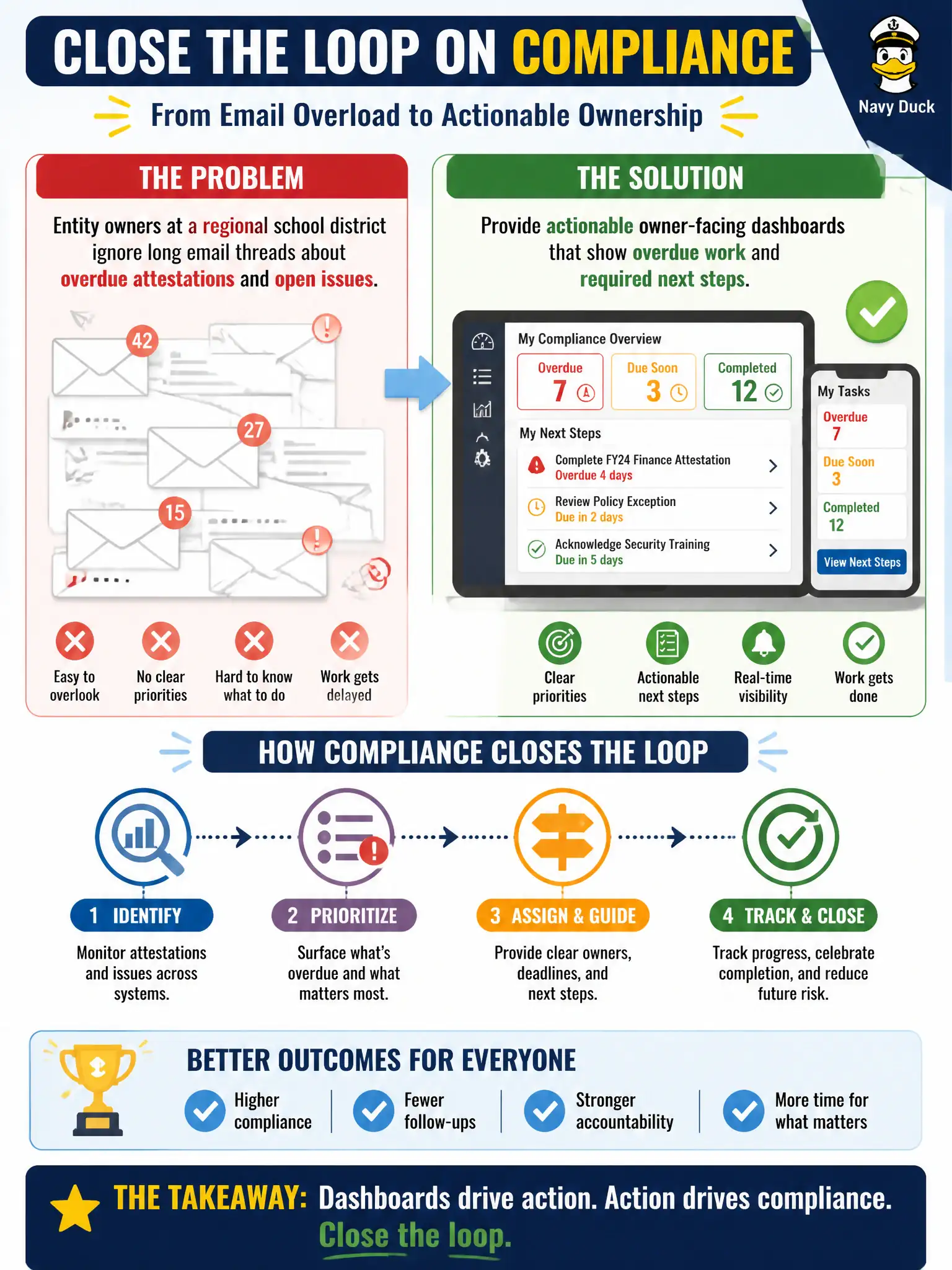
Entity owners at a regional school district ignore long email threads about overdue attestations and open issues. How should compliance close the loop?
Select an answer to reveal the explanation.
Short Explanation
Owners drown in email and still miss the ball. Give them a dashboard that shows what is overdue and what to click next — less inbox archaeology, more action.
Full Explanation
When entity owners at a regional school district ignore long email threads about overdue attestations and open issues, compliance should provide actionable owner-facing dashboards that show overdue work and required next steps—not only more email. Dashboards close the loop for civic education entities by making status and actions visible. Increasing email frequency alone fails by concept because more inbox noise does not improve clarity of what to do next. Removing owners so compliance staff attest on their behalf silently fails by concept because silent proxy attestation breaks accountability of the true control or policy owners. Archiving all open issues to reduce dashboard noise without remediation fails by concept because hiding work falsifies completion. Exam caveat: CIS-RC emphasizes actionable owner visibility for overdue compliance work rather than email-only nagging or silent proxy completion. Operational check: publish an owner dashboard filtered to the school-district entities showing overdue attestations and issues with next-step links, train owners on the view, and measure reduction in overdue aging after adoption. In civic IRM programs, retain configuration and decision evidence so examiners can reconstruct why this design supports public services.