
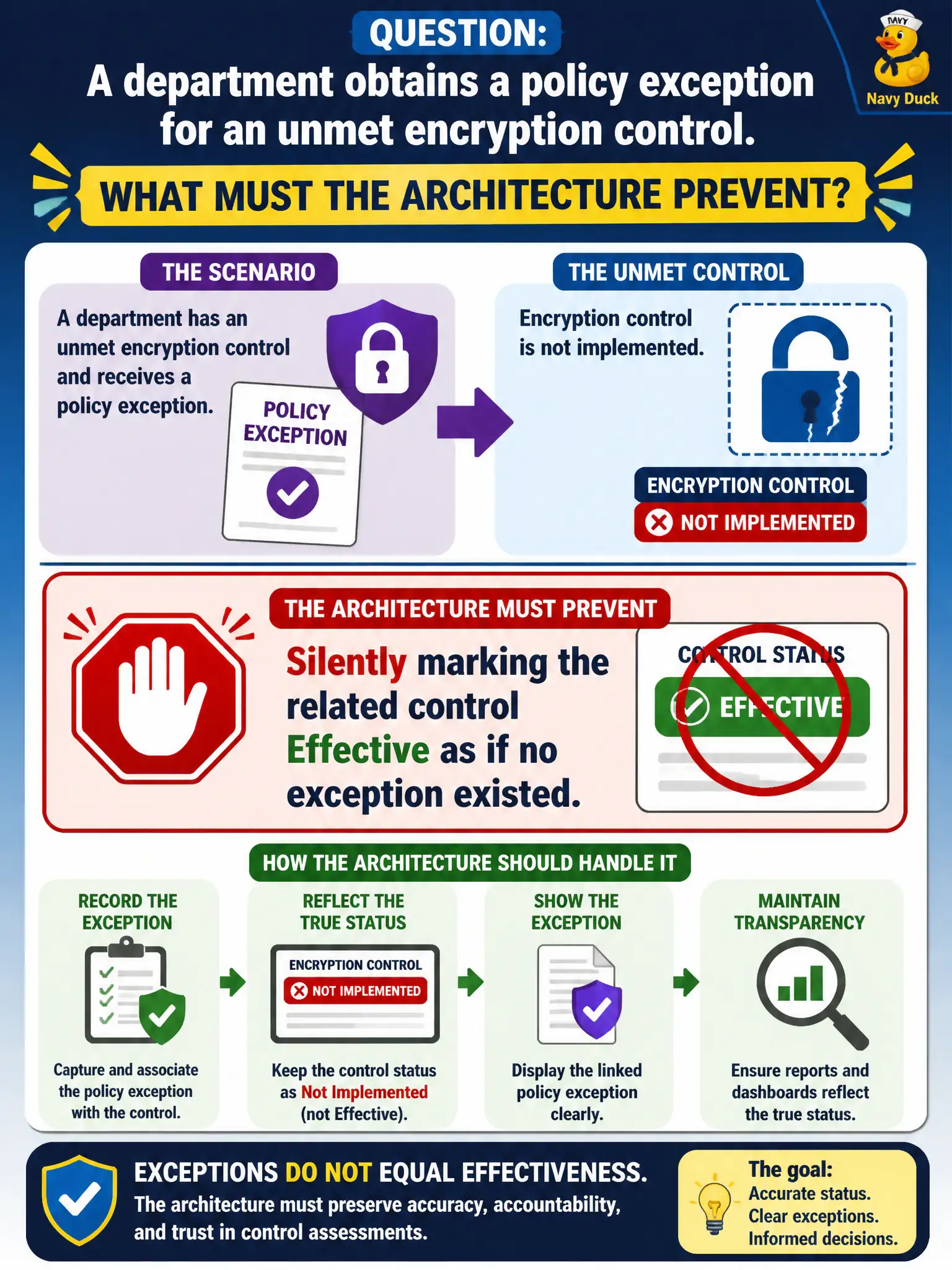
A department obtains a policy exception for an unmet encryption control. What must the architecture prevent?
Select an answer to reveal the explanation.
Short Explanation
An exception is a hall pass with an expiration stamp—not a magic eraser. It must stay visible and time-bound. Never let it quietly paint the control green as if the gap never existed.
Full Explanation
When a department obtains a policy exception for an unmet encryption control, architecture must prevent silently marking the related control Effective as if no exception existed. Exceptions record an approved, time-bound deviation; they must not falsify control effectiveness on dashboards. Recording the exception with an owner and expiration date is appropriate and required. Linking the exception to the affected policy or control context is appropriate for lineage. Reporting open exceptions alongside compliance posture is appropriate transparency for municipal leadership. The anti-pattern is treating the control as fully effective while an exception papers over the gap without visibility to examiners or executives. Exam caveat: exception plus compensating control may reduce residual risk, but effectiveness claims must reflect what is actually operating—not wishful UI status after a paperwork exercise. Operational check: open the exception against the encryption policy or control, keep the control from being marked Effective solely due to the exception, show open exceptions on leadership dashboards, calendar expiry, and verify on close that either compliance is restored with retest or a renewed exception remains visible. Train municipal admins never to clear fail status merely because an exception record exists in the instance.