
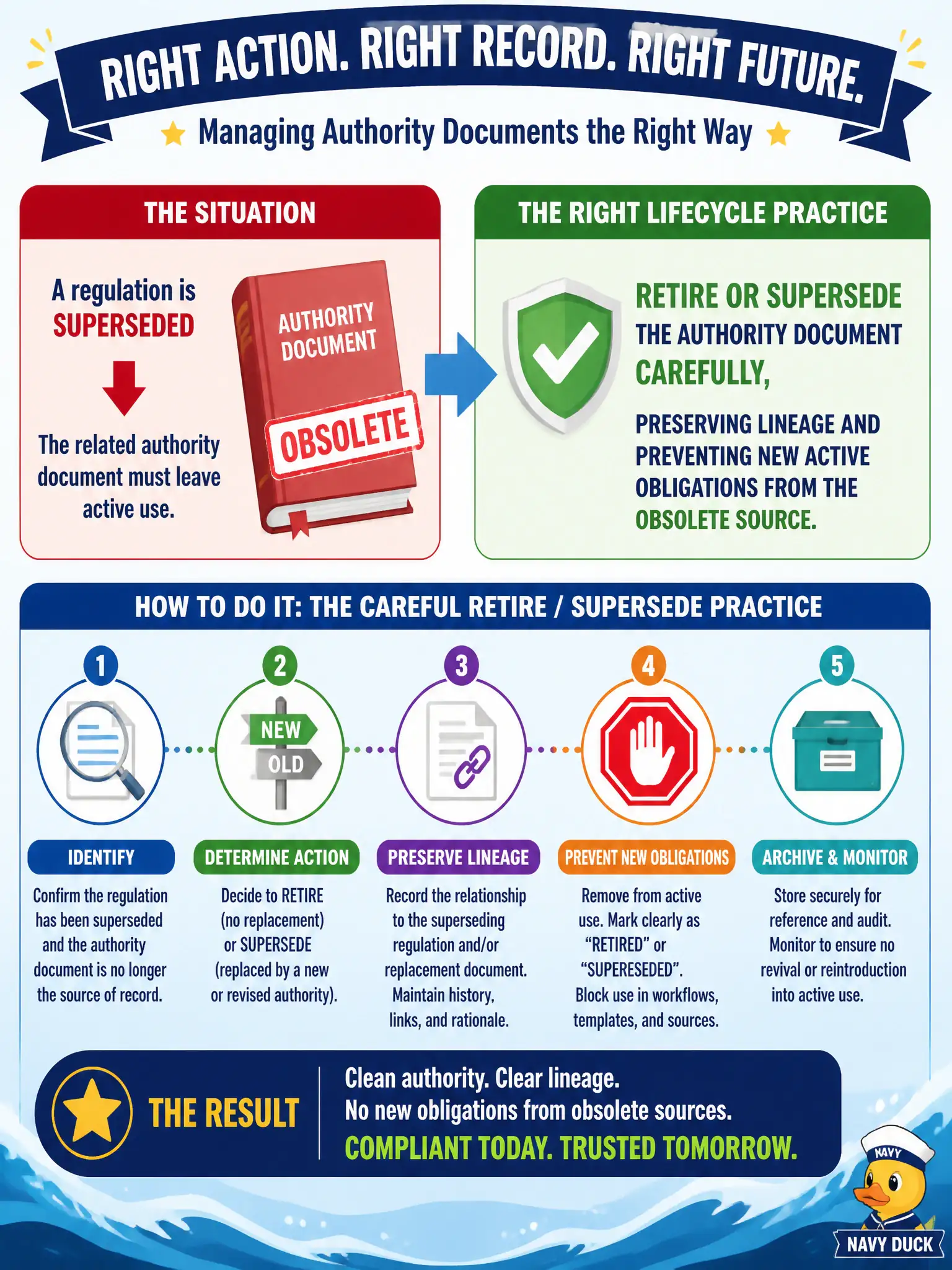
A regulation is superseded and the related authority document must leave active use. What lifecycle practice is appropriate?
Select an answer to reveal the explanation.
Short Explanation
When the law book changes editions, you don’t shred history and pretend the old book still rules. Retire or supersede the authority document so new obligations stop flowing from the obsolete source. Keep lineage so auditors can still see what used to apply.
Full Explanation
Authority documents follow lifecycle states including retirement or supersession when regulations change. When a regulation is superseded and the related authority document must leave active use, retire or supersede the authority document carefully, preserving lineage and preventing new active obligations from the obsolete source. Deleting all historical citations and controls immediately with no supersession trail destroys examiner-valuable history and prior-period evidence. Leaving the obsolete authority marked active so new citations keep appearing under it continues wrong obligations into the municipal library. Copying the old authority into a wiki page and removing it from IRM without status change abandons structured lineage and workflow controls. Exam caveat: retirement stops new active use—it should not blindly wipe historical tests and issues needed to answer prior-year examiner questions. Operational check: mark the authority superseded or retired with references to the replacement mandate, block new citations under the obsolete source, assess cascading impacts on mapped objectives and controls, communicate to municipal compliance authors, and verify library reports no longer present the obsolete authority as active. File the supersession decision with the regulatory change record.