
Writers still say profile while the IRM workspace says entity. What should practitioners understand about that naming?
Select an answer to reveal the explanation.
Short Explanation
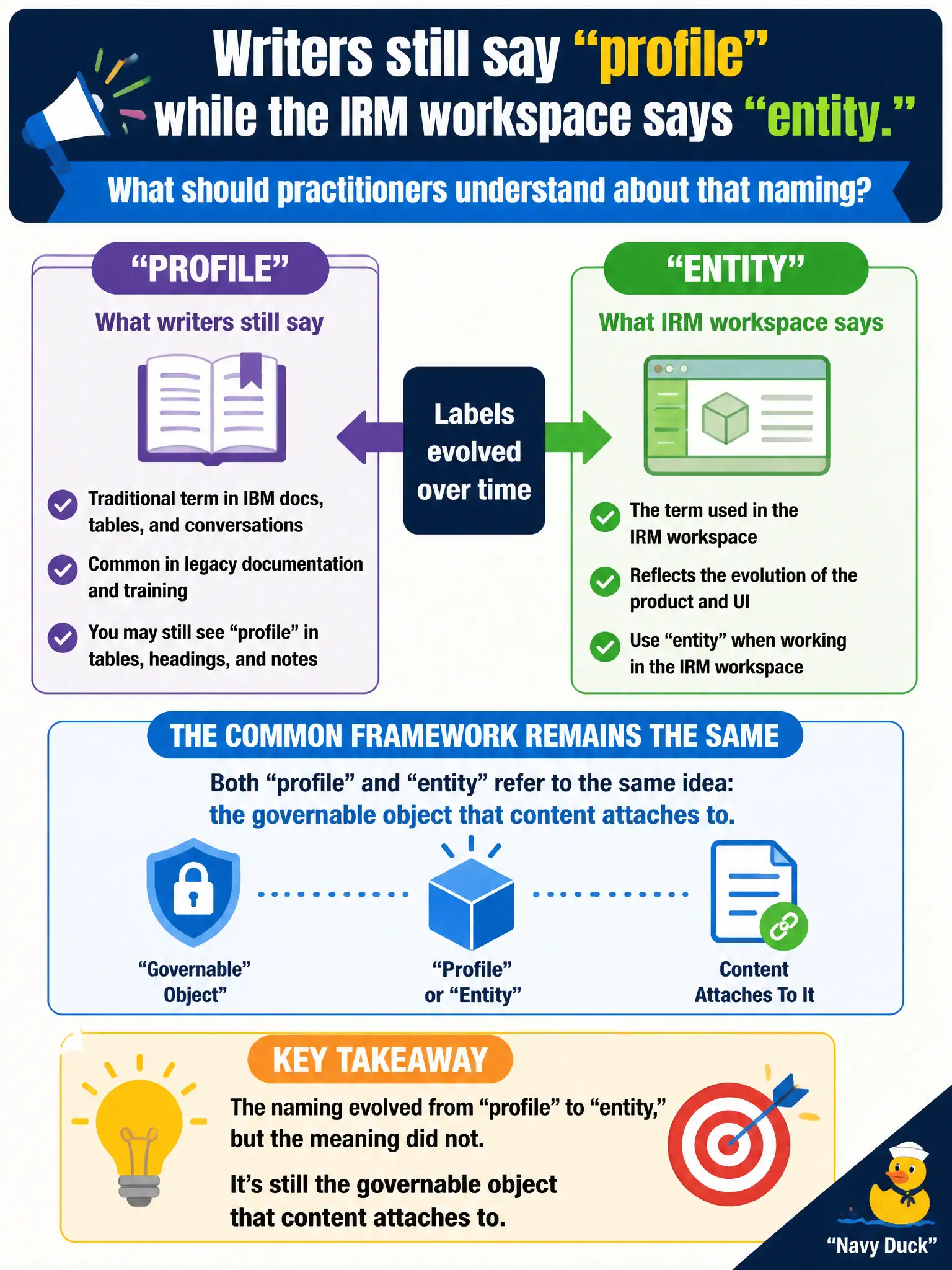
Same mailbox, new sticker. Workspace language moved to entity, but the idea is still the thing you govern—and some tables or old docs may still whisper profile.
Full Explanation
ServiceNow IRM UI language evolved toward entity for the governable object in the common framework, while older profile language may still appear in tables or legacy documentation. Writers who still say profile are usually referring to the same mailbox with a new sticker, not an unrelated object that forbids migration of content or mental models. Practitioners should understand the rename, update glossaries, and keep teaching that policies, risks, and controls attach to governable objects regardless of the label on the workspace. Treating profile and entity as forever-unrelated objects that must never share content creates unnecessary migration fear and duplicate designs. Saying entity always means only a CMDB hardware CI while profile always means a sys_user record over-narrows both terms and ignores org units, applications, and vendors. Claiming the rename means IRM was replaced by CIS-HR case profiles confuses Risk and Compliance with HR Service Delivery concepts. Exam caveat: naming drift between profile and entity is expected on the exam and in older docs; the framework idea remains the governable object. Operational check for writers: when a legacy doc says profile, locate the corresponding entity-oriented workspace or table in the current instance, update the internal glossary once, and brief stakeholders that content still attaches to the same governable-object idea under the newer label.