
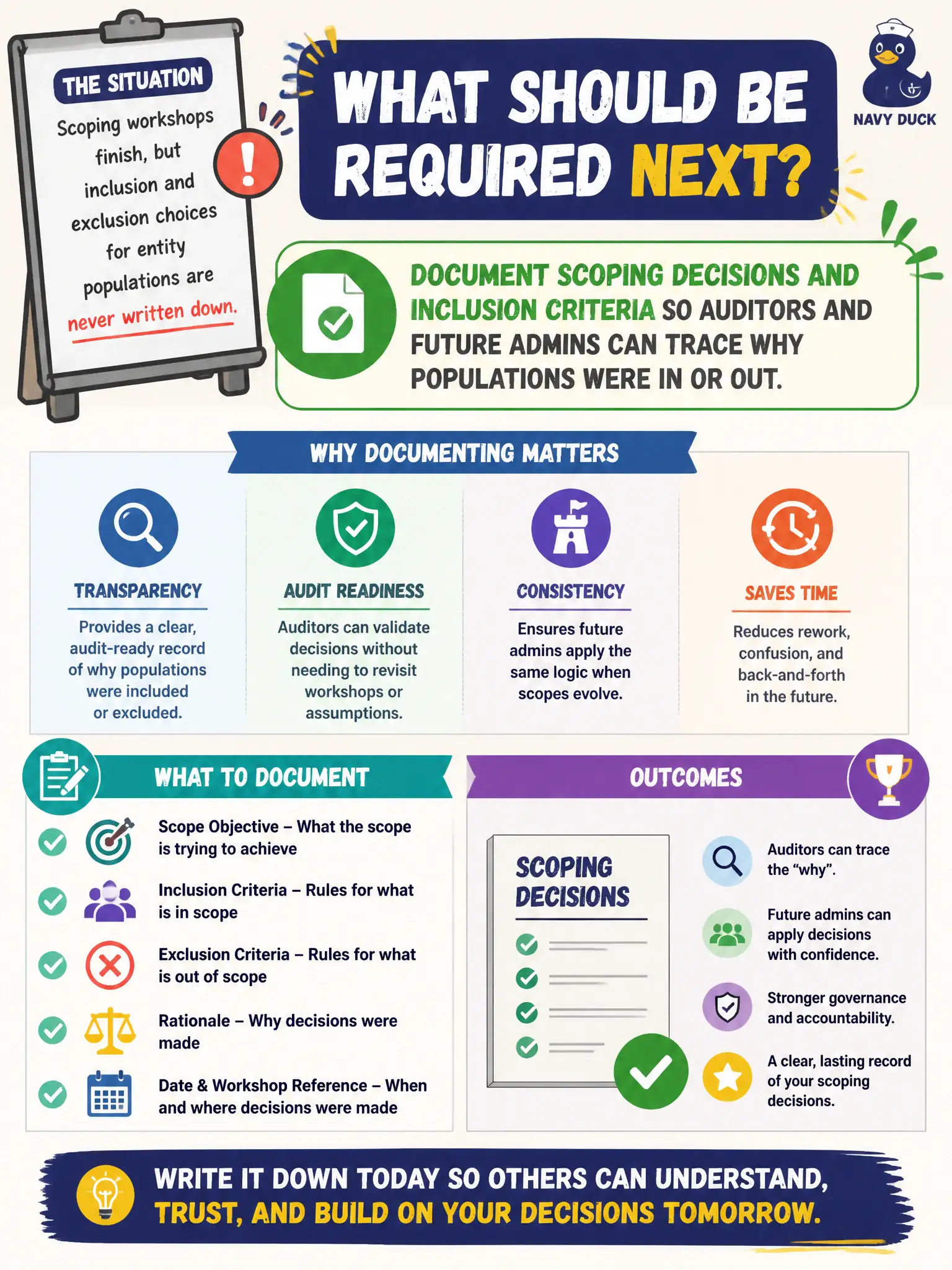
Scoping workshops finish, but inclusion and exclusion choices for entity populations are never written down. What should be required next?
Select an answer to reveal the explanation.
Short Explanation
If nobody wrote why printers were out and tax systems were in, next year’s team will reinvent the argument—or reverse it by accident. Traceable inclusion criteria are the sticky notes that survive staff turnover. Document the scope logic, not just the resulting list.
Full Explanation
After scoping workshops, inclusion and exclusion choices for entity populations must be documented so auditors and future admins can trace why populations were in or out. If nobody wrote why printers were out and tax systems were in, next year’s team reinvents—or silently reverses—the argument. Traceable inclusion criteria survive staff turnover better than chat history. Relying on chat history alone because entity types supposedly store full business rationale automatically leaves intent unrecorded; filters are not narratives. Deleting excluded populations from the CMDB so documentation is unnecessary damages operational inventory to avoid writing a paragraph. Converting every exclusion into a Permanent Accept risk without recording rationale misuses risk acceptance and still fails scope documentation. Exam caveat: document scoping decisions and inclusion criteria alongside configuration. Operational check next: publish a short scope decision record listing populations, filters, exclusions, owners, and review cadence; store it with the entity-type runbook and reference it in audit evidence packages. Keep civic stakeholders aligned on the operating model, and verify platform records after each change before reporting posture to leadership. Revisit the design when CMDB classes, org structures, or program charters change.