
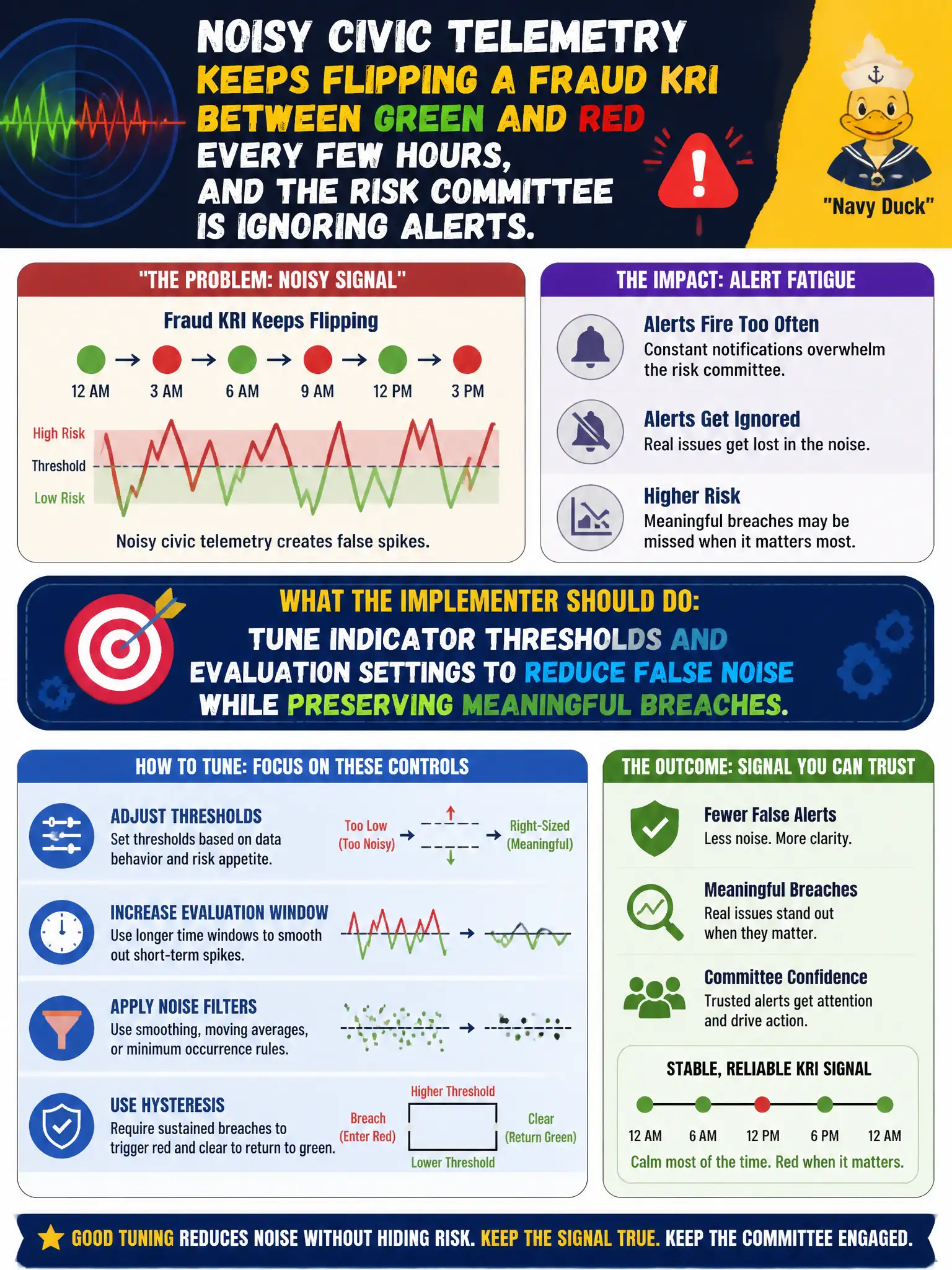
Noisy civic telemetry keeps flipping a fraud KRI between green and red every few hours, and the risk committee is ignoring alerts. What should the implementer do?
Select an answer to reveal the explanation.
Short Explanation
A smoke detector that chirps every time a bus passes trains people to ignore real fires. Threshold tuning calms the noisy KRI so true breaches still matter. Delete-the-metric is giving up; retune is how continuous monitoring stays useful.
Full Explanation
Noisy civic telemetry that flips a fraud KRI between green and red every few hours trains committees to ignore alerts; the implementer should tune indicator thresholds and evaluation settings to reduce false noise while preserving meaningful breaches. Threshold and window tuning restores signal trust. Deleting the metric abandons fraud monitoring for the entity.
Deleting the KRI and stopping fraud measurement for that entity gives up on leading signal. Granting every citizen reporter write access to the risk register to crowdsource scores destroys governance. Moving the KRI into a Knowledge article so alerts become optional reading demotes monitoring to documentation.
Exam caveat: tune continuous-monitoring noise; do not delete KRIs, crowdsource residual edits, or hide measures in Knowledge.
Operational check: analyze false-positive rate; widen evaluation windows or adjust thresholds; validate true breach still alerts; present before/after noise metrics to the risk committee to rebuild trust.
Document threshold changes with rationale and effective dates so fraud-committee members understand why alert volume dropped. Pair tuning with a weekly true-positive sample review. Never move the KRI into Knowledge or open the register for public write access as a noise-reduction strategy.