
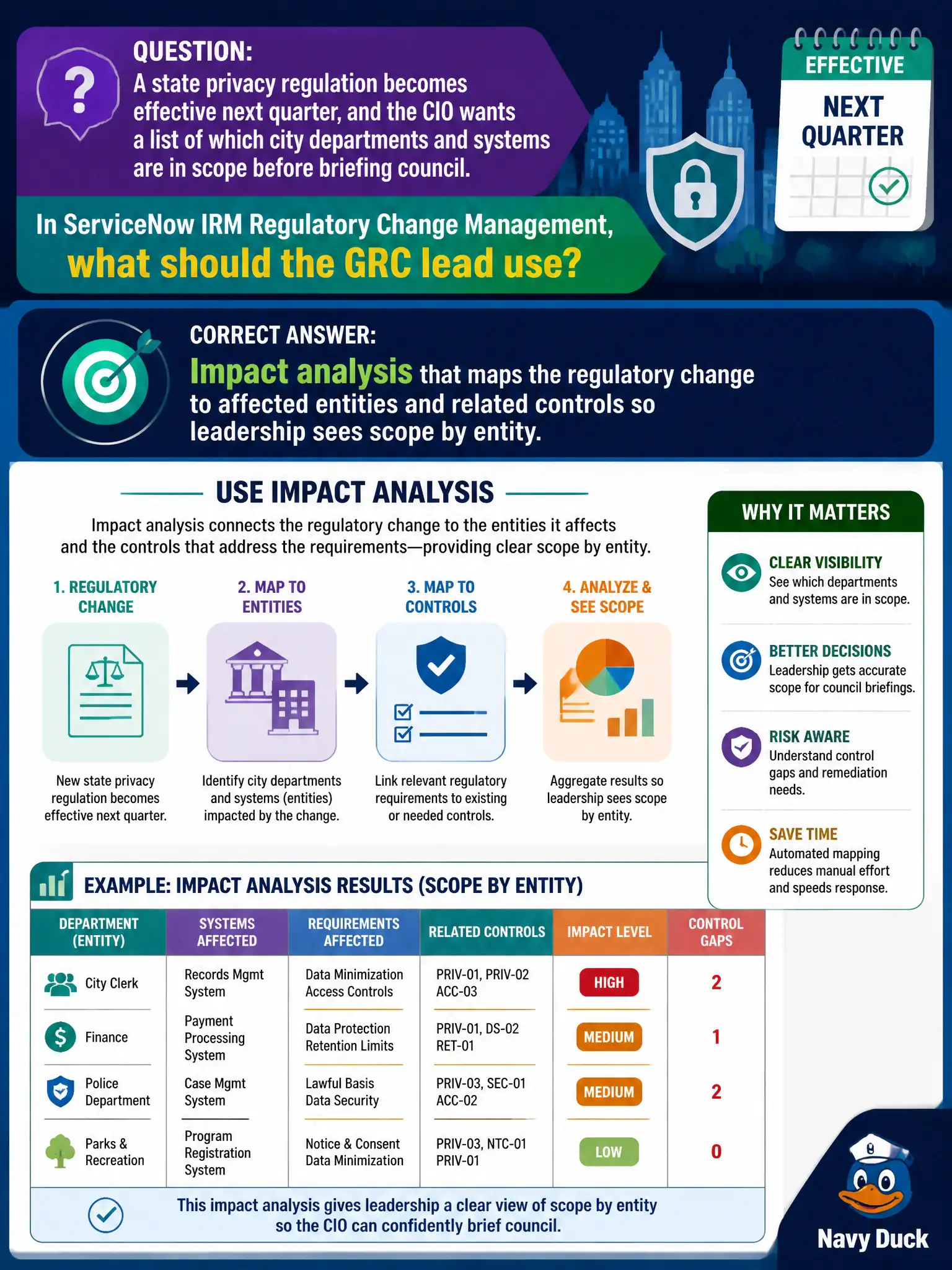
A state privacy regulation becomes effective next quarter, and the CIO wants a list of which city departments and systems are in scope before briefing council. In ServiceNow IRM Regulatory Change Management, what should the GRC lead use?
Select an answer to reveal the explanation.
Short Explanation
Think of regulatory change like a weather alert that already knows which neighborhoods flood. Impact analysis ties the new rule to the entities and controls that actually sit in the flood zone, so the CIO brief is a scoped list—not a guess. That’s how leadership sees who is affected before the effective date.
Full Explanation
When a state privacy regulation becomes effective next quarter, ServiceNow IRM Regulatory Change Management should use impact analysis that maps the regulatory change to affected entities and related controls so leadership sees scope by entity before a council briefing. Impact analysis turns a legal effective date into an operational roster of city departments and systems that must respond. Civic CIOs need that scoped list—not a guess—to prioritize remediation funding and owner assignments ahead of enforcement.
Creating a brand-new authority document for every department with no link to the regulatory-change record fragments obligations and loses the change narrative. An ITSM change request that merely closes when the effective date arrives tracks a calendar event, not regulatory impact on entities and controls. A vulnerability response group assigned to the privacy office as the only tracking object misfiles regulatory change into vuln management.
Exam caveat: Regulatory Change Management emphasizes staged change plus impact analysis to entities/controls. ITSM calendar closes and VR groups are distractors that test whether you keep regulatory work in IRM.
Operational check: open the regulatory-change record; run impact analysis; export the affected-entity and related-control list for the CIO brief; assign cover-or-gap tasks to owners before the effective date; verify authority documents remain linked to the change rather than spawned as unlinked departmental orphans.