
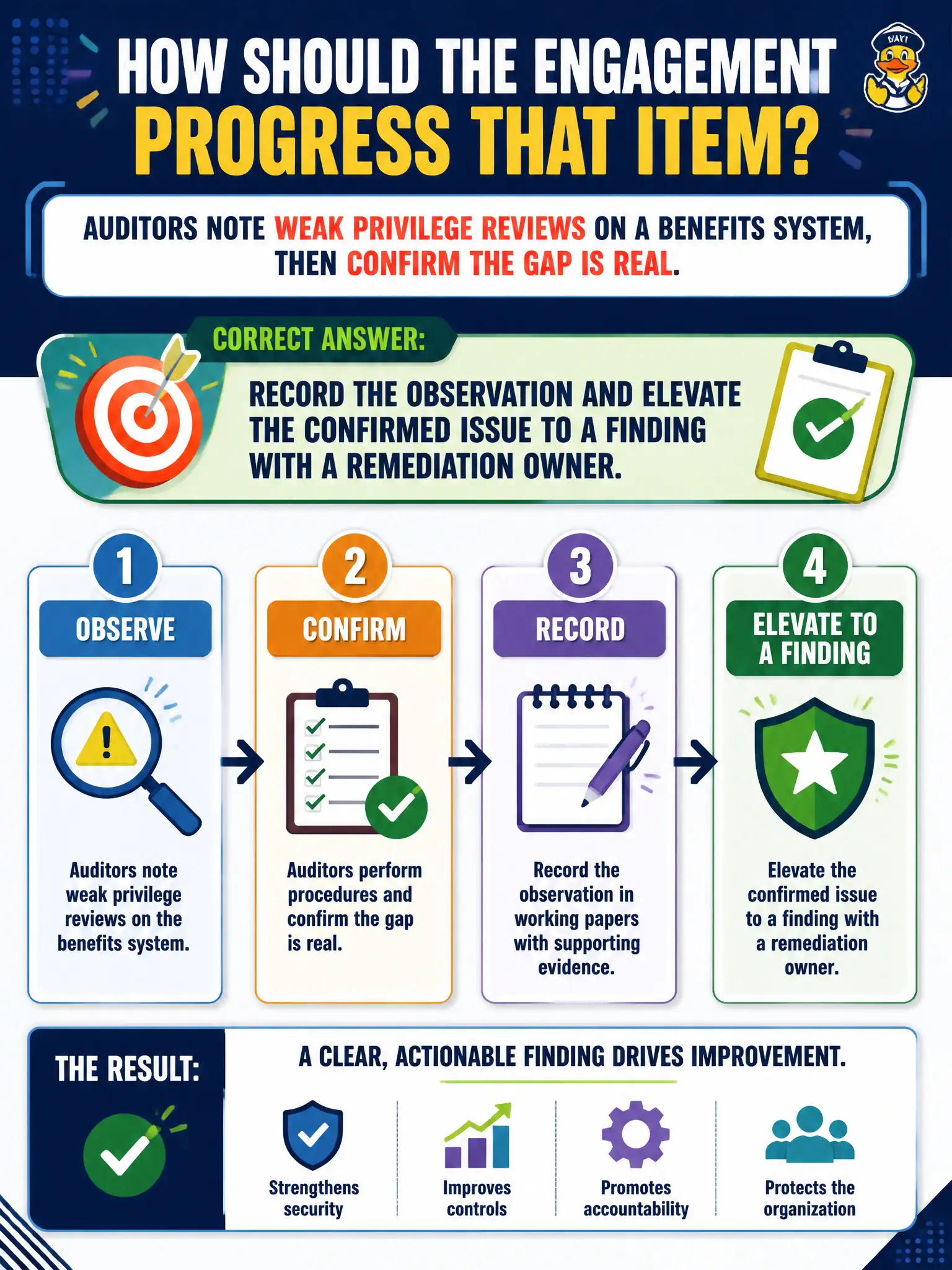
Auditors note weak privilege reviews on a benefits system, then confirm the gap is real. How should the engagement progress that item?
Select an answer to reveal the explanation.
Short Explanation
An observation is a sticky note; a finding is the work order with an owner. When the privilege-review gap checks out, elevate it so remediation has a name on it. Hiding or dissolving it into a quiet incident loses the audit trail.
Full Explanation
When auditors note weak privilege reviews on a benefits system and confirm the gap, the engagement should record the observation and elevate the confirmed issue to a finding with a remediation owner. Observations capture potential issues; findings are confirmed gaps with accountability. Elevation creates the remediation trail civic benefits systems need.
Deleting the observation so it never appears in reporting hides known weakness. Marking the related entity retired to hide the control gap falsifies entity lifecycle to avoid findings. Converting the observation into a resolved incident with no audit finding may close an ITSM ticket while erasing audit reporting obligations.
Exam caveat: confirmed gaps become findings with owners—not deletions, entity-retirement tricks, or incident-only substitutions.
Operational check: record observation; validate evidence; elevate to finding; assign remediation owner and due date; verify the finding appears in engagement reporting and shared issue tracking as designed.
Finding records should capture criteria, condition, cause, and effect at a level suitable for benefits-system leadership, then link to remediation owners with due dates. Observation-to-finding elevation must be irreversible without audit supervisor approval so confirmed gaps cannot be quietly deleted.