
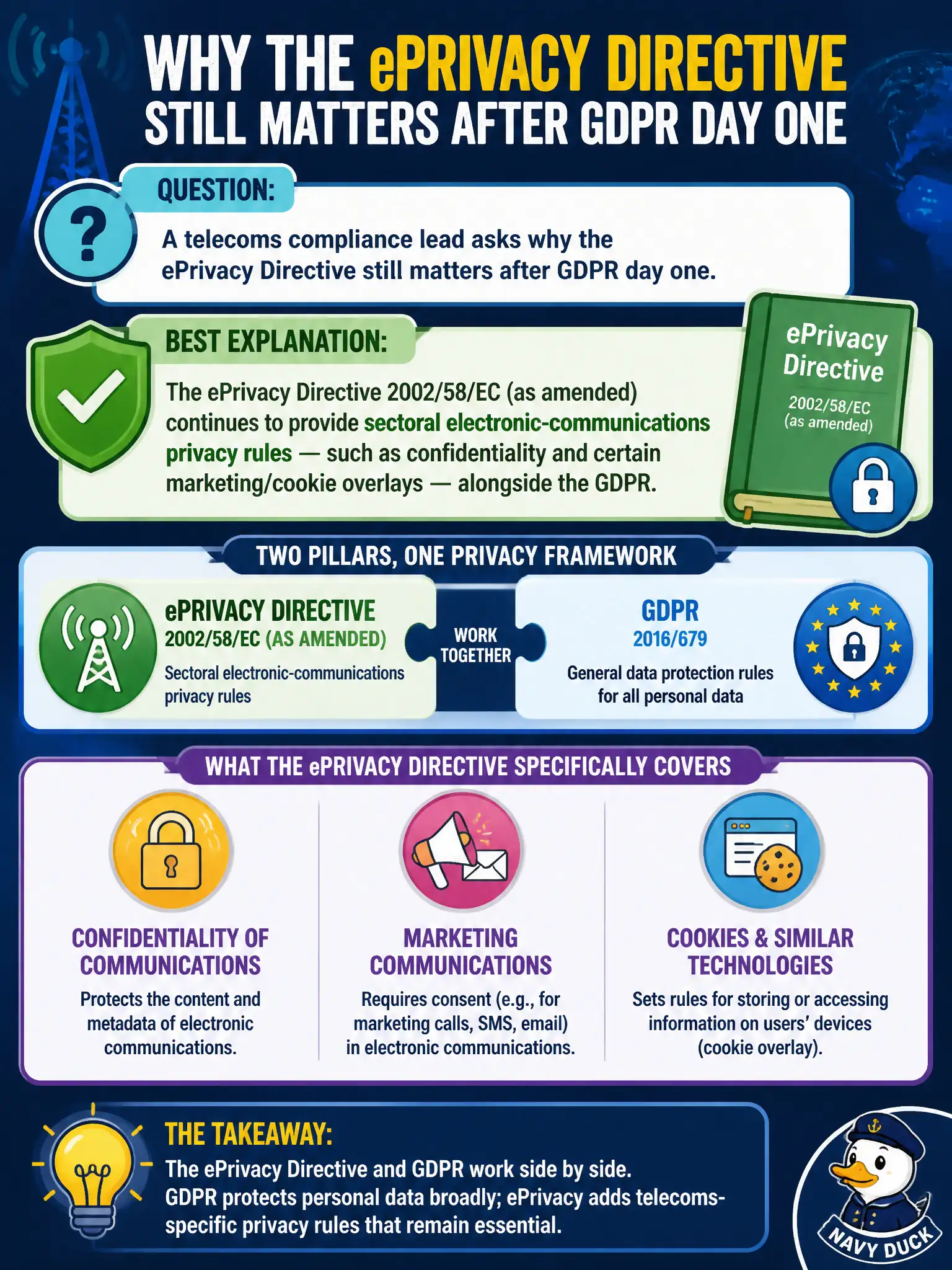
A telecoms compliance lead asks why the ePrivacy Directive still matters after GDPR day one. What is the best explanation?
Select an answer to reveal the explanation.
Short Explanation
GDPR is the general privacy rulebook; ePrivacy is the specialised chapter for phones, messaging, and similar electronic-comms issues. One did not shred the other on day one. Telecoms folks still bump into ePrivacy for confidentiality and certain marketing/cookie-type rules.
Full Explanation
The ePrivacy Directive 2002/58/EC (as amended) continues to provide sectoral electronic-communications privacy rules—such as confidentiality of communications and certain marketing and cookie/terminal-equipment overlays—alongside the GDPR rather than vanishing on GDPR day one. A telecoms compliance lead should treat ePrivacy as related sectoral law that can impose additional or more specific requirements in its field while personal-data processing still engages GDPR principles and rights. Claiming automatic expiry when the GDPR entered into force erases an instrument that remains part of the European stack. Saying ePrivacy only regulates offline billboards invents a medium limit the Directive does not have. Treating ePrivacy as having replaced the GDPR worldwide reverses the relationship: ePrivacy is not a global substitute for the general Regulation. Exam caveat: Domain I related-legislation items often pair GDPR with ePrivacy—select coexistence, not repeal-or-replace myths. Operational check: for any civic portal that sets cookies or sends electronic marketing, map which rules come from ePrivacy versus GDPR lawful-basis and transparency duties, and record both in the processing record before go-live.